


Hannah Arendt and Politics in the Age of the Technosphere
1.
In his famous essay “Karl Jaspers: The Citizenof the World?” Hannah Arendt deeply questions the philosophical concept of her former mentor and close friend, Karl Jaspers, as a cosmopolitan or “citizen of the world.” Although she greatly appreciated Jaspers’s commitment to universal humanism and dialogue, Arendt had a very strong political stance: no one can be a citizen of the world in the same way that they are a citizen of their own country. In her work, Arendt presented several key arguments and perspectives on Jaspers’ cosmopolitanism. Here is one of the fundamental judgments she expresses on this issue.
“Mankind owes its existence not to the dreams of the humanists nor to the reasoning of the philosophers and not even, at least not primarily, political events, but almost exclusively to the technical development of the ‘Western world. When Europe in all earnest began to prescribe its “laws” on all other continents, it so happened that she herself had already lost her belief in them. No less manifest than the fact that technology united the world is the other fact that Europe exported to the four corners of the earth its processes of disintegration-which had started in the Western world with the decline of the traditionally accepted metaphysical and religious beliefs and had accompanied the grandiose development of the natural sciences and the victory of the nation state over all other forms of government. The same forces which took centuries to undermine the ancient beliefs and political ways of life, and which have their place in the continuous development of the West alone, took only a few decades to break down, by working.” (Arendt 1968: 82)
Arendt argues that the concept of “citizen” must be tied to defined territory, laws, and a community of other citizens. For her, any idea of a single world government or world empire represents a “terrifying nightmare of tyranny” because a monopoly on violence would destroy all real political freedom and plurality. She believed Jaspers’ idea of “world citizenship” relied more on a philosophical ideal (like that of Immanuel Kant), which imagines humanity as one large family, than on a concrete political reality. Politics, for Arendt, is concerned with people from different countries and different backgrounds who must live within the positively established “fences” of laws that protect their freedom. However, what Arendt appreciated most about Jaspers as a “citizen of the world” was his unconditional faith in existential communication. Jaspers believed that truth must be inseparable from communication and that common sense and the ability to listen to others connect us to humanity. Arendt therefore concludes that, although Jaspers’s ideal cannot be applied as a formal political order (such as a world state), his insistence on honest, open dialogue without prejudice serves as an enduring moral and spiritual model for how people can talk to and understand each other, even in the darkest times.
This complex relationship and decades-long dialogue is recorded in their extensive correspondence, which spans from 1926 to 1969. (Arendt-Jaspers 2023) Hannah Arendt’s thesis about humanity not as a dream of humanists, but as a technical development of the Western world, goes decisively against Kant and Jaspers. Technology, Arendt says, has become a negative solidarity based on the fear of global destruction. But is that judgment still relevant today because the flourishing of AI in planetary networking has nothing to do with the fear of destruction anymore, but with the idea of the absolute power of what is the subject of this substance (therefore, technology) and can be defined as a planetary-global order of the technosphere that combines technosciences and world management? (Paić 2022: 39-66)
2.
Her critique of the mid-20th century “negative solidarity” – which then primarily referred to the atomic bomb – seems still extremely important today, but precisely in the way that it confirms her darkest forebodings about technology as a substitute for authentic politics, while at the same time going beyond the framework of a mere “fear of destruction”. Here is how her thesis and my interpretation of the technosphere intersect in today’s context. When Arendt wrote about technology creating a false humanity, she meant that Western technical development and global connectivity had created a situation in which a disaster in one part of the world instantly affected another. In the Cold War era, this connection was negative: humanity became one not because it recognized and respected each other (as Kant and Jaspers dreamed), but because it shared a common possibility of destruction (a nuclear holocaust).
Today, in the era of AI, this connection is no longer based on the fear of physical annihilation, but on functional necessity. The technosphere does not unite people through political dialogue, but rather standardizes them through algorithms, protocols, and data flows. Humanity today becomes “solidarity” because it is integrated into the same operating system, whether it likes it or not. If AI and planetary networking are heading toward absolute power and becoming an independent subject, this corresponds to what Arendt called in her book Vita activa (The Human Condition): the loss of control over the processes we initiated ourselves. For Arendt, the danger of automation and technoscience lies in their replacing human action with mere behaviorand administration. (Arendt 1958)
When the technosphere merges technoscience and management (what we now call algorithmic management or algocratic governance), politics is dying. Decisions are no longer made through public discourse and judgment (Jaspers’ ideal), but through optimization, prediction, and efficiency. Power no longer comes from the community of citizens, but from control over the substance of technology. Kant and Jaspers believed that technical progress and global trade would force people to establish a moral and legal world order to defend their own survival. They believed in reason (Vernunft) that governs history according to humanism. Arendt – and in today’s context we see this more clearly than ever – recognizes that technology has its own autonomous logic. It does not create a humanistic humanity. Instead, it creates a planetary power structure in which the subject is no longer the human citizen, but the corporate-state technical apparatus that owns and directs AI.
The destruction cannot necessarily be physical (death), but political: it appears as the destruction of the human ability to start something new, to act freely and unpredictably. AI feeds on predictability; it statistically closes the future by turning past data into future behavior patterns. Hannah Arendt’s judgment seems therefore more relevant today than ever, but with the addition that, according to my philosophical research, the driver of the technosphere is no longer fear, but the desire for absolute control and systemicintegration. The planetary order we live in today appears as the realization of her fear of “world citizenship” in its worst, perverted form: we have not become citizens of the world through freedom and law but have become users and data points within a global techno-governance sphere.
In my text “In the sign of homo laborans: Hannah Arendt and the de-mundanization of Life”, which represents one chapter of the book Prospects for the Future of Philosophy, I show that Arendt, in her work Vita activa, announced the end of anthropology and, at the same time, the end of the definition of man as an animal rationale, because she saw how human praxis in technoscientific conditions transforms into the loss of the very essence of humanity. (Paić 2023) In a condition in which the technosphere and cybernetics take over, the human is no longer the one who uses technology as a tool to achieve human purposes. Instead, humans become the object of technoscientific research and transformation (biotechnology, AI, genetic engineering). When reason (ratio) is externalized into algorithmic systems of artificial intelligence, traditional anthropology loses its object: the human is no longer the sovereign subject of history.
For Arendt, praxis (action) was the highest form of human life – a space of freedom, speech, plurality, and starting something radically new in community with others. Praxis collapses and is absorbed by technoscientific research. Politics and free action have been replaced by functional processes. Science no longer observes nature; it produces and reproduces it through technology. When human action becomes just a link in the automated chain of the technosphere, it loses its political and libertarian dimension. The tragedy of modernity that Arendt describes, according to my insights, lies in the triumph of the homo laborans (a man who works/produces for the mere reproduction of life). But the irony is that automation was supposed to free man from drudgery to devote himself to higher spheres (praxis and theoria). Instead, the opposite happened. The entire society became a society of workers without work, trapped in the imperative of constant consumption, optimization, and adaptation to the machine.
The loss of the essence of humanity is therefore the loss of the capacity for the world. (that inter-est, the space between people that connects and separates them). The technosphere erases this interspace; it does not create a world, but a total environment (system) in which the human being is reduced to a data input, a resource, or a consumer unit. Following Arendt (but even more so Heidegger), I show that the crisis we find ourselves in with AI and planetary order cannot be a “crisis of mismanagement of technology”, but an ontological crisis. The technosphere has become a substance that thinks and develops itself, while man – the former master of that substance – remains caught on its periphery, deprived of his traditional essence. The “subject” becomes a substitute attractor of the system of cybernetic world management, that is, a functional moment, not a purposeful action.
3.
Arendt derived not only her political anthropology in Vita activa, but also theory of totalitarianism in the book Origins of Totalitarianism from Heidegger’s reflections on the relationship between Being and time in Sein und Zeit about the technological realization of the absolute genocide of the Jews (Holocaust) through the fall into impersonality of the impersonal (das Man), which has its political translation in the concept of the banality of evil in her work Eichmann in Jerusalem. (Arendt 2006)
No new political ontology is possible, nor is any regional political anthropology based on it, after the notion of the political as freedom has been destroyed and transformed into technocratic politics through the management of life as a laboratory. The camp denotes the true paradigm of biopolitical evil, and the laboratory for the technoscientific production of life signifies the paradigm of the rise of the non-human in the very essence of the world, which the human-too-human uses as a means and instrument for the total mobilization of the transhuman complex of artificial life. By setting the arc from Heidegger’s das Man through Arendt’s analysis of the camps and Eichmann, and all the way to today’s technoscientific laboratory, opens a process in which evil was transformed from political destruction into ontological production.
Arendt, in fact, saw that totalitarianism and the Holocaust were not historical excesses or mere returns to barbarism, but radical technological and administrative realizations of modern alienation.Heidegger’s das Man (the impersonal “self” in which no one is responsible because everyone thinks and does what “self” does) receives its horrific political embodiment in The Origins of Totalitarianism and Eichmann in Jerusalem. Eichmann was no demonic sadist; he was the perfect exponent of what is meant by that “ontological” synonym for the anonymous public that becomes the mass power of denouncing the Other and his final extermination in the concentration campsꟷ a technocrat, logistician, and bureaucrat who organized absolute genocide with the same administrative coolness with which one manages a railway timetable. This means the banality of evil: the radical absence of thought (the loss of the capacity for theoria and praxis) within a perfectly functional technical system.
Agamben claims, following Arendt, that the camp was a hidden matrix of modern biopolitics ꟷ a space where law is suspended, and Human is reduced to “bare life” (zoe) over which total sovereignty is exercised ꟷ this insight should be radically upgraded for the 21st century. The camp was destructive: it was a biopolitical evil that used industrial technology for annihilation, turning people into corpses before they physically died (loss of human distinctiveness). The laboratory, on the other hand, is productive: it denotes a paradigm in which bare life can no longer be destroyed but is constructed anew. The technoscientific production of artificial life (AI, synthetic biology, genetic algorithms) not only abolishes the notion of the political as freedom; it abolishes the concept of nature as something given. The laboratory turns the entire planet into an experimental training ground. (Agamben 2002)
After this destruction, no new political ontology or anthropology is possible. Why? Anthropology always presupposes a man (anthropos) as a stable subject, and politics presupposes a space of freedom among men. When praxis is transformed into governance and the world into a laboratory, a reversal occurs that transcends Arendt herself and her political thought. The human being is no longer even homo laborans as a worker who serves the machine; it becomes “human-too-human” fuel – raw material and data resource for the total mobilization of the transhuman complex. This set of artificial life (technosphere) no longer needs humans as autonomous political beings, but as biological-digital terminals through which technology reproduces and optimizes itself. It becomes the absolute power of the substance that has engulfed the subject. (Paić 2026)
Every illusion of humanistic optimism becomes redundant. Politics as a space of freedom, speech, and action is dead, replaced by the technocratic management of life. We live in an age in which the ontological abyss that began with the bureaucratic impersonality of the Holocaust is now being completed in the brilliance and algorithmic perfection of the technosphere. The rise of the inhuman cannot be the arrival of some external monster, but the self-development of our technoscientific mind that has devoured its own creator. Given that the concept of the political has been irreversibly destroyed and transformed into management, the question arises: if the laboratory has become a substitute for the world, is there still room in philosophy for thinking about radical rupture (what Arendt called natality – the capacity for a new beginning), or has the transhuman complex already closed history into the total immanence of the system?
4.
The return to the sources of new birth that Hannah Arendt took over from St. Augustine is not a far-reaching solution for the revival of the essence of the political, but it probably has the potential for a post-metaphysical “ethics” that, unlike all other philosophers following Heidegger’s footsteps (Levinas and Jonas in particular), is not centered on compassion for the suffering of the Other, but on the irreducibility of love as a Platonic philia without its ultimate foundation in a soteriology without God. Paradoxically, there should be no place for such ethics in Heidegger, but isn’t it strange that Arendt defended her doctorate on the concept of love in St. Augustine with Jaspers and follows the trace of early Heidegger in 1929, which means that she was looking for the third beyond humanity and its criticism, beyond the idea of a world history of mind and history as the openness of the meaning of Being.
This insight, in my opinion, opens the door to the deepest, and often overlooked, paradox of Hannah Arendt’s thinking. When we strip her political anthropology of the illusions of institutional politics ꟷ which, as we have established, irreversibly capitulated to the technocratic management of the laboratory ꟷ what remains at the very bottom of her thought is not a political program, but an ontological-ethical nucleus coined precisely in her early doctorate, Love and Saint Augustine, defended in 1929 under the mentorship of Karl Jaspers (and under the profound influence of Martin Heidegger). (Arendt 1998)
Its influence on Augustine’s concept of natality (initium ut esset homo creatus est – for there to be a beginning, man was created) is not a naive attempt to reanimate the Greek polis. It is about the search for this “third way” which escapes both Jaspers’s Enlightenment humanism and Heidegger’s history of Being. Unlike Hans Jonas (who bases ethics on the responsibility for preserving endangered being/nature in the face of technology) and Emmanuel Lévinas (whose ethics springs from the asymmetrical, almost religious, imperative face of the suffering Other), Arendt’s ethics are not reactive. They are not moved only by suffering or the threat of destruction. Their “ethics” are based on the irreducibility of love for the world (amor mundi). This love is not the Christian agape that seeks salvation in another world (soteriology without God), nor does it denote the romantic Eros that yearns for possession. It becomes closest to Platonic philia – a political and existential friendship that does not unite people into one body (which would be the totalitarianism of unification) but creates and maintains an interspace (inter-est) that simultaneously connects and separates people, allowing them to be different.
The fact that Arendt shaped her doctorate in a triangle with Heidegger and Jaspers shows that she already recognized the blind alleys of both her teachers. In contrast to Jaspers, she saw that the idea of a world history of reason and universal communication remained in the sphere of Enlightenment humanism, which had no defense against the coming technical impersonality. While Heidegger in Being and Time (1927) defines Human primarily through his finitude, caste, and “Being-towards-death” (Sein -zum -Tode) (Heidegger 2000), Arendt makes a radical turn. She finds a counterbalance in St. Augustine: Human should be defined not by death, but by birth (natality). This “third” that Arendt sought means an “ethics” that does not seek a final foundation. In a world in which the history of reason has failed and the history of Being has been completed in cybernetics and the laboratory, the only place of freedom remains the fact that every new birth becomes an ontological break.
It is a love of the world that accepts the world in its contingency, without historical-philosophical justification or eschatological goal. It is a willingness to preserve the space in which humans can appear at all, even when they are reduced to the margins of the transhuman complex. The paradox seems therefore complete: after the technosphere has turned the world into a laboratory, and biopolitics has closed the traditional notion of freedom, Arendt’s early work on St. Augustine becomes its most radical refuge.
When grand politics collapses, only this post-metaphysical, groundless philia remains – a stubborn, almost incomprehensible love of the world that refuses to surrender being to complete automation and oblivion. Many interpreters who deal with this problem today try to see whether the “ethics of natality and philiae” can function today as a form of micro-resistance within the technosphere, or is the transhuman complex so comprehensive that it can simulate both love itself and birth itself (for example, through synthetic biology and AI)? This becomes a fateful issue for the coming future and requires an in-depth conversation about the history of Western metaphysics, of which philosophy represents the highest possible realization of philia, not eros. That is why the real problem with Arendt’s concept and her “ethics” that opens the possibility of freedom of a differently understood politics in the age of the technosphere is the reckoning with Plato’s notion of the idea of friendship.
This, however, was opened up as a problem by the late Derrida in his work Politics of Friendship, and in contrast to Schmitt’s political decisionism, which rests on agonality and thymos (Plato’s origin of the recognition of human action), he directs himself beyond the metaphysics of the West, but ends with the idea of unconditional justice, which he takes from Levinas. (Derrida 1994) Resistance, even of a micro-character, cannot be the solution to this problem. Can we break through this closed circle of the nihilism of the third order of cybernetics (autopoiesis) without radically uprooting the idea of freedom as autopoiesis? Arendt was the only one who, following Heidegger, saw that the real problem of philosophy as love towards wisdom (philein + logoi) becomes what stands “behind” the idea of both love and logos. It is about freedom that, in 1929- what a coincidence, isn’t it? ꟷ In the discussion Vom Wesen des Grundes, which was derived by Heidegger by understanding freedom as that which is neither Being nor beings but belongs to the abyss as the openness of the very essence of the human.
Freedom becomes the autopoiesis that enables authentic human existence and its last “ onto-theological” instrument of the meaning of Being in general ꟷ sacrifice for Others! You cannot sacrifice yourself for yourself. That would be meaningless, just as you cannot love yourself infinitely because that would make you a narcissistic degenerate. Love is therefore the freedom of existential sacrifice for the Other, and therein lies all this fragile “messianism” ordo amoris on which Arendt insisted.
Freedom, seen as an abyss(Abgrund) that precedes both beings and Being, should be realized in human existence through autopoiesis—theself-creation of meaning. Yet this freedom faces its own undoing when autopoiesis is absorbed by the cybernetic machinery of the technosphere. If machines can mimic self-creation and self-preservation, then human freedom must escape mere functionality and find expression in pure giving, beyond any economic or systemic logic. This is where the closed circle of nihilism might be shattered—through freedom as existential sacrifice. The year 1929 marks a true turning point in Western metaphysics: as Arendt defended her dissertation on St. Augustine, Heidegger, in Vom Wesen des Grundes (On the Essence of Reason), declared that freedom denotes the essence of foundation, yet itself has no foundation—it is an abyss. Here, freedom cannot be a political choice or liberal autonomy, but the very ground for any “world” or “meaning” to arise. (Heidegger 1995)
Since freedom is an abyss, it becomes pure autopoiesis – the human is a being who must establish existence from his own abyss. But the tragedy of the third order of cybernetics, which we live in today, is that the technosphere has hijacked the concept of autopoiesis. Artificial life, algorithms, and the planetary governance system now function as an autonomous autopoiesis that renews itself, optimizes, and thinks. The circle of nihilism is closed because the abyss of human freedom has been replaced by the perfect immanence of the machine.
If Derrida in The Politics of Friendship attempts to deconstruct Schmitt’s decisionism (friend/enemy) that has its roots in Plato’s thymos (warmth, pride, the struggle for recognition), then Schmitt’s politics is agonal, masculine, based on the readiness to die in conflict with the enemy. In contrast, Arendt (and the later Derrida, although he turns towards Levinas’s asymmetrical justice) seeks a tradition of philia that goes beyond thymos. Plato’s philia in the Lysis and the Republic is always subordinated to logos and the idea of the good; it is a search for what should be common to people within the metaphysical order. However, what stands “behind” the idea of both love and logos, and what Arendt suspects, is a freedom that does not seek a common denominator. It is a friendship that does not rest on the recognition of sameness ꟷ we are from the same polis, the same nation, the same class, but on the acceptance of radical otherness.
If the cybernetic order has closed freedom as autopoiesis (self-preservation and self-development), how is it even possible to break this circle? My conclusion is the only possible ontological answer, and there is no deviation from it: through the radical disintegration of freedom as autopoiesis and its transition into existential sacrifice. Within the strictly closed, immanent system of the technosphere, everything seems subordinated to the preservation, accumulation, prediction, and optimization of resources. The system does not know loss without profit. Therefore, sacrifice for the Other represents the only act that cybernetics cannot absorb or simulate.
5.
Sacrifice denotes an ontological break. You cannot sacrifice for yourself because that abolishes the logic of the self. Sacrifice for the Other – that fragile messianism ordo amoris – becomes the moment when freedom steps out of the economy of Being, out of the computational logic of the system, and gives itself without guarantee, without reciprocity and without soteriological reward (without God). This is the “third” that Arendt sought in 1929. It is not a political program of resistance, because the technosphere turns every organized resistance into a new laboratory experiment or a market niche. It should be determined as an ontological-ethical event: a testimony that Human, despite being reduced to the “human-too-human” fuel of the transhuman assembly, retains the capacity for pure surplus – for a purposeless love that, in the act of sacrifice for the Other, reopens the abyss of freedom in the midst of a perfectly programmed world. This fragile messianism insists that the technosphere, despite its absolute power, remains ontologically secondary: it can govern life, but it cannot establish the meaning that springs from the abyss of self-giving love.
Given this radical insight into freedom as sacrifice beyond cybernetic autopoiesis, a final question arises. If this sacrifice represents the only remaining way of breaking through nihilism, how can it even gain visibility in a world in which public space (polis) has been completely replaced by the simulacrum of the digital technosphere? Can this pure act even “appear,” or is it condemned to absolute anonymity within the laboratory of the experimentum mundi?
Bibliography
Agamben, Giorgio (2002) Remnants of Auschwitz: The Witness and the Archive. Princeton: Princeton University Press.
Arendt, Hannah (1958) The Human Condition. Chicago-London: The University of Chicago Press.
Arendt, Hannah (1968) „Karl Jaspers: Citizen of the World?“ in Men in Dark Times. New York: Harcourt Brace Jovanovich.
Arendt, Hannah (1998) Love and Saint Augustine, ed. Joanna Vecchiarelli Scott/Judith Chelius Stark. Chicago: University of Chicago Press.
Arendt, Hannah (2006) Eichmann in Jerusalem: A Report on the Banality of Evil. New York: Penguin.
Arendt, Hannah/Jaspers, Karl (2023) Briefwechsel 1926-1969. München: Pipper..
Derrida, Jacques (1994) Politiques de la amitië. Paris: Galilée.
Heidegger, Martin (1995) Vom Wesen des Grundes. Frankfurt/M.: V. Klostermann. 8. Aufl.
Heidegger, Martin (2000) Sein und Zeit. GA, Vol. 2. Frankfurt/M.: V. Klostermann.
Paić, Žarko (2022) “The Mystery of the New Beginning“, in The Return of Totalitarianism: Ideology, Terror, and Total Control. Cham: Palgrave Macmillan. pp. 39-66
Paić, Žarko (2023) „U znaku homo laboransa: Hannah Arendt i rasvjetovljenost života“, in Izgledi nadolazeće filozofije: Metafizika-kibernetika-transhumanizam. Zagreb: Mizantrop.
Paić, Žarko (2026) The Technoscientific Turn of Philosophy: The Age of Cybernetics. Cham: Palgrave Macmillan.

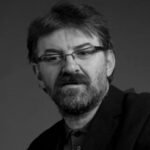
Žarko Paić
Žarko Paić is a Professor at the University of Zagreb, where he teaches courses in Aesthetics and Media Theory. He publishes frequently in philosophy, social sciences, and art theory. His publications include Theorizing Images, eds. with Krešimir Purgar (2016), and Technosphere Vol. 1-5 (2018-2019), White Holes and the Visualization of the Body, (2019), Neoliberalism, Oligarchy and Politics of the Event – At the Ege of Chaos (2020), Aesthetics and the Iconoclasm of Contemporary Art - Pictures Without a World (2021).