

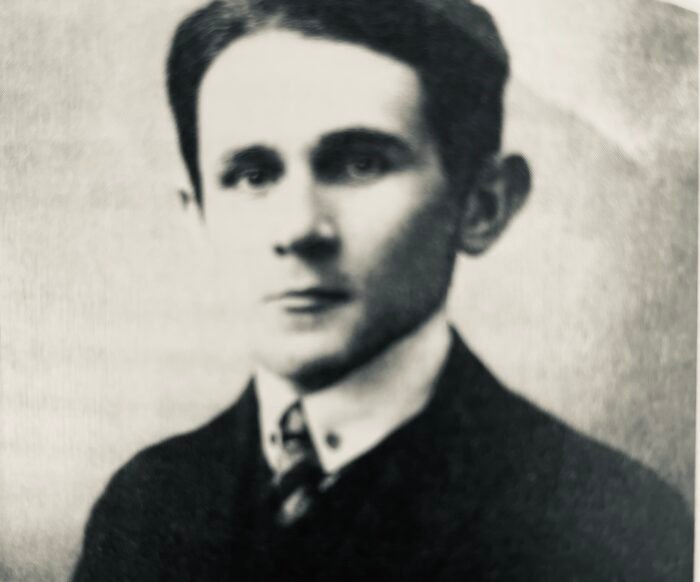
Bruno Schulz, or about the enchantment of reality
To Delimir Rešicki
Abstract
Without the mythicization of literature in its multitude of discursive forms, the world would remain painted in the false brilliance of reality. The mundaneness of the world derives from “cases” as “events”. Everything that Heidegger and Wittgenstein express about language in their greatest reaches of 20th-century philosophical thought, but in the footsteps of Nietzsche and the distinctive version of the neo-gnostic secret of creation, bears the pathos of Bruno Schulz’s literary alchemy. Schulz’s “canonization” as a world-class author of experimental prose happened in parallel to the establishment of Jorge Luis Borges as the master-mandarin of postmodernist literature. Despite the undeniable differences, the end of the 20th century brought awareness to the aestheticization of life itself in these literary figures. Schulz’s solution appropriates neo-baroque figures such as allegory, treatises, and pseudo-fiction. When we have this in mind, it becomes clear why Schulz chooses a peculiar strategy of bewitching and disillusioning “reality” through irony, grotesquerie, and obscenity.
Key words: inexpressibility, Schulz, postmodernist literature, allegory, irony, obscenity
1. Writing as an experiment in life: Words
Who writes, and what is writing? Whoever writes constantly asks questions about the meaning of writing. From this, it is obvious that writing cannot be understood without a relationship in which language and speech require what medieval theology called, albeit negatively, tertium non datur. Writing separates itself from speaking and language as a condition for the possibility of one’s writing by defying the temporality of speaking. In the material trace of a scratch on papyrus or pictorial information in a digital machine, there is a desire to interrupt “here” and “now”. Immortalization in a text like the Book makes writing a divine trace of the “eternal now” (nunc stans). This is why Derrida raised writing to the level of the problem of thinking in the era of the end of metaphysics. (Jacques Derrida, De la grammatologie, Minuit, Paris, 1967)
In writing that precedes speech as shadows preceded the light of the seen, the question of who writes goes beyond investigating what is written about. Who and what belongs to the relationship between “subject” and “thing”? Because someone and something are not separate entities. When someone thinks and speaks about something, what is believed determines the one who thinks by the very essence of thinking as such. The speaker is always separated from the one discussed when the difference between “subject” and “thing” is established. However, when the “thing” itself cannot be fully expressed because it is precisely what makes it possible to distinguish between who and what is being said, writing that leaves a mark immortalized in the text becomes an experiment of life itself. It makes the experience of stopping speech at the zero point of telling.
If language speaks, as the late Heidegger claims, writing derives from the difference between telling, showing, and expressing in the material trace of presence. Telling represents a collected opening of the worldliness of the world. Words are the light of Being. Without them, nothing is meaningful in the chain of events from the beginning to the end of all things. By showing, however, being is revealed in the presence-absence of Being. Time does not show its period shadows. It is a collection point for scattered cargo. All sorts of historical dramas unfold in that gathering place. Finally, expression refers to the connection between speech and writing. Whoever thinks that the former precedes the latter or vice versa is right. How is it possible that the truth belongs to both, and not to one or the other? The reason lies simply in the fact that truth appears only from the perspective of seeing. This is not a fall into the abyss of cognitive relativism.
By expressing something with words, it is exposed from its hiddenness. Because words are not credible enough to “describe” the image of what we see, and suppose we see nothing but shadows on cave walls, as in Plato’s allegory about the world of ideas and phenomena. In that case, this becomes proof that human thought relies on reflection, through which it reaches the knowledge of the absolute. Without reflection and a semblance of reality, there is no royal road to the truth of that reality itself. Writing, therefore, is written not because the language says what must be written down. On the contrary, the relationship between writing and speaking seems asymmetrical and non-reciprocal. In writing, it is about an event without known outcomes in advance. This might be true even when a writer, like a genetic engineer, has a clear plan for what will ultimately result from his “work”. Language expresses Being by talking about it. On the contrary, writing starts from the assumption that what will happen with the text falls into pure contingency. There is no guarantee that the writing will result in a finished work of a historical game on the verge of collapse.
Remember Mallarmé’s idea of the Book as an ideal text of a divine event, almost like the “necessity” of nothingness. The incomparable kingdom of the game flows from it. However, it’s unclear why that game is always new and why the rules don’t change. It should be the privilege of “great writers” to intuitively know this even before the words flowed like a dark river from an (un)known source. One who belonged to the exalted sect of scribes could almost demiurge free words from the compulsion of belonging to the so-called reality by enchanting his literature by weaving the world as a mystical image. In the fragment “Mythization of reality” from 1936, Bruno Schulz talks about the fallacies of realism in philosophy and literature. They are even more dangerous if they cling to the semblance of dogmatism of the scientific age, which greedily searches for the truth starting from the subject’s position of the construction of everything external. And although realism has not been given any special attention in cognitive theory since Kant, it cannot be denied that precisely in today’s era of the rule of the technosphere and the emergence of artificial life, realism has become, if not the ruling mantra in philosophy and art, then certainly a disastrous way of “demystifying reality”. Let’s see how Schulz writes it at the end of this, with the meaning of a pregnant fragment:
“Usually, we consider the word a shadow of reality, its reflection. It would be more correct to say the opposite: reality is the shadow of words. Philosophy is philology, a deep, creative research of words.” (Bruno Schulz, “Mythization of reality”, in: Republika mašte, Litteris, Zagreb, 2015, p. 4, 79. Translated from Polish by Dalibor Blažina
If, therefore, reality is nothing more than the “shadow of words”, we are faced with the aporia of the relationship between thinking, telling, and Being. By aporia, we mean the impossibility of a logical solution to a problem. When a thought sequence that does not correspond to reality is tried to be explained from its internal assumptions, it seems that the problem itself is called into question. What does that mean? As in the case of Zeno’s famous aporia about the impossibility of movement because the fast runner Achilles cannot catch up with the slow tortoise, so also in the case of writing about speech, the impossibility of logical-historical determination in terms of the primacy or condition of the possibility of one of the relata in the relation appears as a fundamental aporia of our time. Writing cannot be derived from speaking as a process of “assembling” words into a thought system if the initial one is not determined: where does speaking gain precedence over writing in the metaphysical tradition? Derrida’s answer represents the beginning of what can be called a cybernetic situation at the “end of history”.
For this reason, all conceptual-categorical associations of thought and reality are based on the outcome of metaphysics. The voice (phoné), as written, loses its privileged place in logically articulated speech. This is not the beginning of the victory of image over language, but rather the fact that, in the age of the technosphere, thinking machines such as computers cannot be understood in any other way than through the logic of number and image. There might be something much more important: the relationship between thought, body, and the worldliness of the world. Derrida says at the beginning Of Grammatology:
“Similarly, a biologist today talks about a letter and a program when discussing a living cell’s most elementary information processes. Ultimately, whether there are essential boundaries or not, any area covered by the cyber program will become the field of the letter. It is assumed that the theory of cybernetics can encompass all metaphysical concepts – up to those of the soul, life, values, choices, and memories – which until recently were used as a contrast between the machine and the human. At the same time, its historical-metaphysical affiliation is also disclosed, having to preserve the concept of letter, impression, gram or grapheme.” (Jacques Derrida, ibid., p. 19.)
In Western history, thinking has traces of myth from time immemorial. Hence, Schulz calls the process of mythicizing reality not only the language that speaks of Being as a mystery of existence. What belongs to mythic storytelling comes from the riddle of the initial as “the first”, the primordial (arché). The first poets-philosophers were also the first mythologists. The reason is that they use language to mark Being as it unfolds. Without myth, language would be a feverish raving of incoherence in states like those familiar to us from the frenzy experience. Therefore, the power of the original exponents of everyday speech in the world becomes immeasurable. It depends on them what the name, sign, and meaning of something will be. Moreover, the first poet-philosophers, such as Heraclitus and Parmenides, were active in the archaic period of Greek thought. Legislators of language and founders of history in the sense of precisely what Schulz sees as a question of philology ꟷ that is, their mission.
Therefore, the “creative research of words” has the characteristics of revealing nature (physis). From it all that is (beings) should be gathered into One (Being). What is being “researched” here has nothing to do with the central concept of modern science. Research is not an experience that requires methods of empirically proving how nature, in its essence, is revealed to the observer in the laboratory conditions of its consideration. On the contrary, research denotes the same as creating. But the difference is that the poet-philosophers take over their powers instead of the divine place in the world’s creation. Download means renaming and redirection. Being-in-the-shadow-of-reality is now being reversed. Because reality cannot be the beginning of thinking in the sense of a medieval formula adequatio rei ad intellectum, it should be the beginning of a long-term destabilization of metaphysics. The painstaking work of creative destruction continues in all its manifestations, from concepts and categories to images. Nothing is guaranteed more than “nature”. History is impossible without participating in the enchanting activity of language with all its means of creating a completely different reality.
Creative research must still be something of the third kind (tertium datur). No one can guarantee that with the certainty of an experienced sailor, he will find the longed-for land on the horizon in the middle of the open sea. If this “third” exists in some form of thought emanation of the primitive idea, it must somehow be sensed in the attempts of poetic-philosophical transmission. From German Romanticism and Novalis to modern times, as a sign of doubt about the possibilities of language, the idea of a simultaneous return to the primordial is developing as the coming period of the recurring event of difference. However, what is genuinely “new” lies in this uncanny relationship and in the combination of two “creative experiment” methods with language. The first way becomes the imaginative speech of finding without mediation, and the second might be the evidentiary process of the mind that comes to the truth about itself through the sciences.
First and last, within the closed circle of goal-purposive history, the concepts of the West’s failed eschatology were not erased. Be that as it may, even when starting from the impossibility of a beginning. Hence, an end in the circle of becoming is always about renaming and a different arrangement. Arranging things brings order to the metastability of chaos. When Schulz so clearly shows that philosophy as philology is no longer concerned with language in the sense of its reflection or imitation of reality, a redirection is at work towards an understanding of thought and writing outside the logic of the image as a display (mimesis) and representation (repraesentatio) of Being. We do not depict what is already always “is” this way or that way. We express and show what happens when words give reality a dimension beyond the monotony of an empty rut. Poets-philosophers are truly “creative explorers” of language. They are his governors. As experimental searchers for the sources of what melts from chaos into the golden age of the world, they open the door from the womb of the world to us. Regardless of all the transformations from the primeval to the vulgar reality of reproduction, with which language becomes a technical apparatus without meaning, a mere transmitter of the conditions of the possibility of communication, something fatefully inalienable remains. We still speak in an archaic manner. And this applies even when we use the technosphere’s symbolic code. We can’t escape it. Language discloses the embodiment of thought in all possibilities of design:
“The essence of reality is meaning. What does not make sense is not real for us. Each fragment of reality lives thanks to its participation in some universal meaning. The old cosmogonies expressed this with the sentence that there was a word in the beginning. What is not named does not exist for us. Naming something means to include it in some universal meaning. The isolated, mosaic word is an invention of later times, but rather the result of a technique. The primordial word revolved around the meaning of the world; it was a great universal whole. In today’s colloquial sense, the word is still only a fragment, a rudiment of some old comprehensive, integral mythology. That is why there is a desire for restoration, for regeneration, for replenishment in the fullness of meaning.” (Bruno Schulz, ibid., p. 77.)
How does the sense of “reality” come about? It is clear from Schulz’s fragment that words give the battle “its” meaning. Designing, however, cannot be reduced to the obsessive activity of language in developing literature from myth, poetry, drama, to novels. The independence of language from the event from which art obtains its place and time belongs to the period of technical destruction of language. Gone are the days when literature was more than a sign communication system. What happens when the technical system of information transmission destroys its ambiguity, and language’s structural multi-layeredness becomes clear when we see that, in the theory of (new) media, the pragmatics of meaning has been established as a leading theoretical approach. It only means that language is no longer superior to writing as its transcendental condition of possibility. Instead, the liberation of writing has the effect of establishing a no-man ‘s-land. On it, the signs do not derive from the meaning of the world, which only needs to be deciphered as the great “Book of Nature”.
What is happening now becomes an entirely new hermeneutic situation. Derrida was one of the first to warn about this in the canonical work of poststructuralism, Of Grammatology. The event of supplement/substitution (supplement) occurs in such a way that the supplement/replacement itself becomes an authentic “second nature”. Writing does not precede speech in the metaphysical sense of foundation. On the contrary, writing happens as a multi-meaning and multi-layered possibility of what is denied to speaking itself, because the voice is heard only in physical proximity and based on the rule of the metaphysics of presence (ousia). He who writes does not speak. Writing replaces language with what lies on the other side of the traditional distinction of cause and effect, goal and purpose. In other words, teleology with the idea of eternal and permanent “nature” (physis). After all, this is how Parmenides understood life in the pre-Socratic era of the Greeks.
The passage mentioned in Schulz’s fragment “Mythization of reality” is perfected by merging the world’s meaningfulness with the act’s mundaneness. It erases the difference between speaking and writing and gives language the demiurge power to create the world. What does not make sense lacks the attribute of reality. Indeed, what Schulz expresses resembles the radical position of the “subject” that hides behind the original act of “mythification”. Without a mythical beginning, which is the only beginning of the history of humanity as the history of letters, there should be no possibility not only of literature, but even more so of what is considered the beginning of the actual “spiritual history” of humanity. It is, of course, about philosophy. Although in the text of this fragment, which represents the peak of the poetics of the entire writing of Bruno Schulz, one can glimpse the undisguised origin of the Nietzschean perspective of thought, especially in the statement that philosophy is identical to philology due to the “creative research of words”, there is something truly archaic in the attempt to establish the relationship between myth, philosophy and literature lead to the stage of crystallization. (Grzegorz Kowal, “Die polnische avantgardistische Triade und ihr von Nietzsche hergeleitetes dichotomisches Welt- und Menschenbild”, in Marta Kopij and Woyciech Kunicki (eds.), Nietzsche und Schopenhauer: Rezeptionsphänomene der Wendezeiten , Leipziger Universitätsverlag, 2006, pp. 187-201.)
It is the realization that poetry, as the essence of art, does not come only from the depths of what is common to all three spiritual powers. It is found in the foundation of the language itself. It works like a mystical power, enchanting reality. In other words, there is no speaking without poetry, because the essence of language is found in praising the gods and talking about the world’s creation. The word enters the world just as Heidegger interprets Hölderlin’s dictum: “Full of merit, but poetically man lives on this earth” (dichterisch wohnet der Mensch auf dieser Erde). (Martin Heidegger, “dichterisch wohnet der Mensch…”, in: Vorträge und Aufsätze , Klett-Cotta, Stuttgart, 2009). 11th edition, pp. 181-198.)
If we etymologically break down the word poetry into its parts, we will get the primitive and the revealing simultaneously. What is one, and what is the other? The primordial condition has been achieved through the self-organization of chaos, and revelation creates a synthesis of both. Romanticism was the aesthetic program of that unity. The key role of poetry should not be attributed to the night of the soul. It is by no means a share of irrationalism and mystagogy. On the contrary, the soul demands the dignity of the mental order of things. But organizing this order is no longer “from above”, but “from below”. Poiesis, namely, denotes the dual establishment of the “new”. On the one hand, by producing the world in a meaningful collection of events, and on the other, by seasoning in the sense of the beginning of something independent in its gift to man.
The poetic principle denotes the creation that floats between the divine game of reproduction of the same and self-creation (generatio aequivoca). To that extent, through poetry, words become holy fire. By speaking, man defines himself as the highest possibility of life. Aristotle knew this well when he described man as a “thinking living being” (zōon logon echon). The mythical origin of poetry refers to the ability of words to reveal the riddle of battle in the labyrinth of life and to hide it from profanation. The sacred and the secular touch each other. But they also exclude. Moreover, the word’s origin in the poetic sense is the revival of sacred as a place from which one approaches the divine. Almost in the same spirit as the Heideggerian interpretation of Hölderlin’s verse about the essence of man from the poetic mode of the battle “on this earth” in the “manifesto” of Bruno Schulz, the echo of the primordial relationship of myth, philosophy, and literature echoes. What they have in common is nothing but poetry as a word and as a story carved into the marble of history:
“In a poem, the word somehow remembers its original meaning, spontaneously blossoms and develops according to its laws, and renews its integrity. That’s why all poetry is mythologizing; it tends to fulfill myths about the world. The mythicization of the world is not complete. This process is only slowed down by the development of knowledge, pushed into the backwater, where it lives, not realizing its true meaning.” (Bruno Schulz, ibid., p. 78.)
How can we understand the saying that “the mythicization of the world is not complete”? Does Schulz oppose the cosmogonies of the archaic era and the religious traditions of Judaism and Christianity, according to which the creator, after creating “this” world, obtains an image of his perfection through creation? Yes, and no. Yes, because it speaks in favor of self-creation, from which the idea of the infinity of becoming “new” emerges. Not because the relationship between God and man is, in a more profound sense, a relationship between the ungrounded and the grounded before metaphysics. What has been created continues to be created further, taking over the alchemical art of making “new”. Suppose we remember the idea of his reflective prose/novel, The Cinnamon Shops, and the neo-gnostic heresiarch who praises the beauty of form with the most significant aesthetic reach. In that case, it will immediately become clear to us that something truly “subversive” is needed to understand the idea of literature. (Bruno Schulz, Dućani cimetne boje, Litteris, Zagreb, 2005. Translated from Polish by Dalibor Blažina)
Writing cannot be an imitation of the world as it always is. When he writes, the writer does not paint what has already been created in the painter’s “realistic” manner. After all, the painter would be all the worse if he tried more faithfully to portray the so-called decor of the outside world. Writing, on the other hand, presupposes an act of contingent openness to the world. Nothing is finalized yet. Moreover, without the mythicization of literature in its multitude of discursive forms, the world would remain painted with the colors of the false brilliance of reality. The mundaneness of the world derives from “cases” as “events”. Everything that Heidegger and Wittgenstein express about language in their greatest reaches of 20th-century philosophical thought, but in the footsteps of Nietzsche and the distinctive version of the neo-gnostic secret of creation, bears the pathos of Bruno Schulz’s literary alchemy.
Writing means mentally trembling in the inexpressible suffering/joy of creation. Everything is subordinated to the act of this anxious freedom. Every moment of floating above things tends to pass into a petrified state of “another life”. Therefore, it seems unsurprising that only (recorded) history is the ruling norm of historicity. Everything else is devoid of credibility. But even more, something that comes from writing as such. It is the alchemical skill through which the order of power passes from a symbolic function to the legalization of “truth”.
If the world, as meaningful openness to Being, cannot be even remotely finished work, what else is left? Nothing but the credible creation of the “new” from what is already always “new” ꟷ from a creative experiment with words like “another life”. Without it, this “first and initial” life would have no meaning. Admittedly, it is possible to imagine life without writing. The future is on its way in the form of techno-scientific visualization. But writing comes from the very metaphysical source of a creative game that unites man’s spirit, soul, and body. Only in this respect is solitude a condition for the possibility of freedom. When he writes, man establishes his existence in uncertainty about what will come. If man is an animal that writes, then writing becomes an existential rejection of openness, for which Blaise Pascal probably found the most impressive words of justification: Man is but a reed, the most feeble thing in nature, but he is a thinking reed.
For Schulz, poetry represents the recreation of the world. This demiurge act is not created from nothing (creatio ex nihilo). For poetry to become the birth mother of history understood from the cosmogony of words, the celebration of speech must be freed from the incidentals of everyday life. How does that happen? The word is the event of the embodiment of life in an exceptional moment. Throughout the history of philosophy, the concept of exceptionality as a flash of the moment has crystallized from Plato to Heidegger as a puzzle over what possesses the highest level of “reality,” precisely because it eludes thematization. This should be understood in connection with kairos and apocalypse. (Koral Ward, Augenblick: The Concept of the “Decisive Moment” in 19th-and 20th Century Western Philosophy, Ashgate, Hampshire, 2008)
The fortunes and revelations of Being unfold in a flash. What is suddenly seen is an intuitive knowledge of the world. Its essence lies in the immediacy of insight. Whoever has seen what is happening “here” and “now” at one moment has seen everything that will happen. That is why the possibilities given to poetry are much more than the usual understanding of poetry as the singing of the gods and incidents in nature and human life. From the poetic fire, the messianic ardor of history flares up. But simultaneously, the doom of all profane ordinariness is looming. The ancient people knew this well. In the mythical age, in their cults and rituals, they celebrated the event of joint sacrifice to the gods with mystical words of consecration. It wasn’t just a word. In the pre-Socratic era of the Greeks, the Eleusinian Mysteries testified to the significance of that which came from the already existing secret. Bruno Schulz, therefore, rightly says:
“The process of designing the world is closely connected with words. Speech is man’s metaphysical organ.” (Bruno Schulz, “Mythization of reality”, in Repubika mašte, p. 79.
The poetic enchantment of the world corresponds to the religious mystery of the divine. However, Schulz’s fragment about the “metaphysical organ” inherent in the essence of the word cannot be merely about the transfer of thoughts into human communication. What seems a puzzle here is the fundamental question of metaphysics in general. Namely, how does the event of the emergence of a being from the battle, which we traditionally call the emergence or birth of the “new”, occur? To even reach the state in which a Being appears suitable for naming, which means that it is present in time in a way of permanence, the word must become from a mere means of thinking to a sublime way of saying. To that extent, Schulz’s metaphor about the “metaphysical organ” is not entirely appropriate. The body serves and functions only within the framework of the system. For example, the heart functions as an autonomous organ only because it makes a part of the cardiovascular system.
If, on the other hand, we talk symbolically, the heart is called the “metaphysical organ” of feelings, sensibility, and synesthetic. When something is an organ, it is only because it is located within a system in terms of the organization of physicality. When talking about an organization, it reflects an opinion about the integrity of the whole. However, the whole cannot be superior to the parts, nor are the parts so independent that they can function on their own. Thus, Schulz’s metaphor about the essence of words can only be understood from the second level of reading this fragment. The word is also a “non-metaphysical organ”. The reason is that its autonomy is impossible without reference to the entirety of all organs materially derived from speech. The poetic word belongs to the holy and divine event, and the metaphysical credo isto reassemble what has been unfolded, to collect what has been scattered, to preserve what is lost, to open what is closed, and to bring to light what is obscured. Does the same apply to words like grapfé in the text when we talk about writing?
In the story “The Republic of Dreams,” Bruno Schulz finally comes to an essential distinction between speech and text. While speaking expresses the singularity of events in which words disappear like music into nothingness, writing presupposes an awareness of the framework in which the work is immortalized in time. Socrates did not write. Speaking in the Athenian squares was more important than writing down what was said. Living philosophizing and singing go beyond the tendency to petrify in a text that repeats itself in its iterability. However, what in the living cannot be separated from the desire for immortality is exactly what Plato in the Phaedo (81a)established as an essential feature of all philosophy: melete thanatou (the art of facing death). (Plato, Phaidon, Reclam, Stuttgart, 1994) Without this, one cannot understand why there is such a preoccupation with the work in the history of Western metaphysics. What remains of living philosophizing and singing is not a work in its completion. On the contrary, the real art and secret of writing is to reach the passage between the abyss that separates the work from the event, the eternal from the exceptional moment, the constant from the changeable. For this reason, Schulz expresses what happens to a man-writer when he reaches the goal of any artistic activity:
“Human works have the characteristic that, when finished, they close in on themselves, separate from nature, stabilize on their principles. (…) … because we are all dreamers by nature, brothers under the sign of the mason’s trowel, builders by nature of things…”(Bruno Schulz, Republika mašte, p. 42.)
For work to have the possibility of opening new worlds, which is the fundamental aporia of writing in general, it must be closed in its inexpressibility. The more interpretations of the openness of the text, the more wandering in the dark without a way out. One lives and dies with the text. He is not interpreted but opens himself up in a multi-layered mysticism without end. This is not just about separating the work from its creator, whether art, philosophy, or craftsmanship. The work lives by itself. As it happens throughout history, when we no longer know, nor does it matter to us at all, who built a fountain in the square, shaped the structure of modern Paris, or, on the other hand, designed Swiss watches according to the model of luxurious minimalism. Work must be separated from action as a child is separated from its mother to continue a life filled with freedom of decision, regardless of the sufferings that result from it. At the same time, the difference and commonality of work and action are in the aspiration of the one who works to create a work that reaches the end without returning to the primordial state of the beginning.
That is why the work of art denotes the perfect absence of the author. Only the presence of his aura, which was embodied in the breathing of the indescribable, in complete silence and solitude. If every man is an artist in statu nascendi, then writing is more than the art of putting words together. It spans the period when Schulz ravishingly poeticizes reality. Thus, he gives her what she does not have, but what she can have only thanks to the words in the text. Reality is haunted; life, on the other hand, means movement in a circle of the same repetitions we call differences. But what about writing? Does writing have a “second life” that cannot be summed up in the completion of the work, but longs to cross the fatal border between work and action, event and happening, one-off and repetition? If Schulz sees the essence of humans in dreaming and construction, then its metaphysical adventure boils down to the poeticization of reality or, more precisely, to its mythologizing.
That so monstrous “human nature” for which neo-Gnostics try to find parables that would correspond to the reason why the “cruel god of creation”, implanting evil in the historical drama of “progress” and “development”, finds its destiny in dreams and construction, no matter how much it is denied in the age of technical idolatry of machines. No one can escape it. Everyone scribbles something, writes something down, builds something, strives to immortalize themselves in the throes of immortal work, to redeem their moral defeats by aesthetic elevation above the blight of everyday life. But why all that and why write at all?
2. “Iron capital of the spirit”: Images
In 20th-century literature, we witness the rebellion of the edge against the center. This applies equally to socio-geographical and cultural-political transformations of the meaning order of modernity in Europe. The avant-garde was a process of radical displacement of the relationship between the center and the edges. It is worth recalling the concepts with which she began to establish historical metaphysics, from destruction, movement, mass, irony, frenzy, cry, and infantility to chaos, objectlessness, and indeterminacy. In the poeticized language of Bruno Schulz, however, these echoes of the historical avant-garde cannot be unambiguously accepted. But not to be rejected entirely. What connects him to the method of establishing metaphysics, as well as his friend, who holds opposite views on the way of understanding literature in general, the Polish stateless Witold Gombrowicz, is the fragmentary experience of language as the crystallization of dreams. In his 1937 review of Gombrowicz’s novel Ferdydurke, Schulz expresses his admiration for the “revolutionary form and method” primarily because he sees the overthrow of the discursive order of ruling opinion in every aspect of the novel. (Bruno Schulz, ibid., p. 108)
“We were obsessed with experimenting with a certain explosive material, called Form. But it was not a form in the ordinary sense – it was about ‘creating form’, its ‘production’ and ‘creation through the creation of form’. (…) Both of us were completely alone in front of Form. That monk without God…and me, with my proud humanity, which was really ‘only in itself’, supported by nothing, a kind of categorical imperative that roared into the void: be yourself!” – Witold Gombrowicz, Posthumna autobiografija, Fraktura, Zaprešić, 2014, p. 86. Translated from Polish by Mladen Martić.)
We will not explore the differences between the two forms and methods, such as those introduced into world literature by Gombrowicz and Schulz. However, what is most puzzling in Schulz’s case stems from the “mythologizing of reality” as an image. When writing cannot be justified as an excuse for the despair of existence, although it is one of the legitimate solutions in the sense of a substitute for life that slips away in its contingency before the beauty of stopping in the text, as Blanchot best demonstrated in his interpretation of Kafka, then the primordial appears on the scene as a means of enchantment. It is about the mythical power of images.
It is easy to say that in the case of Schulz, writing is determined by the split between language and image because he was also a painter, a draftsman, especially of motifs on the edge of the obscene and melancholy. One cannot leave out the obsession with masochism in an ecstatic-spiritual sense of giving oneself to the Other. (Ariko Kato, “The Early Graphic Works of Bruno Schulz and Sacher-Masoch’s Venus in Furs: Schulz as a Modernist”, in Dieter de Bruyn and Kris Van Heuckelom (eds.), (Un)Masking Bruno Schulz: New Combinations, Further Fragmentations, Ultimate Reintegrations. Editions Rodopi BV, Amsterdam-New York, 2009, pp. 219-249.) However, it is more difficult to explain why his understanding of writing is so simultaneously contemporary and at the same time archaic in the perverse sense of the work as the share of a pseudo-Creator. Perhaps the testimony about the role of the body and physicality in his literature is sufficient for this aporia. Namely, in his prose, essays, letters, fragments, and paintings, the body does not appear as a Platonic idea in the niche of embodiment.
The essence of physicality, on the contrary, presupposes an insight into the essence of pleasure as pain by which the secret of creation is reached. What is created suffers from the impossibility of reaching Being. Without the last kiss of nothingness, there is no desired synthesis. Finitude and death do not conflict with the world’s spiritual perfection. Like the neo-Gnostic secret of creation, so too is the ecstatic dimension of the body on the edge between two equally pseudo-characters: one is the corrupt substance of worldliness, and the other is the mirror of the Creator who takes upon himself the colors of decay and the aesthetic semblance of real life. Gombrowicz was therefore right to portray Schulz’s entire struggle with the demons and angels of the writing/painting battle as a conflict between masochism, as a prison of art, and creation, as an experiment with form. “He longed to weaken both matter and spirit”, Gombrowicz will say about his friend, this “false ascetic, sensuous saint, promiscuous monk, nihilistic achiever”. (Witold Gombrowicz, ibid, p. 83)
However, perhaps the most credible of all the paradoxical characters of this creative hubris is the one who praises the Book and writing in homage to art. No one seemed to be as devoted to the construction and deconstruction of form as Bruno Schulz. This is why his understanding of language and image seems essential to grasping modernity, which should be reduced to a game of experiment and form in the age of the technosphere’s rule. Moreover, it can be said without exaggeration that in his work, obsessively, almost in an irreducible game of opposition with the help of taking over what Kafka’s mission was, the world is seen in the perverse form of the obscene trick of the demiurge.
Man bows to him in holy mockery by imitating him in writing. A typical fallacy of our time has again found a worthy critic here. Nothing can be more real than the obsession with reality. Realism is to the theory of writing what photography is to painting – proof of the illusion of originality. There is no longer any refuge for this denied difference if art, as best defined by Walter Benjamin, in the age of technical reproduction, leans towards melancholy for the loss of aura. (Walter Benjamin, Das Kunstwerk im Zeitalter seiner technischen Reproduzierbarkeit , Suhrkamp, Frankfurt/M., 1996) That is why Schulz’s idea of books and literature in the age of unfinished mythologizing of reality represents a path to a simulacrum with no return.
“Once my father, seeing me calmer, cautiously approached me and spoke in a tone of gentle suggestion: – Basically, there are only books. The book is a myth that we believe in when we are young, but over the years, we stop taking it seriously. – Even then, I had a different opinion; I knew that the Book was a postulate, that it was a task.” – Bruno Schulz, Sanatorij pod klepsidrom, Litteris, Zagreb, 2007, p. 11. Translated from Polish by Dalibor Blažina)
The circle is closed. It’s just that the signs that indicate the circularity of the circle have lost any other symbolic value except the beauty of the sign. From it flows the aesthetic magic of sublime creation with the brightest star of illusion and redemption ꟷ metaphor. But why are the images so monstrous and fascinating that they store in themselves the spiritual experience of what is called the proto-form, and in Jung’s psychology, the archetype of the collective unconscious? Schulz answered this question in a letter to his friend and avant-garde Polish writer Stanislaw Ignacy Witkiewicz on April 12, 1934. Trying to decipher what is shrouded in the fog of the unconscious, this semblance of a fusion of sensibility and living in childhood dreams speaks of the carriage and the horse as a fantasy about the journey of souls through a dreamy field of obsessions. Living life means nothing but the experience of traveling, as leaving and returning, stopping and moving in an undetermined direction:
“I don’t know how, in childhood, we arrive at certain images with decisive meaning. These images play the role of those threads in the solution around which the meaning of the world crystallizes for us. In my mind, these images also include the image of a child being carried by his father through the space of the deep night, while he talks to the darkness.” (Bruno Schulz, Republika mašte, pp. 178-179)
There is a truly hybrid image in avant-garde art. It owes its origin, like everything else, when creating new things and experiments, precisely to the idea of romance. It is about the image of an enchanted child in the space of a fairy tale and the time of the eternal present. Benjamin refers to that time in German as Jetztzeit. To live in the presence of “here” and “now” without the attack of infinity means to reach the fullness of time. Each moment of that experience accumulates in a series of subsequent moments. That’s why the child is not just a counterpoint to the seriousness of modern society, which separates itself from life by escaping into the technical myths of the coming future. On the contrary, the image of a child is a monstrous field of experience of what was initial (arché) and what was lost in the monotonous repetition of “progress” and “development”. Hence, childhood is pictorially unrepresentable and, in the modern era, unrepresentable without the return response of reflection. Only retrospection creates the possibility of returning to the chaos of events. Hegel determined the end of history with the arrival of the spirit to the stage of the absolute, which looks back on lived events as a vast “catalog of pictures”.
Childhood is not talked about in any other way than by remembering what happened. From Proust to Schulz, we can trace the attempt to give the eternally present the power to stop in time. With the help of words and books as a counterweight to the invention of photography, things take on the colors and smells of eternity. Talking about childhood and memory is recording feelings without intention other than trying to reach that moment of initiation. The moment becomes crucial for everything that will happen later in a person’s life in the community with Others. Words that revive childhood memories in Schulz are like constellations. In layered sets of experiences of twisted reality, they have a blinding brilliance. Nothing that happened was missing. Everything is brought to life in a mythicized reality. Since it bears traces of cosmic perversion, its drama is multiplied endlessly.
If childhood and the child possess the pictorial dimension of the protoform as an archetype, then this is only possible in memory without memory. How do I understand that? No other way than by establishing the difference between the unconscious and rationalization. What brings them together is reflexive language. The unconscious is expressed by metaphor; the one rationalized, on the other hand, by the postulates of the metaphysics of the mind. Mediation occurs so that the memory flow cannot reach the machine that remembers the past. The reason is that it is already interpreted in advance based on the “cold memory” archive. Schulz, therefore, cannot rely on historical documents. For him, only the experience of reality in the freedom of synesthetic experience is a credible medium of literature as a task. It’s not a phantasm without cover. Just as the idea of a Book in the simulacrum of a multitude of (other) books represents a condition for the possibility of any history of falsification of the original, so the postulate or task of writing is to open the possibilities of “regression” as “reciprocal memory”.
In a letter to Andrzej Plésniewicz on March 4, 1936, he refers to an attempt to return to what he calls the re-attainment of childhood through the revival of the “age of genius” and “messianic times”. (Bruno Schulz, ibid., p. 193) The memory of the event forms the experience of the image; on the contrary, memory requires a suspended order of language at the highest level of discursive power. If there is a touch of Jewish eschatology at work here, it must be in the doctrine of the messianic experience of time. We find it carefully executed in Benjamin’s theory of constellations of time with the corresponding power of phantasmagoria and aura in the age of technical reproducibility. However, in the case of Schulz, it is enough to see the similarities and differences with Kafka and his understanding of writing to show why any possibility of a utopian world is eliminated in The Cinnamon Shops and Sanatorium Under the Sign of the Hourglass. Time passes in the game of kairos and apocalypse. Schulz explained his obsession with beauty as a fetish of enchanted objectivity from which there is no way out because art excludes action according to the principle of projecting the future with masochism from an aesthetic motive.
Work, therefore, is always open to interpretation because it is essentially closed as a form. The pictorial non-imitation of the outside world gives it an advantage over the classic storytelling method. Indeed, his prose does not say “about” anything, even when it refers symbolically to the autobiographical background of provincial life. Experimental prose is as much a poetic parody of the realistic form of “life” as it is seductive in its stylistic beauty, with a metaphor without an object. The words that break free from attachment to things dance over the abyss. They do it spontaneously in the balance between heaven and earth. The neo-Gnostic secret of creation is doubled in fragments that parody the Talmud-like scholarly discussion, Spinoza’s Ethics, and critical reckoning with the language of technical nihilism. Writing doesn’t free us from anything. It is an experiment in life that serves almost therapeutically so that a person does not end up in a big car of depression, left at the mercy of the empty homogeneity of duration. If, instead of frenzy, Kafka resorted to vowing to burn the manuscript, in complete reliance on the word of his friend Max Brod, for Schulz, the vowed field of words is identical to the trace of the image. In between, there is nothing but a deep void.
“Such images represent a program, legitimizing the iron capital of the spirit, which was given to us very early in the form of premonitions and half-conscious experiences. It seems to me that the rest of our lives are spent interpreting these introspections, breaking them down into the whole of the content we accept, and carrying them through the full range of our intellect. For artists, these early paintings mark the boundaries of their creativity. Their creativity is a deduction from ready-made assumptions. After that, they discover nothing new; they only learn to understand the secret entrusted to them better. Their creativity is a continuous exegesis, a commentary on a single verse given to them. After all, art does not fully solve this mystery. It remains unsolved.” (Bruno Schulz, ibid., p. 179.)
What means the “iron capital of the spirit” in which the surplus value of language is accumulated? Undoubtedly, Schulz starts from the assumption that the pictorial experience of battle is the protoform of storytelling. The inexpressible in language itself is the chaotic magma of pictoriality as a condition for the possibility of reflecting life through rationalization. Images are therefore a “program” as in cybernetics, as we have already heard in Derrida’s critique of the voice with which the logocentrism of Western history begins. However, this “program” must be constantly reprogrammed. Otherwise, it remains ineffective in new epochal situations. Avant-garde represents one such program. Moreover, it can be understood by de/reprogramming reality as a construction that starts from the power of thought in its two modes of expression: (a) performative and (b) conceptual.
Language is encoded bodily as pure gesture on the stage of life itself, which is why thinking is a performative act. On the other hand, the painting is conceptually freed from its pictoriality and replaced by a pure idea in the form of a technosphere. What Schulz sees as unresolved in the mystery of creation is the relationship between the archaic and the contemporary, the beginning and the end. If this is also true for his painting, which he confirms in the same letter, then we are tempted to open the question of the difference between language and painting in an even more radical way. What, namely, if this difference that comes from the archetype according to which there is necessarily the primordial as original and the substitute as reproductive, simulating, derived no longer exists at all, or, in other words, is no longer decisive for the future of writing/painting?
Schulz was aware that the reception of his writing idea was full of unfulfilled expectations. And that is precisely why, in reading, not writing, the pleasure is greater than the pain that arises when the writer takes on the task or postulate of literature beyond the disappointment in the power of words. The joy of reading comes from completing the work, even though it may be incomplete in intention. Moreover, the incompleteness characterizes the idea of an open work, as Umberto Eco interpreted it in his work on Joyce, Mallarmé, and Cage. It’s not about work, but about the process of creation. For this reason, the movement appears more important than the outcome within the given framework of goal-purpose metaphysics (télos).
Interestingly, Schulz’s “canonization” as a world-class author of experimental prose happened in parallel to the establishment of Jorge Luis Borges as the master-mandarin of postmodernist literature. Despite the undeniable differences, the end of the 20th century brought awareness to the aestheticization of life itself in these literary figures. The persistent struggle against attempts to restore “realism” whenever the text needs an “excess of reality” obviously takes two different yet paradoxically related paths. In both cases, art constructs life, giving it meaning even at the cost of reading the aesthetic luxury through the hermetic grids of style on the edge of poetry and philosophy, as in Schulz, or by turning the world into a mannerist text game like a game of chess according to predetermined rules, as in Borges.
Speaking about the composition, structure, and conceptual framework of The Cinnamon Shops,Schulz highlighted his role model, Thomas Mann‘s Jacob’s Tales. However, his idea was less historical-analogical and more situated in that “private mythology” that allows things to be seen from the position of a disembodied subject. It is all part of a universal, incomplete whole. What happens in the circle of repetition of “destiny” written in the protoform and archetypes is that the common battle goes beyond the individuality and singularity of events. Unlike Kafka, who writes in German in the environment of the Prague Hasidic community, the Jewish “fate” is brought to the extreme boiling point in the case of Schulz. The suffering of the people throughout the history of exile culminates in the Nazi extermination program in Auschwitz. It is known that Bruno Schulz was killed in the Drohobych ghetto in 1942. It happened just before the great genocide that would follow in the whole of Poland. The way he was shot is even more monstrous. On the street, like a dog, on a whim, without warning, about the Nazis’ retaliation against the local Jews. The art of dying, which Socrates and the Stoics thought of as the meaning of the philosophical path with which the human soul ends the embodied life of passion and suffering, happiness and joy, can no longer be described either in language or in a picture. It becomes even superfluous to mention the murderer in the name of the “higher goals” of destroying the Jews in Europe.
What seems to be the only important thing here is hidden in Schulz’s annulment of the simulation and imitation of reality in relation to the power of the protoform in the figure of the pseudo-Creator. Let’s leave the chapters or inserted tracts on “Mannequin Theory” within the structure of the Cinnamon Shops and the “crocodile street” metaphor. Because the path will not lead us towards “nostalgia for the absolute” (Georg Steiner). Instead, it seems that with Schulz, literature takes on the contours of the path between philosophy and art in a truly peculiar way. It is not a prose evocation of childhood as protection from falling into the abyss of “reality” driven by the goals and purposes of profane existence. At best, we face the challenge of floating and flowing forms. They are more fluid if they are closed in “private mythology” with its lavish wealth of “private language”.
Why, then, is the question of the image as a “program” of a perverse, grotesque, obscene conspiracy of heresiarchs covered by the theory of “secondary demiurgy” with which the world becomes a mythic space to produce “false goods” as a new “unique”? Everything that happens in Schulz’s phantasmagorical world is nothing but a perversion of theology itself, to use Pierre Klossowski’s expression in interpreting the riddle of Nietzsche’s statement about the eternal recurrence of the same. (Pierre Klossowski, Nietzsche et le cercle viceux, Mercure de France, Paris, 1969) Understanding the concept of “perversion” presupposes a departure from theological and moral-ethical passion in the field of language practice. It is about twisting the symbolic power of language. This marks the beginning of the upheaval of metaphysics. What had the legitimate authority of the beginning collapses like a house of cards by becoming Other. Instead of the original, a copy now takes its place.
However, the order of the categories did not remain unchanged. In philosophy, from Fichte through Sartre to Derrida and Deleuze, this operation is known as “immanent transcendence”. It is impossible to avoid parallels between Schulz’s grotesque in the narrative process and the emergence of the most significant concept of contemporary art. It is, of course, about Duchamp’s ready-mades. Instead of an art object that still had its “aura” in high modernism, with the cult of the work’s autonomy, everything changes radically with the introduction of the concept of the aesthetic object. Then the very concept of art becomes questionable. Because we no longer produce works of art of timeless beauty. Everything now boils down to the staging of events from the aesthetic creation of the world.
In Schulz’s avant-garde process of creating an experimental form, the same thing is at work as in Walter Benjamin’s philosophical-historical genealogy of modern capitalism, especially in the attempt to enchant-disillusion reality as a “dialectical/thought image” (Denkbild). Things from the material environment of industrial production are not just useful objects that replace the unique, unrepeatable beauty of art’s auratic nature. These are things with a soul; the truth is that they have already been significantly changed because they were created by the “part of a sinful creator” as a simulacrum of the primal idea. Schulz’s medium of narration is, as we have already said, a hybrid language of prose and philosophy. What gives him the aesthetic power of seduction emerges as primarily the poeticization of life. This is expressed in all areas of creativity.
Language creates the world. This is why it possesses the philosophical power of reflection on the act of creation. In contrast, the painting shows the work’s greatness and nothingness. The transition from the logic of language to the semiotics of the image, which, for Schulz, portrays this seductive, “model-like” and “crocodile-like” pavilion of shadows and appearances, becomes the final process of the de-substantializing of life. Everything seems affected by this destructive-creative process, and even the fact that art can now preserve traces of truth only if it takes on the character of a charlatan and mocker, if it completely loses itself in reviving the image of the world instead of expressing what is already always this way and that. The secret of the “second creation” is that it represents an experiment of life as the reproductive power of aesthetic appearance. However, there remains something Platonic, indestructible in that pseudo-world, pure form. That is why Schulz’s literature denotes, from beginning to end, a performative-conceptual event of mythologizing life. Away from the center, in its drama of existence, writing serves no one and nothing. Except that nothing makes sense without it.
We would make a mistake in interpreting Schulz’s image theory if we understood it from what is today called an iconic turn in visual studies and image science. It cannot be unequivocally claimed that his painting is separate from literature. On the contrary, the picture is saturated with the world’s poeticization. A draftsman and illustrator, an unsuspecting painter who failed to complete his study of fine arts in Vienna, sees words as archetypal images. That is why his imagery in writing derives from a metaphysical faith in the words. The book precedes the painting because the iconoclastic Law lies in the middle. With it, the Jews establish their destiny as the primordial people of the book. (Karen Underhill, “Ecstasy and Heresy: Martin Buber, Bruno Schulz, and Jewish Modernity”, in: Dieter de Bruyn and Kris Van Heuckelom (eds.), (Un)Masking Bruno Schulz: New Combinations, Further Fragmentations, Ultimate Reintegrations, Editions Rodopi BV, Amsterdam-New York, 2009, p. 27-47)
However, Schulz’s “private mythology,” with the perverse background of the world, in the mode of being engrossed in matter and the aesthetic appearance of abundance, starts from the assumption that even the word as such is not autonomous. What gives the word ontological priority over the image is only a conditional advantage. Because the problem arises from the fact that the condition for the possibility of words appearing in the medium of language is speaking. It is simultaneously speaking “about” the world and pointing “to” the world.
The first describes what always exists, and the second should be about a creative experiment. Myths are by no means descriptions of the state of Being. The magical power of legitimizing the rule of thought in history begins with the beginning of the event of the world changing from a state to a constellation of becoming. In this sense, myth could be considered the true beginning of all history. In one place of the fragment “Mythification of reality”, Schulz therefore states that the image is “a derivative of a primordial word, a word that was not yet a sign, but a myth, a story, a meaning.” (Bruno Schulz, Republika mašte, p. 79)
The time when words breathe soul into things is long gone. Nevertheless, the alchemy of creativity by which the images of the world’s original experiences pass through the niches of childhood in anticipation of the “messianic times” does not put faith in the word for the sake of the word itself. If that were so, then Schulz’s literature would remain at the level of an ornament for a picture without a frame of reality. The effect of her program is quite the opposite. It gives beauty to reality by pushing all the darkness into the unconscious, unspeakable regions. The place from which the image acquires its ontological perversion is emptiness. But this emptiness is emptied of any meaning. Obscenity is not in the figures’ nudity in the inverted mirror of reality. It hides in the need for the fetishism of the sign that “cinnamon shops” imprints on the body signs of pleasure and damnation.
Analysis of the early-period painting in Bruno Schulz’s so-called “Book of Idolatry,” which he illustrated, reveals a penchant for the bizarre and grotesque. (Kris Van Heuckel, “Artistic Crossover in Polish Modernism. The Case of Bruno Schulz’s (The Idolatrous Booke)”, Image & Narrative: Online Magazine of the Visual Narrative, no. 15/2006. (November) http://www.imageandnarrative.be/inarchive/iconoclasm/heuckelom.htm)Regardless of what he writes about, Schulz always depicts something that is not there or that which is not there appears like a scene in a darkened pavilion: a sad dog in the arms of an almost aged boy, naked girls walking in the streets, cobalt days illuminated now when the light disappears… In the temptation of poeticizing reality, it retreats before words that cease to have stable meanings. Thus, they become more than a picture. Where the image ends, language does not reach. Instead, everything is open to finally abandoning any “realism”. In a letter to Anna Plockier on June 19, 1941, Schulz wrote:
“It seems to me that realism, as a tendency that exclusively copies reality, is a fiction. There has never been anything like it. Realism has become the specter and scarecrow of non-realists, the true Satan of the Middle Ages, painted on every wall in bright colors. To define realism, I propose to use a completely negative term: it is a method that tries to place its meaning within the framework of certain conventions, that chooses not to break certain conventions that we call reality, common sense, or probability.” (Bruno Schulz, ibid., pp. 207-208.)
The image evokes physicality from an inverted perspective. It is known that the painting of German Expressionism in the 1920s was focused on precisely this gap between telling and showing a grotesque picture of the world. However, in the poeticization or mythification of reality, as Schulz undertakes, the socio-critical meanings of the drawings are excluded. The fundamental feature of expressionism was the reduction of the figure-in-picture to elementary emotions: fear, anxiety, apprehension, pleasure, and pain. Like a scattered load, the decomposition of the image of elementary gestures is directed against the source of social injustice. This is far from politicized art. Motifs of death and decay are mixed with orgiastic festivities. What we see in Schulz’s drawings is reflected in his reflective prose. The encounter with the “eternal feminine” in the painted figures simultaneously means confronting one’s rapture towards fetishism. It seems that Freud’s theory would be insufficiently adequate here. After all, Schulz was familiar with the basics of psychoanalysis.
It is no substitute for the inorganic object of desire. Instead, the aspiration for a pure form of obscenity prevails shoes, the nudity of the female body in erotic underwear, the phantasmagoria of faces in sleepwalking through the labyrinth of the city. The pen is a fetish, chalk and ink for drawing, all that shapes the work of art as a creation of the “secondary demiurge”. Writing means approaching the death of the organic now, of moving away from the work. Unlike Kafka and the figure of the “cruel father”, in Schulz, the figure of the father is shown to be a fantastic and grotesque heresiarch who does not torture his son with unreasonable guilt. His artistic mission becomes more important than ethical controversies.
The price of aestheticism is paid by the lack of precisely what this writing so passionately renounces. Indifference to reality ultimately ends in the inability to breathe the weight of infinite justice into the experiment of life. In an age without “messianic times”, writing therefore has the task of being a “postulate” of a completely different reality from this cruel dystopia that constantly demands new heroes and victims in tribute to techno-genetic nothingness. What is the meaning of literature and writing? Nothing but passing between the demands of the obscure ideology of realism and the politics of unconditional justice. It is paradoxical that in this, Schulz is the least “Jewish” of all avant-garde thinkers and writers of the 20th century:
“But art operates in a pre-moral depth, at the point where value is only in statu nascendi. Art as a spontaneous expression of life sets tasks for ethics, not vice versa. It would be unnecessary if art were only to confirm what is already defined. Its role is to serve as a probe we lower into the nameless. An artist is an apparatus that registers processes in the depth of consciousness where value is created.” (Bruno Schulz, ibid., p. 181-182)
3. The evil copycat and his kingdom
In an interesting interpretation of the “aesthetics of melancholia” in the writings of Bruno Schulz, the Polish scholar Mieczyslaw Dabrowski advances, following Benjamin, the premise that “the feeling or awareness of loss” is the fundamental feature of his ontology of the world’s twistedness. (Mieczyslaw Dabrowski, “Aesthetics of Melancholy in Bruno Schulz’s Writings”, in: Dieter de Bruyn and Kris Van Heuckelom (eds.), (Un)Masking Bruno Schulz: New Combinations, Further Fragmentations, Ultimate Reintegrations, Editions Rodopi BV, Amsterdam-New York, 2009, p. 307)
It is not difficult to conclude that this loss is shown in all areas of the writer’s life experience, including the social position of the impoverished son of a Jewish merchant, Jakub Schulz, who committed suicide in the whirlwind of World War I after the collapse of his business. The father’s figure, in both the real and symbolic senses, will be the basis of all his phantasmagoria for Schulz. The experience of loss refers primarily to the disappearance of faith in the cult-religious ritual of art with the arrival of autonomous modernism. His idea of liberation from the sacred and entry into the “reality” of industrial reproduction is still considered today as a sign of an unfinished process. We know that for Benjamin, the loss of the aura of a work of art is the beginning of the reign of new media in the mass reception of new art. Everything that will happen in the 20th century regarding the aesthetic production of new forms will directly affect awareness of this irreparable loss. To that extent, awareness of the aura’s disappearance simultaneously creates a new illusion of an artistic event.
With the help of reproduction technology, its fluidity is revealed. However, in Schulz’s case, the experience of the “aesthetics of melancholy” is by no means reduced to mourning for an irretrievably lost past. What makes his entire oeuvre open to further interpretations in Benjamin’s key is not to be found in nostalgia for past times. On the contrary, there is an attempt to find a place for the messianic second coming into the “eternal now” (nunc stans). Time passes in the sign of mythologizing reality. This must contribute to a change in the status of art in general.
The Book’s loss of authenticity and singularity in the sense of the first beginning (arché) signifies the experience of creation as a replacement for the first beginning. Invoking “messianic times”, therefore, necessarily requires the suspension of the fiction of a “golden age”. Instead, Schulz introduces something extremely unexpected in the father-son fight over the authenticity of creation and the evil spirit of reproduction. This is also a compromise between what belongs to Hasidic metaphysics and the program of the historical avant-garde ꟷ the Credibility of the Creator and his desecration in the form of a heresiarch who repeats the act of creation in the bizarre world of the “cinnamon shop”.
(Alfred Sproede, “Bruno Schulz: Between Avant-Garde and Hasidic Redemption”, in: Dieter de Bruyn and Kris Van Heuckelom (eds.), (Un)Masking Bruno Schulz: New Combinations, Further Fragmentations, Ultimate Reintegrations, Editions Rodopi BV, Amsterdam-New York, 2009, pp. 473-497. In his interpretation, Sproede convincingly shows how much the tradition of Eastern European mysticism in the Jewish understanding of the relationship between the profane and the sacred, especially in Poland and Lithuania, influenced Schulz’s storytelling. This refers to a tendency towards the bizarre and fantastic, the obscene and reflexive. Namely, according to the doctrine of Hasidic metaphysics as a kind of heretical movement of the folk tradition against the elitist understanding of the Jewish faith – Talmud, kosher, synagogue – redemption through sin is the basis of this profane metaphysics of the sacred. Paradoxes and aporias within the mystical understanding of the world fit perfectly into Schulz’s strategy of humorous deconstruction of pseudo-messianism. Hence, the relationship with the historical avant-garde is ambivalent. On the one hand, it is about taking over some of her achievements, as in the futuristic “star language” of Khlebnikov, and on the other hand, about ironizing her cult of unconditional progress in science and technology. Schulz’s belonging to decadence, however, is by no means self-evident without an internal relationship with the idea developed by modernism with Baudelaire in the figure of the artist as a rebel and bohemian, a heretic and apostate from social norms. In the image of the heresiarch, Father Jakub, the Hasidic prototype of the sage and the hanged man, the saint and the lecher is embodied. Therefore, Sproede’s proposition that the acceptance of Hasidism and decadence in the Comet narrativerepresents a peculiar critique of the avant-garde is acceptable. But this seems only true in view of her pseudo-messianic and pseudo-apocalyptic call for revolution. In this regard, Bruno Schulz is an heir and a creative experimenter with language in all aspects of the reshaping of tradition and modernity. It cannot be reduced to any aesthetic or poetic determinant of the interwar period in the 20th century. Like Kafka, he passed between the hammer and the anvil of the avant-garde and decadence, brushed by the mysticism of Jewish tradition, Nietzsche, Buber, and Freud. It involves the creative appropriation of ideas, not eclecticism without an attitude.)
His solution appropriates neo-baroque figures such as allegory, treatises, and pseudo-fiction. When we have this in mind, it becomes clear why Schulz chooses a peculiar strategy of bewitching and disillusioning “reality” through irony, grotesquerie, and obscenity. The image no longer requires an authentic revelation of the Creator’s majesty. Nudity and body fetishism enter the scene. It is thrown out of the spheres of pure form into a multitude of fractals of indescribable events. The body that opposes the memory of the era of the reign of authenticity of the One/Creator becomes multiplicative, unfolding, utterly seductive. Pure obscenity screams from it. In the Sanatorium Under the Sign of the Hourglass, such physicality adorns the “age of genius”:
“So, did the epoch of genius happen or not? It’s hard to say. And yes, and no. Because some things cannot happen completely, they are ultimately too big to fit into the event and too magnificent. (…) And yet, in a certain sense, she is whole and integral in her fragile and fragmentary incarnations. This is about the emergence of representation and substitute existence. Some event may be small and miserable about its provenance and its means, and yet, if we bring it closer to the eye, it can open up an infinite and radiant perspective in its interior, thanks to the fact that a higher existence is sought to be expressed in it and that what is strong in it shines. This is how we will collect these allusions, these earthly comparisons, these stations and stages on the paths of our life, like fragments of a broken mirror.” (Bruno Schulz, Sanatorij pod klepsidrom, pp. 23–24.)
Where should one start when explaining that the “aesthetics of melancholy” in Schulz is not, at the same time, a critique of the present grosso modo? It attempts to pass between the ideology-politics of “progress” and the desire to preserve the past. In 20th-century literature, Franz Kafka performed this most authentically. The origin seems to be that the “figures of dissemination” point to the complexity of the text’s poetic configuration. In addition, the relationship between the Hasidic Jewish tradition and the historical avant-garde’s crushing of literature as a form of the sublime discourse of the “Great Other” presupposes vicarious games. Witold Gombrowicz warned about this with a dose of healing cynicism in his comments on Schulz’s work. Let’s remember again that he called him a masochist and a promiscuous monk who “wanted to weaken both matter and spirit”. If, on the other hand, there is something monstrously twisted in the spiritual cartography of Central Europe, then it is primarily about the fate of Judaism on its edges.
The Czech Republic and Poland are exemplary examples of this. Kafka and Schulz seem unimaginable without the connective tissue of Messianism and profaneness. But what is excessive is the awareness of being immersed in the space between. For both, the concept of a labyrinth is aframework for breaking down the boundaries between the sacred and the profane. Dreams and underground animals, the rhizomatic structure of the world as machinery in Kafka, contrast with the fantastic environment of the city woven from another demiurge creation in Schulz. His aesthetic cosmogony equally questions the self-intelligibility of spirit and matter, as well as the rule of the original (Authentic) over the copy. Moreover, writing cannot be a substitute for the innateness of being in the sense of its ethical-political justification. With it comes a different opening of the world in perfect ambiguity. Just as the writer explains in Sanatorium Under the Sign of the Hourglass:
“Bending over the Book, my face blazing like a rainbow, I burned quietly from ecstasy to ecstasy. Lost in reading, I forgot about lunch. My hunch didn’t deceive me. It was the Authentic, the holy original, although deeply humiliated and degraded. And when in the late twilight, with a slight smile, I put the Book in the deepest drawer, covering it with other books as if it could not be recognized – it seemed to me as if I was putting that sun blush to sleep on the chest of drawers, a sun blush that ignites itself again and again alone, and passes through all the flames and purples, then returns, not wanting to end. How indifferent I have become to all other books!” (Bruno Schulz, ibid., p. 1)
How should we understand Schulz’s idea of literature? Undoubtedly, it overlaps the influences of Jewish mysticism and messianism with the early European avant-garde experience. In addition, the neo-gnostic understanding of the world, characterized by an obsession with the aesthetic appearance of things produced through the reproduction of techno-genesis, is also at work. Some contemporary interpreters will therefore speak of “poetic fluidization and intellectual eclecticism” in his writing. (Janis Ausberger, “Poetical Fluidization and Intellectual Eclecticism in Bruno Schulz’s Writings”, in Dieter de Bruyn and Kris Van Heuckelom (eds.), (Un)Masking Bruno Schulz: New Combinations, Further Fragmentations, Ultimate Reintegrations, Editions Rodopi BV, Amsterdam – New York, 2009, pp. 499-518.)
Be that as it may, one thing seems undeniable. The fundamental principle of his aesthetic Weltanschauung stems from the insight that it is nothing but “all kinds of masquerade”. What does he mean by that term? It is about an endless circular motion. The experience of passing time testifies to the constant renewal of the original starting from its otherness. To that extent, the transformation of the “monistic substance” denotes a condition for the possibility that art can have primacy over other forms of Being. Philosophy, however, explores the mystery of words. Although it originates from myth, as is evident in Plato’s opinion and his famous allegory about the cave, its “flaw” in art is the beginning of historical drama.
This “flaw” manifests in a way of saying that does not enter the singularity of being but works from the universality of being. If so, the problem with Schulz’s idea of writing and literature can be traced to the fundamental problem of inexpressibility in the age of visualizing the world. Perhaps nowhere is the difference between two close and distant discourses so passionately and simultaneously precisely clarified as in Schulz’s letter to Witkiewicz. There, we read that the difference is more profound, which means that it cannot be resolved by the opposition of rationalization and aestheticization, i.e., direct presentation of the thing itself. The “dark fluid” with which the work of art presents the trauma and beauty of the battle to the onlookers in the holy game of irrationality and chaos cannot be reached by philosophical interpretation. The reason is that philosophy, like an “anatomical preparation”, has been extracted from the whole. Rationalizing, therefore, becomes always something beyond the event. That is why Schulz turns to the text’s hybridity and fluidity.
Since literature cannot merely retell events from the so-called real life and its obscure reality, the only thing left of the passion for showing-representing the world lies in “all kinds of masquerade”. What is hidden behind the mask is not the truth in the character of the Book that he calls Authentic. On the contrary, it hides a whole series of other masks. Duplication without the original is now the credo of every possible obscenity. The body in the visualization of events loses the features of the soul and spirituality. It has a sublime dimension of mystery that flows from the fluid of erotic seduction. “Coquetry” denotes something artificial and aesthetically performed in female seduction. Literature, therefore, seduces by creating “all kinds of masquerade” out of the world. And in that cosmic-human game, in which history takes place without the messianic event of intervention in the events themselves, everything that is takes on the contours of impermanence and fragility.
Looking for the beginning of the original duplication, we encounter difficulties. It now becomes clear that Schulz is not discussing a “conservative” defense of tradition. However, he approaches it without the sullenness of a militant avant-garde in the service of well-known illusions of progress. What is authentic in life, “here” and “now”, has the exact contours of taking over the world as a challenge for the soul’s salvation. The problem becomes identical to that of Gombrowicz and Witkiewicz. It can be formulated as follows: How can we break with the shackles of the old form and build a new edifice on the barren land, but this time without fussing about permanence and eternity?
Schulz’s path metaphysically opens with the rule of metaphor. It is born experimentally through the alchemical art of creating a text without a real-world source. However, it comprises existing sources in different texts of Hasidism, the European avant-garde and decadence, Kafka, Mann, and Dostoyevsky. The constellations of these hybrid creations of the text are highly fluid. Moreover, they possess refined vibrations of spheres that connect body, soul, and spirit in a unique aesthetic dissymmetry. Language puts the shards of broken mirrors in order. But it does so by bewitching him anew, giving him the scents and colors of a unique melancholy without a mournful substance. Ultimately, everything becomes a question of measure, rhythm, and style.
4. The second life of the text
In a letter to Romani Halpern on August 30, 1937, Bruno Schulz expresses his relationship with writing and art. This is the place to end:
“It seems to me that the world and life are important to me only as material for creativity. When I cannot utilize life creatively, it becomes terrible and dangerous for me, or I die barren. My most important and urgent tasks are to maintain curiosity, a creative impulse, to resist falling behind, and to resist boredom. Without this spice of life, I will fall into a mortal lethargy – while I’m still alive.” (Bruno Schulz, Republika mašte, p. 204)
To write means to think and to leave a trace of creation in an endless desert that expands and contracts. Without writing, we die. Slowly, indifference to the world and its novelties, alone and ” put away among files – archival a number in the big register of the sky.” That’s how Schulz’s story “The Comet”ends.
To write is to be able to complete an inexpressible work, like childhood pictures and their deceptive brightness. To stop at the edge of the text, in time, without regretting what was done once and for all. To write is to limit a time with words stronger than the omnipresent twilight of a book.
Bibliography
Janis Ausberger, “Poetical Fluidization and Intellectual Eclecticism in Bruno Schulz’s Writings”, in Dieter de Bruyn and Kris Van Heuckelom (eds.), (Un)Masking Bruno Schulz: New Combinations, Further Fragmentations, Ultimate Reintegrations, Editions Rodopi BV, Amsterdam – New York, 2009, pp. 499-518
Walter Benjamin, Das Kunstwerk im Zeitalter seiner technischen Reproduzierbarkeit , Suhrkamp, Frankfurt/M., 1996
Mieczyslaw Dabrowski, “Aesthetics of Melancholy in Bruno Schulz’s Writings”, in Dieter de Bruyn and Kris Van Heuckelom (eds.), (Un)Masking Bruno Schulz: New Combinations, Further Fragmentations, Ultimate Reintegrations, Editions Rodopi BV, Amsterdam-New York, 2009
Jacques Derrida, De la grammatologie, Minuit, Paris, 1967
Witold Gombrowicz, Posthumna autobiografija, Fraktura, Zaprešić, 2014. Translated from Polish by Mladen Martić
Martin Heidegger, “…dichterisch wohnet der Mensch…”, in: Vorträge und Aufsätze , Klett-Cotta, Stuttgart, 2009. 11th edition, pp. 181-198
Kris Van Heuckel, “Artistic Crossover in Polish Modernism. The Case of Bruno Schulz’s (The Idolatrous Booke)”, Image & Narrative: Online Magazine of the Visual Narrative, no. 15/2006. (November) http://www.imageandnarrative.be/inarchive/iconoclasm/heuckelom.htm
Ariko Kato, “The Early Graphic Works of Bruno Schulz and Sacher-Masoch’s Venus in Furs: Schulz as a Modernist”, in Dieter de Bruyn and Kris Van Heuckelom (eds.), (Un)Masking Bruno Schulz: New Combinations, Further Fragmentations, Ultimate Reintegrations. Editions Rodopi BV, Amsterdam-New York, 2009, pp. 219-249
Pierre Klossowski, Nietzsche et le cercle viceux, Mercure de France, Paris, 1969
Grzegorz Kowal, “Die polnische avantgardistische Triade und ihr von Nietzsche hergeleitetes dichotomisches Welt- und Menschenbild”, in Marta Kopij and Woyciech Kunicki (eds.), Nietzsche und Schopenhauer: Rezeptionsphänomene der Wendezeiten , Leipziger Universitätsverlag, 2006, pp. 187-201
Plato, Phaidon, Reclam, Stuttgart, 1994
Bruno Schulz, Sanatorij pod klepsidrom, Litteris, Zagreb, 2007. Translated from Polish by Dalibor Blažina
Bruno Schulz, Republika mašte, Litteris, Zagreb, 2015. Translated from Polish by Dalibor Blažina
Alfred Sproede, “Bruno Schulz: Between Avant-Garde and Hasidic Redemption”, in Dieter de Bruyn and Kris Van Heuckelom (eds.), (Un)Masking Bruno Schulz: New Combinations, Further Fragmentations, Ultimate Reintegrations, Editions Rodopi BV, Amsterdam-New York, 2009, pp. 473-497.
Karen Underhill, “Ecstasy and Heresy: Martin Buber, Bruno Schulz, and Jewish Modernity”, in: Dieter de Bruyn and Kris Van Heuckelom (eds.), (Un)Masking Bruno Schulz: New Combinations, Further Fragmentations, Ultimate Reintegrations, Editions Rodopi BV, Amsterdam-New York, 2009, pp. 27-47
Koral Ward, Augenblick: The Concept of the “Decisive Moment” in 19th-and 20th Century Western Philosophy, Ashgate, Hampshire, 2008
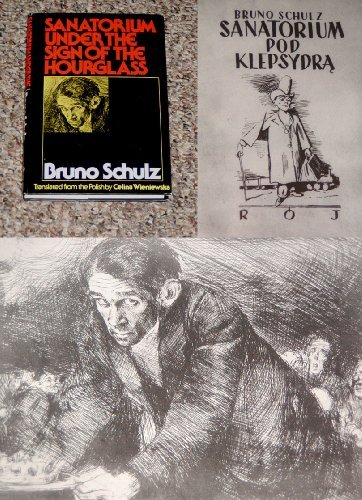
Žarko Paić
Žarko Paić is a Professor at the University of Zagreb, where he teaches courses in Aesthetics and Media Theory. He publishes frequently in philosophy, social sciences, and art theory. His publications include Theorizing Images, eds. with Krešimir Purgar (2016), and Technosphere Vol. 1-5 (2018-2019), White Holes and the Visualization of the Body, (2019), Neoliberalism, Oligarchy and Politics of the Event – At the Ege of Chaos (2020), Aesthetics and the Iconoclasm of Contemporary Art - Pictures Without a World (2021).