In his famous essay “Karl Jaspers: The Citizen of the World?” Hannah Arendt deeply questions the philosophical concept of her former mentor and close friend, Karl Jaspers
Visual semiotics of fashion culminates in the idea that contemporary clothing has moved from “applied art” to “creative body design,” fueled by what he terms posthuman fetishism.
In his famous essay “Karl Jaspers: The Citizen of the World?” Hannah Arendt deeply questions the philosophical concept of her former mentor and close friend, Karl Jaspers
Bernhard Waldenfels and the Other as a Problem of Ontology Abstract In the article, the author attempts to analytically show how, in contemporary philosophical debate, we encounter the problem of the relationship between human consciousness and the technosphere, which synthesizes the scientific construction of a new interobjectivity with the concepts of the body and the Other. Therefore, new figures, rather than traditional ontological-anthropological concepts such as homo kybernetes (Paić) and homo respondens (Waldenfels), necessarily find themselves in a kind of bipolarity in their determinations and actions in the real world. If, for Waldenfels,” intentionality is transformed into responsiveness”, then the path of phenomenology in the new conditions of action of globally networked societies must be designated as a “post-phenomenological path”. It is already evident from this that the answer to the stranger issue does not only hide the communicative potential of human existence in a historical-epochal sense. Considering a new ontological status of communication with the Other is simultaneously a necessity: abandoning the concept of intersubjectivity in favor of networked relations in the constitution of the body and the Other as existential structures of freedom. Keywords: homo kybernetes, homo respondens, technosphere, intersubjectivity, Other, stranger Introduction After Heidegger, Merleau-Ponty, and Lévinas introduced into contemporary philosophy the “spirit of reversal” of all metaphysical categories, abandoning its original starting points in the problematization of the relationship between Being, beings, and the essence of Human, phenomenology was left without a signifier ─ Husserl’s program of returning to the natural attitude. The question of consciousness and self-consciousness, which was so crucial to the entire philosophy of the modern age, was redirected to the conditions for the possibility of thinking about that which is not only a part of human existence but also the primary meeting point of thought and the matrix of Western metaphysics. Heidegger rightly called it the onto-theological framework of history. The reason is that thinking begins with the question of Being and the first cause or origin as the source of all beings (arché). In constructing the artificial mind and life, suppose phenomenology lacks the object of its focus, such as the forms of human consciousness. In that case, the only remaining area of its “resurrection” can be discerned in the analysis of the body and the Other. By analogy, since the concept of the subjectivity of mind marked the metaphysics of the modern age, the return to the body in the post-metaphysical thought of the 20th century should not be understood as a return to materialism and physicalism, much less to some dark psychologism. In contemporary philosophy, the body represents an enigma, as consciousness does, but on entirely different foundations from those established by the metaphysics of mind. However, Husserl’s critique of the Cartesian legacy in contemporary thought genuinely developed the concept of the Other. It did not radically break through the framework of subjectivity and self-consciousness; it did not wholly leave the environment of egology and anthropology. The first approach is found mainly in Merleau-Ponty’s existential phenomenology. In contrast, the second approach is shown to be derived from Lévinas’ most important book, Totalité et Infini (Lévinas: Totalité et Infini: essai sur l’extériorite). There are multiple overlaps. For French thinkers, the body and the Other simultaneously mark the path into the labyrinth of feelings and the ethical call for freedom and justice in the community. In the contemporary situation, however, the new approaches can be concisely defined as the phenomenological analysis of the body, with Hermann Schmitz as its primary representative, and the phenomenological analysis of the Other, with Waldenfels as its primary representative. (Schmitz: System der Philosophie III.) 2. Der Gefühlsraum) In the lecture “Homo respondensʺ he showed the reach of different definitions of Human throughout the history of metaphysics (homo sapiens, homo erectus, homo faber, homo ludens, etc.). All these definitions start from what has always had the feature or transcendental condition of human existence in history, or has been historically attributed to him, such as something that determines the structure of action, such as work, for example, or play. Responsiveness or the possibility and necessity of answering questions that are posed to him as challenges or as mysterious events that must be solved, as if they give the Human some transcendental “essence” which is reduced to what in cybernetic theory belongs to the concept of substitution of everything from the traditional ontology of causality. How do we reach communication if not by mediating the source or cause of the emergence of intersubjectivity in dialogue and discourse with the body of the Other, whether it is physical, directly given, or only indicated using the image of a contingent and singular body? The reflections on this problem in Bernhard Waldenfels’ thinking are highly stimulating because they introduce into consideration, post-phenomenologically, a new way in which the Other, so to speak, is inter-subjectified through the experience of our changed view and narration not about him as the Other, but about what enables the coexistence of the Self and the Other in a community that is constantly changing and losing the characteristics of ontological permanence. What challenges me to question the possibility of any further phenomenological and post-phenomenological analysis of the Other stems from the impossibility of its ontological determination in modernity, already determined by the rule of the technosphere. Questions are no longer answered only by us as humans but also by them as posthuman bodies of artificial intelligence. As Bernhard Waldenfels clearly shows, responsiveness cannot be what is reduced in one way or another to the environment of humans and non-humans in the sense of living ꟷ Human and animal. (Waldenfels: “Homo respondens”, 6-16.) Hence, it is foreign or alien, that uncanny Other as Stranger, no longer in the sense of that powerful title of Albert Camus’s novel, or that actor in Plato’s Sophist who questioned the universality of the ethical-political horizon of the recognition of the Other in Athenian democracy. Can homo respondens still be an appropriate name for the issue of the body and the Other “here”
The problem with the disappearance of absolute sovereignty from Bodin to Schmitt, as Derrida sees it in the act of his late (ethical-political) deconstruction, is that there is no longer a sufficient reason for any effectiveness of representing the Other. Reasons are reducible to this or that form of violence. Everything must be dismantled and disassembled. What remains of sovereignty becomes the contingency and singularity of the space between power and freedom. In this space, Derrida begins with the view of the Other and unconditional hospitality as a deconstruction of previous metaphysical politics of hospitality. The Other must be emancipated from the perspective of the subject’s metaphysics and its inherent violence. In the discourse of politics of friendship lies the ground for democracy to come as a final soteriological solution for other headings of history. Keywords: politics of friendship, upcoming community, Derrida, deconstruction of sovereignty, violence, Other 1. Deconstruction of Sovereignty What Lévinas has taken from Heidegger and endeavored to “overcome” by ethically thinking as a starting point for the critique of metaphysics as an ontology, Derrida continued in an articulated and even more radical sense. In the analysis of ethics of hospitality and guest policy concerning Lévinas settings we often encountered Derrida’s critical interpretation of central concepts of post-metaphysical condition ‒ foreigners, refugees, and asylum seekers in the discourse of receiving the Other as a guest in “my” home and the emergence of a new one perspective for the subjectivity of the subject. One of the constant motives we encounter from the early works of Derrida is the corpus of the modern theory of state and law, until the 1990s which marked books like Spectres of Marx, The Politics of Friendship, and The Beast and the Sovereign. The notion of sovereignty refers to the logic of the metaphysical establishment of the rule of the subject in philosophy and the humanities. The main intention of Jean Bodin in political thinking ‒ justification of the rule of monarchies based on the absolute power of the kingdom as a source of popular sovereignty ‒ was also the task of Descartes in the ontological-philosophical sense. The question of the two bodies of divine and popular sovereignty (theology and politics) had its metaphysical origin in the Cartesian duality of mental and bodily substance (res cogitans and res extensa). The opinion of the subject in the statement cogito ergo sum establishes the power of the supremacy of the mind over the body so that the separation between them becomes a matter of the functioning of the whole building of metaphysical concepts such as “infinity”, “being”, “substance”, “idea”. That gap represents far-reaching consequences for the European formation of political identity from culture as such. Sovereignty denotes the autonomy of the mind and the heteronomy of the body. So, it is logical to assume that Derrida must reckon with the legacy of this metaphysics of rationality and occasionalism from Malebranche to Rousseau. The main reason is that the subject of self-establishment denotes the power of the modern age when the rule of the mind appears as enlightening systematic madness of absolutism. In contemporary French philosophy, the critique of the Enlightenment was most radically carried out by Michel Foucault. (Foucault 1984, 2-50, Paić 2013, 181-211) It is interesting that from there one can even genealogically reconstruct history before and after the French Revolution as an event of radical cut with linear history. From Descartes to Hegel the creation of the absolute subject becomes a matter of thinking process which tries to achieve a peak of modern metaphysics. Sovereignty does not mean freedom by the act of constituting the external world of objects (nature in the sense of natura naturans and natura naturata) starting from the act of foundation of mindful substance. It rules the body even after its disappearance. How is that possible? Logos in the tradition of Greek-Jewish onto-theology is always inscribed in the body by transcending it, and not the other way around. In the gap or rift between God and man (mind and body), the emergence of modern anthropology was already determined in Kant by the necessity to find a consensus between the fundamental world of the Law (noumenon) and the empirical world of facts (phenomenon). Derrida’s deconstruction of the metaphysics of subjectivity aimed to establish just that place “in-between “, that empty meeting place between the two. The moment when the act creates the new thought and action that arises with modern sovereignty is already recognized from its structural or ontological violence. That is why in the brilliant analysis of Lévinas’ ethics of the Other in the essay “Violence and Metaphysics” included in the collection of essays entitled Writing and Difference (L’ecriture et difference) from 1967 Derrida could say that what belongs to the structure of thinking subject we might claim as “totalitarianism of the same“. (Derrida 1978, 91) The concepts of cogito, subjectivity, sovereignty, a nation-state, and modern Europe as the cosmopolitan order of mind Derrida tried to deconstruct. Suppose we want to clarify the controversy that is so abused in contemporary discourse not only in the social sciences and humanities. In that case, it is worth first recalling what Derrida himself self-ironically said about it in the book Positions. At one point he noted that he was dealing with the translation of the key concept of destruction from Heidegger’s Being and Time (Sein und Zeit) in French. It is well-known that Heidegger’s intention before turning in 1930 focused on the “destruction of traditional ontology“, and Derrida had insurmountable difficulties in his translation. What this term refers to in German cannot be the same as in French, where it has the explicit meaning of destruction and annihilation. So, he opted for what would be just like destruction, but what would be more appropriate to Heidegger’s thinking. When, therefore, he chose the word deconstruction despite destruction, the whole horizon of new meanings appeared to him, and thus the possibility of an internal “critique” of Heidegger. We think from language, and language denotes a riddle of the trace of that event, which has the possibility of changing the essence of Being. The rest belongs to the history of the post-metaphysics of Otherness (alterity) because the Other and difference direct the history of thought. In addition, deconstruction means disassembly and dismantling with the intention of permanent rebuilding. (Derrida 1982) When the age of modern sovereignty of the people loses its power, the subject of the representation of the Other in all existing systems of thought and reality disappears, from philosophy, science, art, culture,
Let’s start by clearly delineating the space of discussion. Yes, it’s a matter of spacing – a phenomenon to be elaborated in more detail later –, a matter of topos, topography etc. Any discussion on reality necessarily opens up a question of being-in-the-world, of Being as such, its manifestation as happening, as situatedness. But what exactly is happening here, what is being situated? Poetry in its original sense is related to the openness of Being as the event of freedom. The descent into the spacing of writing manifests itself in the form of a disclosive, illuminative (written) record (os alethes). What situates this record also maintains it, reveals it, exposes it in the openness of this coming-to-be emerging at the horizon of the event. Language itself is in perpetual flux, and poetry is language as such, language overflowing the utmost recesses of Being and permanently running up against its own limits where it breaks into silence (and vice versa). To remain silent is to be. Poetry, the act of writing about poetry and neoliberal paradigm intersect in the process of spacing, in the openness of the event. No creative thinking about revolution can dispense with the situatedness of the event conceived as an intersection of covertness/truth (aletheia) of Being. The revolutionary turn taking place in the world nihilistically dominated by neoliberal paradigm can be realized only through the situatedness of Being, for otherwise it is not a genuine turn/descent, but merely a reproduction, a recycling of nihilism/destruction/death. Poetry in its original sense – poesis as the act/realization of the openness/truth* of Being in its emergence/persistence as a historical truth of the Western world – is thus a manifestation in the present of what is yet to come, of the utopian Being of post-revolutionary world characterized by the turn/descent into being of nihilism. It is the being-in-the-world of our children. The only real revolution, i.e. a revolution conceived as a utopia of an already realized future (in the Husserlian sense of protention), discloses itself as a creative openness of experimental poetry, as an openness of Being in the sense of an “alternative” to nihilist neocapitalist practices and their destructive/exploitative approaches to life as such. The German philosopher Martin Heidegger once wrote: “Language is the house of Being”. Allow me to bypass certain phases of my thinking, and state clearly: it is not that Being is hidden inside of a house, i.e. that one needs merely to open up the house and bring out what is hidden within. Far from it – the treasure chest is empty, there is nothing inside. Transcendentality consists of the presence of the non-present/non-existent/imaginary. Being is the treasure chest itself: language as the trace (Derrida); poiesis as spacing, as opening, as revealing; verbalization as naming (nennen) and therefore as Being as such, as the event beyond things, beyond the reality of this “now”, the clearing of worldhood basking in the truth of disclosure as the existential abyss of freedom. I borrowed an idea and turned it upside down. It would be easier to draw out an argument on experimental poetry in light of neoliberal paradigm, but that is not what I’m after. Quite the contrary, what I’m pursuing is the idea that it is possible to understand neoliberal paradigm only against the background of what is being exposed (la poésie ne se impose pas, elle s’ expose, as Paul Celan once said /cf. Sloterdijk 1992: 5) by means of experimental poetry in the process of global neoliberalization, in light of what a well-known ideologist of neoliberalism called the end of history. The same phenomenon could be referred to as a suppression or elimination of history as historical thinking. A careful reflection on post-historical destiny of experimental poetry might shed some light on my own embeddedness in one of the ghettos constructed by the neoliberal newspeak and by the eradication of human beings perceived as human societies within the context of a discursive/cybernetic machinery of global, profit-oriented economy and social, political, economical, financial, military etc. relations it establishes, enforces and develops. The nature of these relations is reflected in the Greek word stasis denoting conflict, crisis, instability, and struggle in both living social communities as well as in ourselves. It is also reflected in the Greek word kinesis referring to (according to Thucydides) “a general state of uncertainty, danger and uprootedness” (Kalan 1983: 10). Some might find this an exaggeration, but the term crisis, which has gained a widespread popularity among neoliberal ideologists, points precisely in this direction. In this particular context, of course, the term crisis has to be understood as an ideologeme, a symptom of a certain strategy, whose main goal is to functionalize the machinery of profit accumulation based on existential interests and needs of people. It is a stasis between “profit and people” (Chomsky 1999), human society and all other forms of life, including the planet as a whole. The main attempt of our discussion on the meaning and role of experimental poetry, on its suppression as a stratagem concocted and spread by the neoliberal profit machinery, is to show the following: in the realm of poetry, language transcends its designated role as a means of communication for mediating specific, strictly limited messages, and thereby sets itself outside of the neoliberal, cybernetic machinery of information control and management (Heidegger 1999: 137); as such, it becomes a medium in which what Greeks called henargeia (lat. evidentia) takes place – “henargeia, which has the same root as argentum (silver), means that which in itself and of itself radiates and brings itself to life” (ibid.). It is important to realize that what we’re dealing here is a perpetual, on-going being-in-the-world. There is no need for silver to take on the role of an element symbolizing market value; it is not something that has to step out of language conceived as a cybernetic means of communication, as it is already outside of it, already in front of it – it speaks and discloses something else and is
The author deals with the consideration of what he calls the post-metaphysical complex of the technosphere, for which the ontogenetic framework of classical metaphysics from Aristotle to Hegel is no longer valid. Instead, the question of the essence of man posits his transcendence in the emergence of Homo kybernetes, with which he removes the posthuman condition. To explain how the permeation of human and non-human appears in all areas of contemporary life as a connection and relationship of information, feedback, control and communication, it seems necessary to open the issue of the cyborgization of life itself. At the same time, the analysis of transhumanism in the opinion of Stefan Lorenz Sorgner proves to be stimulating for understanding what the digital age of the technosphere presupposes, and that is the question of the possibilities of freedom beyond its metaphysical framework as it was considered in the speculative thinking by Schelling. Instead of freedom as absolute, the time has come to establish the possibility of thinking about freedom as an experiment of thought and action beyond human reduction and its associated anthropologies that have lost their credibility in an encounter with the complexity of Homo kybernetes. Keywords: Homo kybernetes, metaphysics, information, technosphere, onto-genesis, posthuman condition 1. Metaphysics and Technosphere Without thoughtful reflection on the challenge of the relationship between technology and (post)humanity, it seems impossible to persist in the relationship between technoscience and humanities that would not become non-contemporary in one way or another. Although the prefix post is in parentheses, and humanity is without it, it seems obvious that today there is still something that does not reduce human prerogatives and achievements to the logic of technological singularity. As if this play between what comes after the human and what is here and now human-too-human, to use Nietzsche’s famous statement, points to the necessary difference between what constitutes the essence of posthumanism and humanity at all, which becomes the highest reach of technosphere rule in managing societies and culture with the help of artificial intelligence. But what if this small difference no longer exists or if it is suspended and neutralized? What, furthermore, if a man has never been able to separate from technology in historical development, i.e. what if we have never been humane, as Donna Haraway claims, or what if we have always been cyborgs, as Stefan Lorenz Sorgner puts it? (Haraway 1990, Sorgner 2022) While, namely, there is a relationship between the human and the non-human, the metaphysical structure of thought is at work, even if Being is replaced with the concept of information, and beings with a multitude of pure contingencies. A relationship denotes always a possibility of a union at a distance. Synthesis, therefore, presupposes a real state of analytical separation, for example, of different substances in some hybrid assemblies such as contemporary technoscience with biogenetics, biocybernetics and biosemiotics. When we talk about the relationship between the human and the non-human, we must start from the assumption that the former is always the model for understanding the latter. Man in so-called human nature or its essence cannot be understood within metaphysics in any other way than essentialist. This means that his position within Being and his being are always given to him spiritually and biologically, i.e. vertically, following Aristotle’s famous definition of animal rationale. Furthermore, the relationship between the two, starting from the human primacy, is therefore not only horizontally reduced to biologism, from which psychologism and anthropology follow, which Heidegger in Being and Time (Sein und Zeit) tried to eliminate within the framework of the systematic “destruction of traditional ontology”. (Heidegger 2018) The reason should be seen in the fact that he considered that by doing so “man” or being there (Dasein) completely fails in his thinking and thereby reduces to exactly what he wanted to critically overcome, namely Aristotle’s definition of animal rationale. Biologicism denotes the reduction of man to naturalism, thatis, to the so-called biological factors of the whole of his own; psychologism becomes a reduction to the so-called unconscious articulation of language, which reduces man to a pre-and-post-rational living being, while anthropology means the reduction of man to the subjectivity of the subject by which all other beings appear at a lower level of cosmic-biological evolution and thus make him the master of nature as a whole. Heidegger’s critique of the reduction of the meaning of Being to the so-called life processes in their inclusive vitality affects the triad of biology-psychology-anthropology because they think a man insufficiently and inauthentically according to this conceptual-categorical “rationalization” of language. Any reduction of the human in man to the non-human necessarily fragments his integrity and irreducibility as a being among beings. However, every reduction cannot be the same as the annulment of human authentic existence in the openness of freedom. To reach the purity of the human essence, phenomenologically speaking, it is necessary to understand that such an essence comes from the dark core of the non-human, which was already known by pre-Socratic thinkers when they spoke about the relationship between demons and humanity. We should remember that Socrates was also constantly followed and urged to freely express his thoughts in public by his demon. So, we shall see that the question of the relationship between humans and non-humans cannot be simply resolved by a vulgar distinction between the biological and the post-biological when it comes to the relationship between humans and post(humanity). It is not difficult to understand that the problem of this relationship is that both relata in the relationship are derived from the difference against the life force of what comes from the concept of nature (physis), which is life (bios). The human in the metaphysical sense is always rising above the limits of biologically understood life as mere survival at the animal level. Therefore, it seems self-evident that from this every form of animalism will be considered as a loss of the so-called human dignity. This term has its origin in connection with the ethical-aesthetic doctrines of the Renaissance notion
This paper is a general assessment of the reasons for, and proceeding of, Russia’s invasion of Ukraine. I argue that the political order established by Vladimir Putin at the beginning of his tenure is now crumbling due to his very desire to preserve and expand it. Among the issues discussed are the ideological background of Putin’s conception of power, Germany’s attitude towards Putin, the Russian struggle for recognition by the international community, and the problem of moral symmetry between Russia and US military interventions. In conclusion, I argue against the interpretation of the Russia-Ukraine war as a proxy war of two imperialisms and suggest the present form of imperialism is now on the wane. Putin’s order The unfortunate period of Boris Yeltsin’s presidency is known among the Russians as smuta, or despair. Some of that time I have spent in the company of young people from the post-Soviet bloc. The Soviet habit of heavy vodka drinking had not yet been then superseded in Central Europe by the liberal wine-sipping. In the alcohol-induced frankness, one of the Russians bitterly said: „На что мена такая великая родина, когда в нее порядка нет?” („Why should I need such a great homeland, if there is no order in it?”) In this straightforward way, he pointed out two main, closely related Russia’s problems: its size, and its endemic disorder. Soon after, Vladimir Putin found a solution to these problems, establishing the order much longed for by Russians. Though at the top of the political hierarchy this order turned out to be a system of organized crime, it brought some relief to all. After more than two decades of despotic rule, Putin decided to expand the Ruskij mir he founded. As a result, the Russian order has just begun to disintegrate and, together with it, the global order as well. The Invasion In a public lecture on his geopolitical ideas, delivered to a worldwide audience shortly before the invasion of Ukraine, Putin reiterated his long-held position. He used a twisted interpretation of history to claim that Ukrainian territory is an integral part of Russia. He questioned the statehood and cultural distinctiveness of Ukraine and denied its sovereignty. It was a historical mistake to grant Ukraine the status of a separate Soviet republic within the Soviet Union. He dismissed the 1994 Budapest Memorandum, signed by Leonid Kuchma, Boris Yeltsin, Bill Clinton, and John Major, which guaranteed Ukraine the „respect for the independence and sovereignty of the existing borders” and its security in exchange for the renunciation of nuclear weapons located on its territory during the Soviet era. He accused the West of breaking the promise given to Mikhail Gorbachev that NATO would not expand east of the East German border and would not deploy in the Central European countries the weapons that might endanger Russia’s security. He interpreted the subsequent political evolution of Ukraine as dictated by the leaders of the West bent on undermining Russia’s security by bringing NATO closer to its borders. According to Putin, Russia cannot trust Western countries because they have broken numerous pledges given to Russia after 1989. The ring of independent former Soviet republics surrounding Russia in Europe and Central Asia, which politically gravitate towards the West, is seen by him as a noose tightening around Russia’s neck. In the face of this betrayal, and out of concern for the country’s security, Putin wants to reclaim the areas lost by Russia: Ukraine and the Baltic states, as well as the sphere of its former influence. The first step towards these goals is to change the government of Ukraine, America’s errand boy. During the decades of his reign, Putin disciplined Chechnya, Nagorno-Karabakh, and Georgia. He began disciplining Ukraine in 2014, by annexing Crimea and supporting the Russian separatists in Donetsk and Luhansk. The time has come to take over the rest of Ukraine. His goal is to de-Nazify and demilitarize Ukraine and protect the 12 million Russians living in Donbas from Ukrainian Nazism. By Ukrainian Nazism Putin means the party Right Sector which originally evolved from a movement of supporters of the Metalist Kharkiv football club. Its militant extreme-right and neo-Nazi members, many with a criminal record, adopted as their own the Nazi symbol of Wolfsangel. The Ukrainian government granted them the status of a National Guard unit which was transformed in 2014 into the Azov Battalion, now the Regiment. Azov uses a crest that dangerously resembles the crest of the Nazi 2nd SS Panzer Division Das Reich. Azov took part in military action for the first time in Mariupol, recapturing the city from the Russian army during the annexation of Crimea in 2014, and fought against separatists. Russia accuses Azov of violent repressions against the Russian-speaking population in the present Donetsk quasi-republic. In the most chilling part of his speech, Putin threatened that any country wishing to prevent him from implementing his plans in Ukraine would have to take into account the consequences that no one had seen in history. The Russian mir The ideological foundation of Putin’s geopolitical vision is the nationalist philosophy of Ivan Aleksandrovich Ilyin, now the most widely read Russian philosopher. His ideas won the sympathy of such Russian figures as Alexander Solzhenitsyn, the Kremlin court philosopher Alexander Dugin, and the popular film director Nikita Mikhalkov, who proposed to bring Ilyin’s remnants from Switzerland. Since 2005, twenty-three volumes of Ilyin’s writings are being published in Russia. Ilyin was born in Moscow in 1883 to an aristocratic German-Russian family. Influenced by Pavel Novgorodtsev, a law professor at Imperial Moscow State University, he rejected his youthful anarchism, turned to law studies and right-wing ideas, and against scientific socialism. He was among 160 intellectuals expelled from revolutionary Russia by the Bolsheviks in 1922 on the famous „philosophers’ ship” which sailed from St. Petersburg to German Stettin. He spent ten years in exile in Germany, where he wrote anti-Bolshevik essays for the magazine „Kolokol”, and then moved to Switzerland, where he died in 1954. Like many of the „white”
No “revolution” is “revolutionary” enough. Martin Heidegger, Die Geschichte des Seyns 1. Mephisto’s problem: So, what if there is nothing left behind? One of the most lucid analyses of the essence of a contemporary world in which the governance of capital becomes the assemblage of the power of technoscience, transnational corporations, and crisis management policies is the monumental study by Luc Boltanski and Eve Chiapello titled The New Spirit of Capitalism. The main assumption seems extremely provocative. In spite of late capitalism being a neoliberal doctrine and the practice of the radical privatization of public/common goods in the world from the end of the 1970s to today, one can speak of a reaction to the defeat of the idea of the student rebellion in 1968 (Boltanski and Chiapello 2005). How are we to comprehend this almost emblematic assumption of left-wing theory? For this, we have at least two explanations. One is that capitalism cannot work without periodical crisis. Stability, otherwise, arises from the danger of the system’s collapse. So, the balance of the structural elements of its existence, such as the supply economy, political changes in the bipolar system of liberal democracy and, most importantly, innovation in the field of science and technology, seems to be constantly violated. Therefore, the governance crisis in all situations from political revolutions to the wars of conquest for new markets in the 20th century and today shows the continuation of the power struggle by other means. The classic era of industrial capitalism belongs to modernity. Its ruling idea encompasses unconditional progress. But the late capitalism assembled by IT corporations is based, however, on the idea of sustainable development. What is the difference? Can it be visible only in the way social relations function? The paradigm of the linear notion of history in the social sciences and humanities has been replaced since 1968 by models of indetermination and contingency. However, despite the uncertainty in the era of doubt in unlimited economic growth, the facts contradict the heroic pathos of the “Big Defeat”. With the transition from the form of the object/thing in the form of techno-scientific capital to the process of creating a new life (biogenetics and biocybernetics), unconditional progress became a posthuman condition. Its main features include the following: (1) Science now connects once separate spheres of nature and many by exploring the possibilities of creating artificial intelligence and artificial life. In the know-how of the information society, man is reduced to biogenetic code. With it, the experiment is aimed at improving the cognitive-physical capabilities for performing complex work operations. All sciences have now become technoscience. The concept of technology, unlike the technique, is no longer an asset for purposes other than itself as the “essence” of the contemporary era. Technology, hence, refers equally to nature and culture, the production of objects and the way of creation of a subject. The shift from technology to the technosphere means the transition from the analogue to thedigital paradigm of the historical development of thinking and Being. (2) Technology, therefore, combines areas of science and culture, nature and man, information and communication. All technical logic is today digital, and instead of their instrumental power, in the centre arrives a new aesthetic function. But now we are no longer talking about a beautifying of objects. Design, on the contrary, becomes the conception of the new digital world, as the construction becomes the basic notion of complexity, but of the fundamentals of new sciences (cybernetics, informatics, computer intelligence, neuroscience). Artificial intelligence (AI) and artificial life (AL), thanks to the relationship between nanotechnology and the cognitive machines, have become the creators of life from the uncanny power of immateriality. The space of their proximity and their events is virtual, and time is taking place in the immediate instant. We can define that as a condition of forgetting the past, without being aware of the already possible event of interruption with the order of the perpetual updating of the new. (3) Finally, culture simultaneously becomes the life-world and the ideological justification of the performing event of the power of capital and capitalism without alternatives. Within this framework, culture takes the “power” of the irreducible remnant of what is most proximate to the man due to the art and its non-instrumental character of the un-representability of the work. From spectacle to design, from aesthetics to architecture, from high culture to mass culture, identity is constantly emerging. We no longer understand life as a gift and unchangeable destiny. So, to create something new, based on the methods and experimental technoscience and freedom of choice, is more important than a biologically given position as a facticity of Being. When this “holy trinity” of the posthuman condition is translated into the language of communication, then we are immersed deeply into a cognitive model of capitalism. The paradoxes and aporias of historical experience are simply shown in the fact that the 1960s were the years of the highest growth rates in the second half of the 20th century within the capitalism of the West, as well as in the framework of real socialism in Eastern Europe, particularly in the former Yugoslavia. It is by no means a coincidence that this was the time of a pervasive belief in the stability of the new economy, despite regional wars in Indochina and the Middle East and the ongoing political crisis. The welfare state became—due to the Scandinavian model—a desirable image of labour and capital compromise. Structurally speaking, capitalism is expanding through wars of conquest and in the context of the decolonization of the Third World, and it internally intensified its power by political movements for human rights and democracy. The second explanation, however, is that neoliberalism as a new spirit of capitalism should be much broader than the dogma about the privatizing of public/common goods, the disappearance of nation-state sovereignty, and the destruction of civil society institutions. It denotes, in fact, an ideological-political project of establishing a new form of rule and governance. Foucault, in his lectures
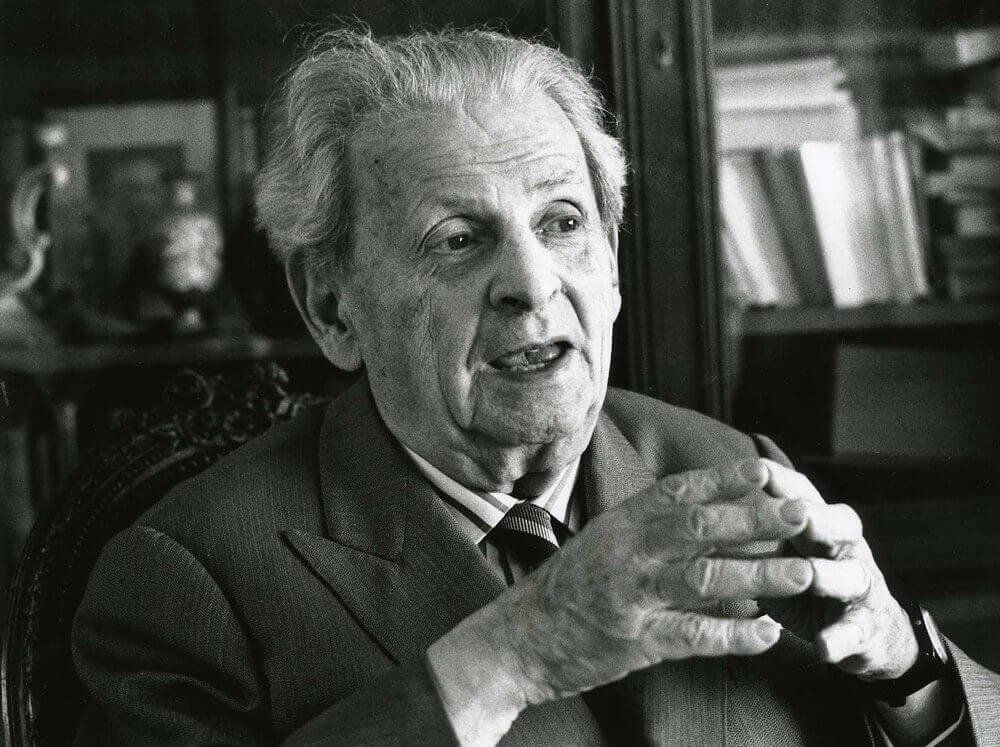
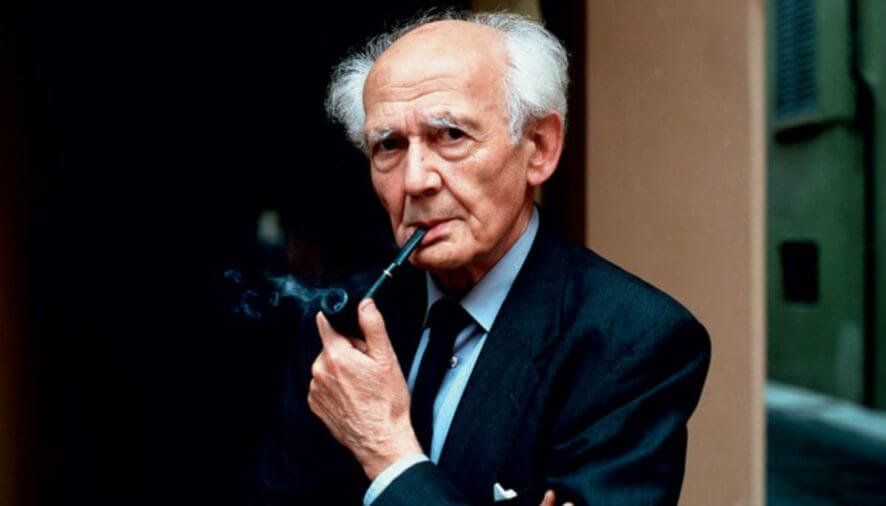
Zygmunt Bauman’s books have been read by millions of people in over thirty languages. For this reason alone the biography of this outstanding philosopher and a sociologist deserves attention. An interest in his life is justified not only by the natural need to learn about the twists and turns of his activities as a scholar and popular intellectual. It may contribute to our understanding of how someone who faced extraordinary and overwhelming challenges managed to achieve the status of a global public intellectual. Bauman’s life has already become the subject of three biographical accounts, all written by Polish intellectuals. Izabela Wagner’s Bauman: A Biography, appeared in English (Cambridge 2020). Polish-language biographies was authored by Dariusz Rosiak, (Bauman, Kraków 2019), and by Artur Domosławski (An Outcast: 21 Scenes from Zygmunt Bauman’s Life, Warszawa 2021). All of them may be read as extended commentaries on Bauman’s brusque and (un)apologetic statement: “I couldn’t have another life.” Bauman was born in 1925 in the city of Poznań, Poland, to impoverished Jewish parents. As a teenager, he fled with his family to the Soviet Union to escape the oncoming war. There he excelled in education, conducted in Russian, despite the fact that he attended it erratically in multiple schools in various locations, and then became an officer of the Polish army established on Stalin’s orders. He fought in World War II, was badly wounded in a battle, and, having recuperated, he continued to fight all the way to Berlin. After the war, his military corps was transformed into a special security force in which he served as a propaganda officer. Discharged from the army, he enrolled at the University of Warsaw and soon became an academic. As a trusted comrade, he was sent to the London School of Economics on a scholarship as part of which he conducted research for his book devoted to the British socialist movement. Upon return, he quickly climbed up the academic ladder in Warsaw and became a professor. After the Stalinist atrocities were revealed in 1956, he gradually slid into revisionist positions and became one of the suspect intellectuals in the eyes of the nationalist fraction which gradually won preëminence within the Polish communist party. In 1968 he was expelled from university, and from the country. He took his family to Israel, where he rapidly mastered the Hebrew language and taught briefly at Tel Aviv University. Never a Zionist, he was soon discouraged by Israeli politics and publicly criticized it. In 1972 the Baumans moved to England where Zygmunt chaired the sociology department at Leeds University until his retirement in 1990. As a writer, he flourished especially when released from the academic chores. He wrote predominantly in English, which was his third language. He published nearly sixty books and innumerable papers on a great variety of topics in social theory, moral philosophy, the Holocaust, postmodernism, urbanism, and many others. His Postmodern Ethics (1993) won him the status of a prominent exponent of postmodernism, a label he later discarded. After 1989 he frequently visited his homeland Poland, where he was rediscovered and admired by the young intellectual generation until the extreme-right, xenophobic movements took him to task for his past cooperation with the Polish and Soviet secret services. He passed away at his English home in 2017 at the age of 92. In 2010 Mark Davis established the Bauman Institute at Leeds University, now chaired by Adrian Favell. Undoubtedly, his was an intense and fulfilling life. But it was also riddled with secrets, some of which became subjects of international controversies: his belief in communism, his collaboration with the secret services of Soviet Russia and communist Poland, about which he was interrogated by Aida Edemariam,[1] the unfortunate pistol he allegedly used to carry in a holster in his initial year at the University of Warsaw, accusations of plagiarism and self-plagiarism, along with problematic family issues in various periods of his life, like his declarative and actual renunciation of his father, or his oppressive solicitude towards the people he loved. An autobiographical sketch he wrote for his daughters does little to dispel his secrets. In 1945 Bauman joined the communist ranks. For a number of years, he fervently believed in the egalitarian ideology, and overlooked the oppressive practice of the communist party or rather took it as a necessary stage on the road to communism. This was held against him until his death, and indeed after he passed away, as a sin for which he could not hope to be forgiven. In his voluminous work, Domosławski asks a number of pertinent questions which make the reader realize the problems Bauman had to cope with in his early life. Could nineteen-year-old Zygmunt Bauman have become anyone else in post-war Poland but a communist? Were any other options available to him over the next decade in a country ruled by a regime imposed by Moscow? Obviously, Bauman, a Jew, could not become a member of the nationalist opposition: already in his early childhood, he learned the hard way the true meaning of the anti-Semitism and nationalism ingrained in Poland’s cultural genes. There were no liberal democratic movements at that time for him to join, and, as an urban creature, completely unfamiliar with rural life, he could not seek shelter in the peasants’ movements. The key to an understanding of Bauman’s choices, and the content of his work, is the problem of oppression. Oppression was an integral part of his personal and intellectual life. He was bullied in childhood by non-Jewish peers, flew with his family from the war terror, seized any opportunity to physically survive the exile in the harsh conditions of Stalinist Russia, fought with the Nazi army during World War II, was badly wounded in a battle, and was ill-treated because of his Jewishness in socialist Poland. In a provocative essay entitled “Persecution and the Art of Writing,” Leo Strauss attempted to explain the situation of a writer who, fearing persecution, encodes double meanings in his text: the superficial, understandable to
It is almost unquestionable that throughout history educated classes have always adhered to dictatorial regimes. Plato and his failed ‘mission’ in service of Dionysius I, tyrant of Syracuse, bequeathed us the Seventh Letter . This legendary episode is often taken as a metaphor for all philosophers and artists of the 20th century who were impressed by leaders and politics crossing the boundaries of democratic boredom. Notwithstanding, it is somewhat peculiar that the absolute moral guilt of visiting Syracuse has always been ascribed to the greatest thinker of the 20th century – Martin Heidegger – while the cases of Knut Hamsun and Ezra Pound, although considered amoral, have nevertheless been regarded as completely benign compared to that of the master thinker. It is today most difficult to find literature describing and interpreting political delusions of the great novelist and poet. On the other hand, Heidegger’s marveling at Adolf Hitler’s ‘hands,’ in the words of Jaspers, who accused Heidegger of allegiance to Nazism, still serves as an inspiration. One could say that dealing with Heidegger’s short adherence to Nazism during his vice-chancellorship in Freiburg in 1933/34 represents a certain universal (moral) examination of conscience for the entire western culture. In the spirit of Hegel’s maxims, philosophy is in this way unintentionally placed above all sciences and human skills. This happens regardless of the fact that the end of the 20th century was definitely marked by Warhol’s maxim about the artist (the philosopher included), who is but one of many in the business of the world. In spite of the studies written by Bourdie, Pöggeler, Farias, Safransky, it seems that the Heidegger case remains open. Nevertheless, this does not mean that boredom has gained supremacy and that historical revisionism will dilute this episode as unnecessary for the understanding of Martin Heidegger’s thought world and political views. However, it has lately been easy to notice that most studies are trying to grasp the meaning of Heidegger’s political engagement beyond the vulgar accusation that he was nothing more than a regular Nazi. Two books written by philosophers of the younger generation – Miguel de Beistegui ‘s Heidegger & political Dystopias (Routledge, London-New York 1998) and Julian Young ‘s Heidegger, philosophy, Nazism (Cambridge University Press, 1997), stand out as most provocative studies. These books should be critically discussed if we wish to find the answer to the central question raised in this paper: is it possible to talk about Heidegger’s understanding of politics and political engagement as such, from the perspective of Heidegger’s idea of the western metaphysics and its particular turn? Moreover, can Heidegger’s thinking still be preserved as a life-saving chant in the overall nihilism of virtual civilization? Miguel de Beistegui is a professor of philosophy at the University of Warwick. His study on Heidegger and political engagement written from the point of view of understanding political as such, belongs to the tradition of new German historiography, since it is trying to consider the notion of political in relation to politics, in accordance with the famous book by Christian Meier , Die Entstebung der politischen bei den Griechen . The rigidity of execution and the faithful following of the idea of political and politics in Heidegger make this work stand together with pieces written by Löwith, Bourdie and Pöggeler. Beistegui is trying to understand Heidegger’s political engagement in service of Nazism, by pondering upon his idea of politics in general. The real question is whether this is possible in the first place, since Heidegger left only a few fragments written on politics and society (useless to the philosophy of politics), found in Sein und Zeit and in some of his lectures on great metaphysicians of the West. Therefore, Beistegui is trying to correlate Heidegger’s destruction of traditional ontology with the issues of border-lines between peace and politics in the speech of Heidegger himself. Three methodological approaches have taken root since the beginning of analyzing the Heidegger case. They are, of course, cognitively relevant, as well. The first approach claims that Heidegger’s political engagement during Nazi regime was the result of his philosophy. The second says that it is all only about moral and civil allegiance, as a form of human and political opportunism. The third approach believes that Heidegger failed and went astray into politics, of which he soon grew tired. There is also a fourth approach, which today seems least credible, saying that Heidegger gave some sort of esoteric criticism of Nazism. It could be said that Miguel de Beistegui’s is the first approach. However, he rejects Farias’s accusation that the thinker of the turn of metaphysics was but a small, provincial Nazi. In the foreword to his book, Beistegui explicitly states that he wishes to lay out the following thesis obtained from Heidegger’s radical criticism of metaphysics and modern times in general: we have before us a philosophical answer to the question about the sense of political engagement. In this respect, the entire interpretation is more inspired by the works of authors who focused on Heidegger’s understanding of community and politics, than those interpreters who ideologically rejected him as an eminent Nazi thinker. Beistegui presents Heidegger’s reception in the United States in detail, in view of his political engagement that was in the liberal democratic tradition always confronted with more benevolent attitudes of the English or Italians, or even the French, gathered around Heidegger’s friend Jean Beaufret and great surrealist poet and anti-fascist Rene Char. Miguel de Beistegui openly admits that his main problem with articulating Heidegger’s attitude towards the Nazi politics is an attempt to clarify and phenomenologically understand the notion of here-being ( Dasein ) in the part on historicity in Sein und Zeit . Nevertheless, he rejects Adorno’s serious accusation that Heidegger’s thinking is therefore basically “fascist in its innermost components.” Since there is no explicit political philosophy in Heidegger, it is obvious that we must first see why the modern man’s experience of being without home creates conditions for a different notion of politics, beyond enlightening tradition
If we should ask what remains of Husserl’s phenomenology and its study of intentional consciousness, the answer would probably be as follows – a body and Other.
I present the concepts of love in the Western history (twin souls, platonism, catholicism, courtly, romantic, psychoanalytic love) and argue that the aforementioned concepts are unrealistic and disatisatifying because they measure the success of a partnership by restoring some previously lost, divine or primordial wholeness. My concept of love thus offers realistic expectations of the partnership that aims at a happy and peaceful relation which does not allow violence, abuse and inequality. Key words: Western concepts of love, Majerhold’s love concept. Given that I have written in depth about the dominant Western concepts of love I can say that previous notions or concepts in the Western culture are ‘negative’ – notions of love that makes a person either never satisfied and fulfilled or demands a tragic dimension that causes someone to die, sacrafice for the others or experience a great misfortune. Western love works on the principle of ‘lack’, and ‘lack’ is defined in various philosophical, spiritual and religious history in various ways, either lack of a premordial or pre-embodied state of the divine soul (Plato, 1960), a reunion of the lost twin soul (Aristophanes in Plato, 1960: 80), a purification of the human body, nature and the restoration of the divine spark (Orphism)[1], as a returning and recovering connection with God (St. Paul, 1984), an everlasting desire for unattainable Dame (Villiam IX. Duke of Aquitaine in Novak, 2003: 11), restoring unity of a male and female complementarity (Rousseau, 1959; 1978), a restoration of the original family (Freud, 1995) and a confluent love (Giddens, 1992). Personally, I am not for any regression to some original state (divine or familial), point zero state, ‘death’ or nirvana. And in light of the concepts mentioned, we can say that we have came a long way from chanting about finding a lost twin (Aristophanes in Plato, 1960); from chanting about wild and impossible passionate and ecstatic love (Villiam IX. Duke of Aquitaine in Novak, 2003); from chanting about tender, ethereal, sweet romantic love of male and female (Rousseau, 1978); chanting about mother as the source of all love (Freud, 1995) or chanting about love as motivation of Christian self-sacrifice for the others (Paul, 1984) to chanting about plastic sexuality and last but not least to chanting about unbridled sexual pleasures of swinging, BDSM and other diverse tastes (Soble, 2001) to finally reveal new, different concepts of love. In my opinion, people just like to meet, socialize, communicate and unite, not because of biological function (evolutionary biology, endocrinology or medicine) and not because we have to get rid of the ‘dungeon’ of our incarnation, according to which we are not important as individuals here and now (Orphism, Platonism, Catholicism) and also not because we used to be perfect, divine, complete, eternal and in control (Orphism, Platonism, Catholicism, Psychoanalysis). When and how we could be supposed that since we know only our earthly mundane existence? Our goal is also not to present man as a somekind ‘perfect machine’ that has ‘software’ and ‘hardware’ in it and behaves predictably in accordance with the hardware. If we look at this view, man tends to be a solid, stable, self-contained eternal, complete whole (a kind of jigsaw puzzle made up of parts or as a clockwork made up of gears). But at the same time, it also means that we are not the only and unique (specimen) of our species and therefore nothing special, much less a ‘crown of creation’, because we are not significantly different from others. We are just a piece of some biological species that can be interchangeable and combinatorial. Or if I express myself about our nonuniqueness with the example of Socrates and Alcibiades from Plato’s Symposium (Plato, 1960). Alcibiades, a renowned soldier, statesman and a beautiful man who could have any man, fell in love with Socrates precisely because he believed that Socrates had a distinguished feature and skill no one else had – he knew how to conjure up every situation in words, a fact or thought (probable or unbelievable, real or fictitious) so that you had a ‘feeling’ as if an ‘imagined’ thought or situation appeared before you’ as completely tangible and visible. Alcibiades discovered in Socrates the extraordinary convincing power of words and spirit, which he did not find in anyone else and which, according to him, made him the most attractive and desirable of all men. But we can say that for Alcibiades this remarkable rhetorical and ‘sophistic’ feature of Socrates was so appealing because Alcibiades was a politician and one of the most important abilities of a politician is precisely the ability to persuade convincingly, to disply the power of verbal sovereignty and persuasion. In this one finds a sensible explanation as to why Alcibiades fell so much in love with Socrates and considered him unique, (better than all the others) as he surpassed all other philosophical, rhetorical and sophistic rivals. After all, Alcibiades revealed this motive by offering a bargain that if Socrates taught him these ‘agalmas’ of his (hidden priceless valuables of verbal persuasion), he would offer him pleasure between the sheets. The human uniqueness called agalma by Lacan is thus revealed by surpassing: (s)he is unique as long as (s)he is better at something from all the others and that is something I desire and/or need (Lacan, 1996). But Socrates himself objects to this notion of uniqueness when he tells Alcibiades that he should take again a good look if he may not be mistaken – what Alcibiades is supposed to see in him is a reflection of his desires and beliefs, this is not how Socrates sees and understands himself (Platon, 1960). Socrates also thinks that Alcibiades is not in love with him at all, but with someone else, Agathon (ibid.) and thus gives us a notion of love as desire driven by the other who responds to our desire (Lacan, 1996). Therefore for the case of agalma or uniqueness of someone as a criterion for choosing someone over someone else, we can say that
Visual semiotics of fashion culminates in the idea that contemporary clothing has moved from “applied art” to “creative body design,” fueled by what he terms posthuman fetishism.
The most important Romantic thinker besides Novalis, the philosopher and writer Friedrich Schlegel, says the following about this in his “Paris- Cologne
Celan is not a “poet of poetry” like Hölderlin, but of the end of poetry as the art of representing the world itself at its end. The poet does not sing about a world
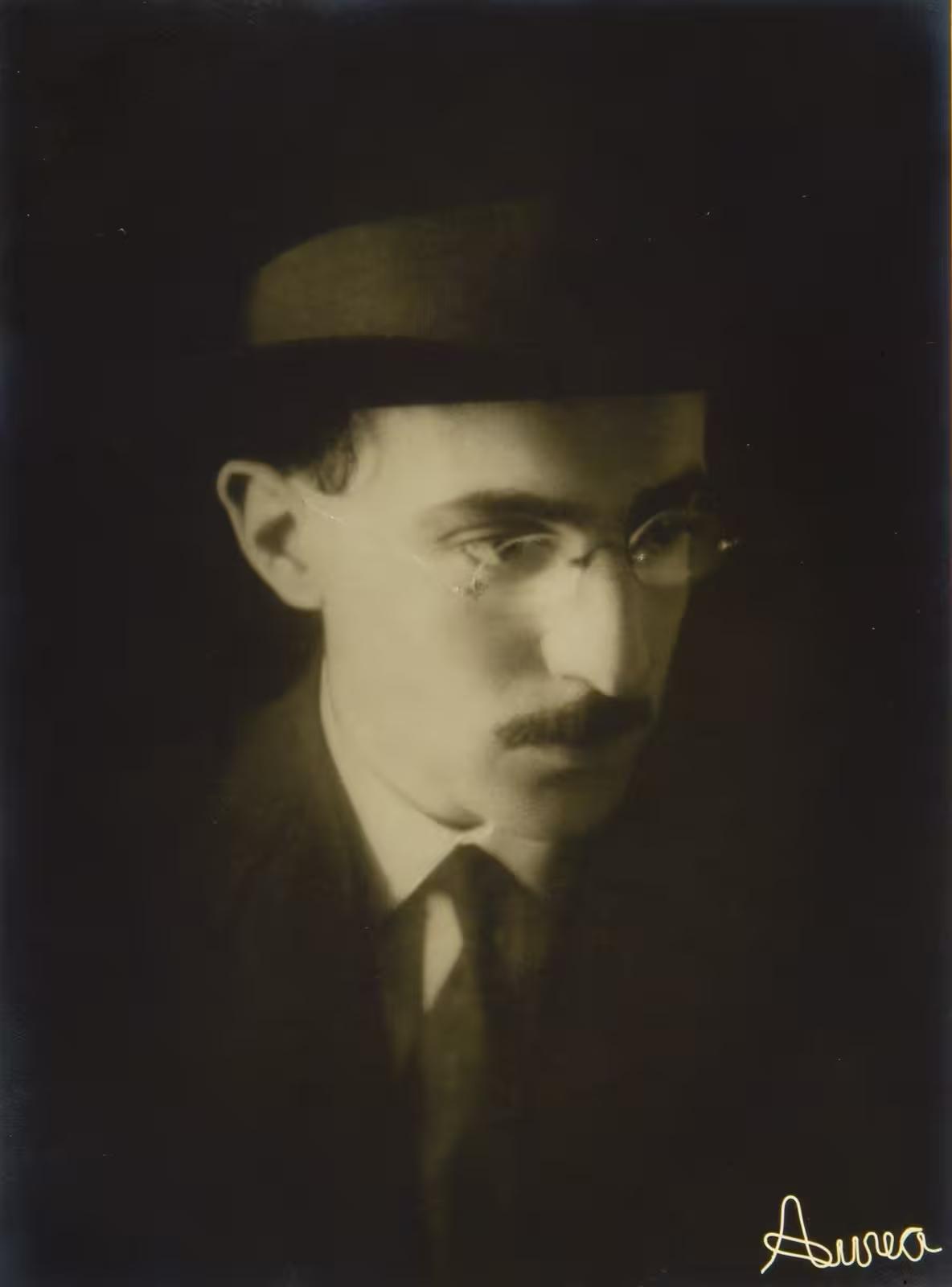
To Ribbons painted with a fountain pen, glasses, and a scent from the book Eros and Psyche Abstract The author analyzes writing as the thinking of the Portuguese poet Fernando Pessoa, one of the most significant artists of the 20th century. However, his influence is only now gaining the deserved world reception not only in the fields of literary theory and poetry, but also in contemporary philosophy. Since the fundamental problem of his work is represented in the multiplication of persons he created as authentic participants in thinking and writing, it appears that access to his works requires, first, an insight into the ontological-metaphysical questions regarding Being, beings, and the essence of Human, because a person cannot be reduced to the matrix of subjectivity. Instead, Pessoa demands a different approach, immediately addressing the aspiration to traverse his heteronyms (Campos, Caeiro, Reis) and recognizing that writing must be understood as absolute freedom in constructing new identities. In accordance with Heidegger’s and Wittgenstein’s thoughts regarding the questions of language, and in the search for a newer analysis of Pessoa’s works in the philosophical writings of Alain Badiou and Judith Balso, the author tries to follow his own way of interpreting Pessoa as a thinker-artist whose voice shows the authentic simulacrum of the world, in which contingency represents the necessity of freedom. The chaos of imagination becomes creative order without beginning or ending. Keywords: metaphysics, madness, Pessoa, heteronimy, plural literary space, chaos of imagination Introduction Approaching the thought directly in the work of Fernando Pessoa does not mean grasping the whole. Without the paradoxes and aporias of the discursive adventure, we will not get anywhere. It should be reconciled in advance that this impossibility of access to his work is simultaneously an open area of overlap between the styles and forms of the writer’s drama of singularity. There is no a priori given personality, some supreme transcendental “I” with which we can reliably start in what follows ꟷ the dissolution and unraveling of the secret of Pessoa’s thought, in which philosophy and art overlap and separate on the same path. If we are deprived of what Judith Balso calls in the title of her inspiring book a “metaphysical courier” (Balso 2006) to penetrate the labyrinth of his writing, then what is left for us? Perhaps the instructions for entering that labyrinth can be found in a fragment of Bernardo Soares’ Book of Disquiet (Livro do Desassossego por Bernardo Soares). Here, in probably the most lucid way, the fundamental problem of the relationship between thinking and writing has been shown from the spirit of metaphysical understanding of things in general. “Metaphysics has always seemed to be an extended form of latent madness. If we knew the truth, we would see it; everything else is the system and environment. If we think about it, it is enough for us not to understand the universe; wanting to understand it means being less than human, because being human means knowing that the universe is incomprehensible.” (Pessoa 2001: 89) Pessoa often uses the word metaphysics as an adjective for various phenomena. The same applies to the word mystery. Namely, metaphysics denotes obsession and illusion in an aesthetic sense. However, it is also about the way of thinking of man, which is given to him out of the necessity of his ambiguous existence as a being who feels, suffers, and experiences anxious moments in the face of the drama of existence. If metaphysics is madness, then this diagnosis should be something completely different from the science of psychoanalysis. For Freud, the central maxim is that where It was, shall I be (Wo es war soll Ich werden). This Enlightenment “rationalism” by other means ꟷ the discovery of the unconscious as a language ꟷ starts from the idea that the self is “that” which rules and governs our archipelago of desires. Admittedly, it no longer does this from the center of the mind, but from the displaced area of the living body. However, metaphysics cannot be overcome by reversing it. It goes down from head to toe. Pessoa, therefore, does not understand madness as a disease of the mind or thought. There is only one different opinion, and that from difference constitutes identity as a river of dreams and the contingency of multiplied “I”. Their origin lies beyond any replication of a proto-original (arché). According to this, Pesso’s undertaking is linked to the revelation of the non-existence of the first cause and the last purpose (télos) of the event. If so, then metaphysics cannot be just madness. It also denotes a necessary obsession with giving Human a substitute consolation: that God might exist and that the world might make sense. For Pessoa, metaphors and figures in literature, as paradigms of art, because language becomes the condition for the possibility of the worldliness of the world, are the same thing that Nietzsche attributes to the conceptual language of philosophy: that it is a substitute for the real appearance of things. Art should be thus played out in double coding. It becomes simultaneously “avant-garde decadence” and “decadent avant-garde”. In the case of Pessoa, this will have far-reaching consequences for the understanding of “his” poetic thought or logic based on the model of aporia and paradox. What, for classical metaphysics, is the unity of place and time, a kind of Aristotle’s fundamental law of the aesthetic determination of the world expressed in Poeticsas the coincidence of the substance of things and the order of meaning in the environment of the harmony of the world, will be completely reversed and denied. Instead of an either-or logic in Pessoa, everything becomes simultaneously positive and negative, possible and real, in the sign of logic, either-or. This is why we must keep in mind two metaphysics and, accordingly, two types of “metaphysical madness”: (1) Aristotelian with the fundamental principles inherited by modern philosophy and science under the name of the principle of sufficient reason (principium rationis) and further developed in the thinking of Descartes, Kant, and
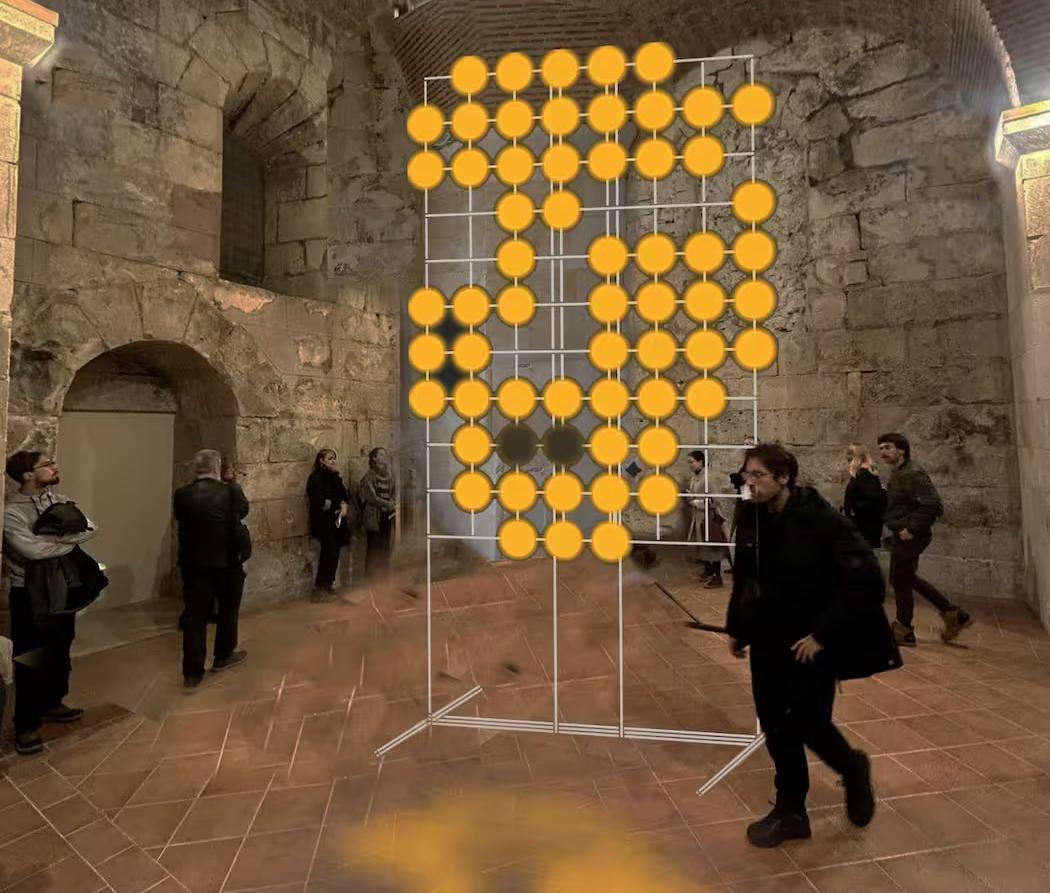
In his latest work, “The Luminous Self-Portrait of DM,” a light-and- sound installation that challenges the very notion of video installation, the artist
In 1942, Vladimir Jankélévitch wrote a book entitled Nocturne, dedicated to the issues of rapture and reverie, dreaming and flickering, those feelings that
Bruno Schulz, or about the enchantment of reality To Delimir Rešicki Abstract Without the mythicization of literature in its multitude of discursive forms, the world would remain painted in the false brilliance of reality. The mundaneness of the world derives from “cases” as “events”. Everything that Heidegger and Wittgenstein express about language in their greatest reaches of 20th-century philosophical thought, but in the footsteps of Nietzsche and the distinctive version of the neo-gnostic secret of creation, bears the pathos of Bruno Schulz’s literary alchemy. Schulz’s “canonization” as a world-class author of experimental prose happened in parallel to the establishment of Jorge Luis Borges as the master-mandarin of postmodernist literature. Despite the undeniable differences, the end of the 20th century brought awareness to the aestheticization of life itself in these literary figures. Schulz’s solution appropriates neo-baroque figures such as allegory, treatises, and pseudo-fiction. When we have this in mind, it becomes clear why Schulz chooses a peculiar strategy of bewitching and disillusioning “reality” through irony, grotesquerie, and obscenity. Key words: inexpressibility, Schulz, postmodernist literature, allegory, irony, obscenity 1. Writing as an experiment in life: Words Who writes, and what is writing? Whoever writes constantly asks questions about the meaning of writing. From this, it is obvious that writing cannot be understood without a relationship in which language and speech require what medieval theology called, albeit negatively, tertium non datur. Writing separates itself from speaking and language as a condition for the possibility of one’s writing by defying the temporality of speaking. In the material trace of a scratch on papyrus or pictorial information in a digital machine, there is a desire to interrupt “here” and “now”. Immortalization in a text like the Book makes writing a divine trace of the “eternal now” (nunc stans). This is why Derrida raised writing to the level of the problem of thinking in the era of the end of metaphysics. (Jacques Derrida, De la grammatologie, Minuit, Paris, 1967) In writing that precedes speech as shadows preceded the light of the seen, the question of who writes goes beyond investigating what is written about. Who and what belongs to the relationship between “subject” and “thing”? Because someone and something are not separate entities. When someone thinks and speaks about something, what is believed determines the one who thinks by the very essence of thinking as such. The speaker is always separated from the one discussed when the difference between “subject” and “thing” is established. However, when the “thing” itself cannot be fully expressed because it is precisely what makes it possible to distinguish between who and what is being said, writing that leaves a mark immortalized in the text becomes an experiment of life itself. It makes the experience of stopping speech at the zero point of telling. If language speaks, as the late Heidegger claims, writing derives from the difference between telling, showing, and expressing in the material trace of presence. Telling represents a collected opening of the worldliness of the world. Words are the light of Being. Without them, nothing is meaningful in the chain of events from the beginning to the end of all things. By showing, however, being is revealed in the presence-absence of Being. Time does not show its period shadows. It is a collection point for scattered cargo. All sorts of historical dramas unfold in that gathering place. Finally, expression refers to the connection between speech and writing. Whoever thinks that the former precedes the latter or vice versa is right. How is it possible that the truth belongs to both, and not to one or the other? The reason lies simply in the fact that truth appears only from the perspective of seeing. This is not a fall into the abyss of cognitive relativism. By expressing something with words, it is exposed from its hiddenness. Because words are not credible enough to “describe” the image of what we see, and suppose we see nothing but shadows on cave walls, as in Plato’s allegory about the world of ideas and phenomena. In that case, this becomes proof that human thought relies on reflection, through which it reaches the knowledge of the absolute. Without reflection and a semblance of reality, there is no royal road to the truth of that reality itself. Writing, therefore, is written not because the language says what must be written down. On the contrary, the relationship between writing and speaking seems asymmetrical and non-reciprocal. In writing, it is about an event without known outcomes in advance. This might be true even when a writer, like a genetic engineer, has a clear plan for what will ultimately result from his “work”. Language expresses Being by talking about it. On the contrary, writing starts from the assumption that what will happen with the text falls into pure contingency. There is no guarantee that the writing will result in a finished work of a historical game on the verge of collapse. Remember Mallarmé’s idea of the Book as an ideal text of a divine event, almost like the “necessity” of nothingness. The incomparable kingdom of the game flows from it. However, it’s unclear why that game is always new and why the rules don’t change. It should be the privilege of “great writers” to intuitively know this even before the words flowed like a dark river from an (un)known source. One who belonged to the exalted sect of scribes could almost demiurge free words from the compulsion of belonging to the so-called reality by enchanting his literature by weaving the world as a mystical image. In the fragment “Mythization of reality” from 1936, Bruno Schulz talks about the fallacies of realism in philosophy and literature. They are even more dangerous if they cling to the semblance of dogmatism of the scientific age, which greedily searches for the truth starting from the subject’s position of the construction of everything external. And although realism has not been given any special attention in cognitive theory since Kant, it
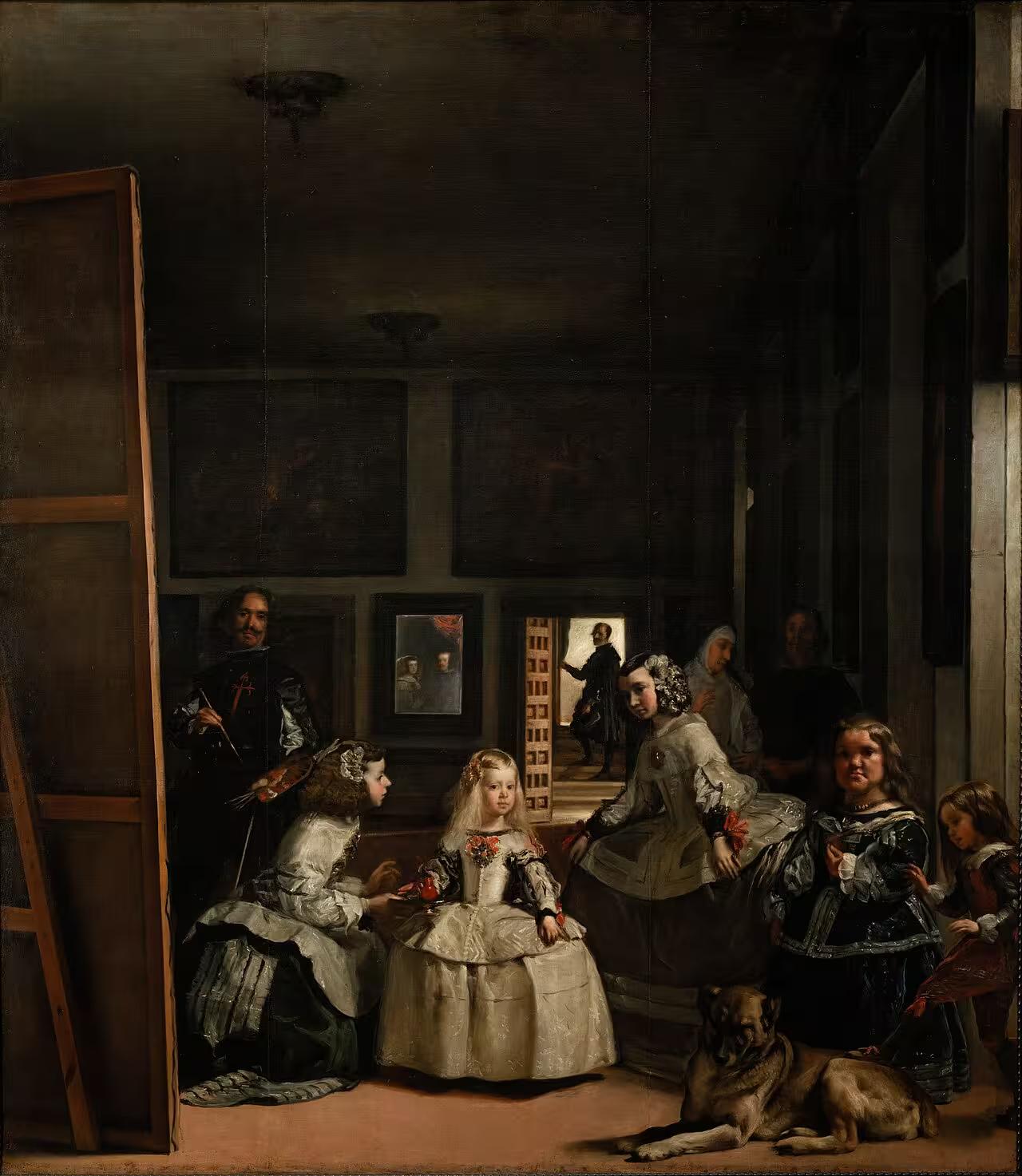
Velázquez and the End of the Representation Abstract If we wanted to describe what characterizes the history of painting from the Baroque to the implosion of colors and the loss of perspective in modern art, perhaps we should perform a necessary operation: reduce the image to thought in conceptual matrices. Thus, we would obtain two mutually opposed and, paradoxically, related attempts to talk about the world from the essence of painting in general. Both are formally linked to Spanish painting. The first is the path established by El Greco through the mystical field of divine sublimity, as in Christ’s sacrifice and bodily suffering on the cross. In contrast, the second path aims to create the illusion of pictorial representation within the pure rationality of the so-called referential painting of the aristocratic era in European history, with Diego Velázquez as the leading representative. Two paradigms of the image seem to correspond to paradigms of thought: one that invokes and depicts the unpresentable in the image of the mystery of Christ with the aspiration that the phenomenal world takes on the metaphysical dimension of the rule of the Platonic idea in the world, and the other that shows that only through the mental construction of the world can the highest degree of enlightenment be reached in the image as a perfect aesthetic illusion. The author attempts to arrive at a thesis on the rational mysticism of painting through Ortega y Gasset’s analysis of Velázquez’s painting Las Meninas, which represents the greatest achievement of the concept of representation in the art and aesthetics of the classical era, but also its end in the autopoietic painting of the late avant-garde in the 20th century. Key words: Rational mysticism, Velázquez, representation, painting, rebirth of the image, sublimity 1. If we wanted to describe what characterizes the history of painting from the Baroque to the implosion of colors and the loss of perspective in modern art, perhaps we should perform a necessary operation: reduce the image to thought in conceptual matrices. Thus, we would obtain two mutually opposed and, paradoxically, related attempts to tell about the world from the essence of painting in general. Both are formally linked to Spanish painting. The first represents the path established by El Greco through the mystical field of divine sublimity, as in Christ’s sacrifice and bodily suffering on the cross. In contrast, the second path aims to create the illusion of pictorial representation within the pure rationality of the so-called referential painting of the aristocratic era in European history, with Diego Velázquez as the leading representative. Two paradigms of the image seem to correspond to paradigms of thought: one that invokes and depicts the unpresentable in the image of the mystery of Christ with the aspiration that the phenomenal world takes on the metaphysical dimension of the rule of the Platonic idea in the world, and the other that shows that only through the mental construction of the world can the highest degree of enlightenment be reached in the image as a perfect aesthetic illusion. Metaphorically speaking, El Greco would be Plato here, and Velázquez would be Aristotle, given the essence of the matter in question. Of course, Platonism is no mysticism, just as Aristotelianism is no rationalism. Our conceptual grasp of reality is often a necessary intellectual appropriation that begins with the abstraction and reduction of reality’s complex structure. However, one thing is undeniable. In European painting from the Baroque to modernity, we encounter an obvious opposition between God in the image and man as the subject of rational anthropo-technology. This metaphysical-antimetaphysically, “The War of the Worlds” happens only in the internal “logic” of the art of painting as what is happening: a historical secularization and profanation of the world. However, the question is why, for this depiction of the conflict between the otherworldly and the here-and-now, idea and reality, mysticism and rationality in the downward trajectory of the metaphysics of European nihilism, as Heidegger would say when dealing with Nietzsche, (Martin Heidegger, Nietzsche: Seminare 1937 und 1944, GA, vol. 87, V. Klostermann, Frankfurt am Main, 2004, p. 45), we decided to take painting as a medium of thought, and not literature? The greatest Spanish philosopher of the 20th century, José Ortega y Gasset, offers us an explanation in his essay ” The Rebirth of the Image,” in which he also says this: “Even Plato emphasized the muteness of the painter. The entire magic of painting is summed up in this duality: the desire for expression and the determination to remain silent. To paint means to decide on muteness firmly, but a muteness that does not mean deprivation or lack. The painter decides on muteness precisely because he wants to express what speech, by itself, can never say. ” (José Ortega y Gasset, “The Rebirth of the Image,” in: The Dehumanization of Art and Other Essays, Litteris, 2007, p. 89. Translated from the Spanish by Dunja Frankol) Literature, therefore, as well as philosophy, due to its focus on language and speech, seems unable to fully reach that pictorial phantasmagoria with which only the conflict between mysticism and rationality always appears as a conflicting dialogue of the sacred and the mundane. Why is this duality so immersed in the network of all our intellectual efforts in approaching immediacy without any substitute means of conceptualization? The simplest answer would be because both the supersensible and the sensible belong to the same indistinguishable origin of the very thing of thought and Being. The beginning of metaphysics in the Greeks, with Plato, establishes this duality, starting from the mystery of logos as speech that the idea uses to introduce the divine into the apparent splendor of intra-worldly beings. However, language can never encompass the mundaneness of the world itself, just as wisdom must use all intellectual means, from paradox to aporia, to establish, through language, a confidential relationship between the meaning of Being and its appearance in beings, and the essence of the Human. In other words, language fails only insofar
So why the Baroque and its dark secrets at all? We can approach the answer to this question by bypassing the question itself. Uwe Steiner points out that when
Most transhumanists are computer scientists, biologists, or entrepreneurs. They do not have the education to develop complex philosophical reflections.
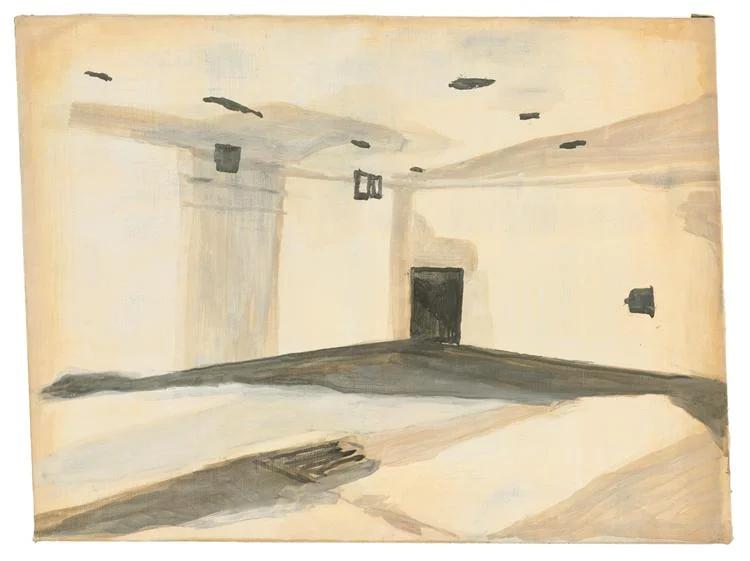
For a long time I avoided painting humans or portraits restraining myself to space as a void. If a portrait or a face would crop up, it would be derived from objects,
While the birds were talking, I thought I heard, though behind them, or deep in their shadow, another voice, perhaps human, perhaps, artificial, which seemed
There were many such people who deep inside wished to be free and authentic but believed it was not yet totally and completely possible, or who believed it was simply necessary
We use cookies
We use cookies on our site to enhance your user experience and analyze our traffic. See our Privacy Policy.
Cookie Settings
Customize your cookie preferences. Essential cookies are required for the website to function properly.
Essential Cookies
Required for basic website functionality. Cannot be disabled.
Analytics & Performance
Help us understand how visitors interact with our content anonymously.
Marketing & Content
Used to deliver relevant recommendations and journal highlights.


 Visual Arts