

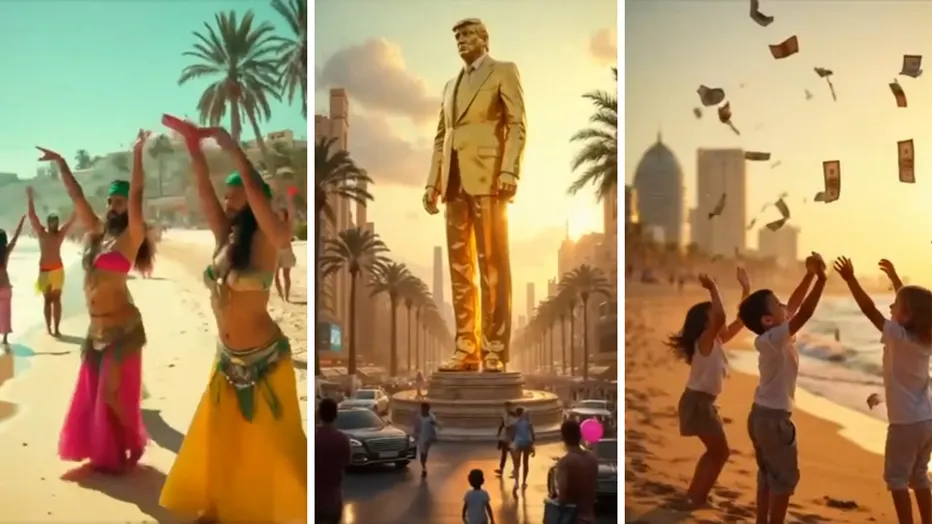
Communication assumes the exchange of “aesthetic” (sensory) and “cognitive” (mental) energy in the process of becoming an ever-new identity of a fluid nature. That is why all technical devices of the digital age are aesthetically designed objects adapted to the “style” of the fluid nature of human mobility, the changeability of its position in space, and the telepresence of interplanetary nomads. All of this occurs within the triad of communication, interaction, and system. It should be clear that these concepts of cybernetics and systems theory simultaneously connect “nature” and “cultures” or “societies”. Since communication occurs primarily as a technical process of dialogue and discourse among networked machines, body computers, and mobile smartphones, cultural-social processes are examined from the perspective of managing, regulating, and monitoring the environment in which this process unfolds.
The transition from content analysis to form analysis in media theory corresponds to the transition from text analysis to the analysis of the language of communication or, simply put, cultural techniques of communication. This turn from text to visuality corresponds, of course, to what has been called a paradigm shift in philosophy and the social humanities since the 1960s, when semiotics, semiology, and philosophies of language replaced traditional metaphysical disciplines. Cultural techniques become technologies with their aesthetic matrix of communication in a complex environment. We can call them the means/purpose of communication. In this respect, the history of cultural techniques corresponds to the history of media as a linear series of inventions and practical applications of “tools” and “machines” of communication. However, the problem is that media history presupposes an understanding of the relationship between the technosphere and the biosphere. Cognitive processes are self-referential. If, in this theory, it seems that Berkeley’s solipsism, esse est percipi, has an obvious ontological advantage, then it might be a genuinely modernized way of criticizing the transcendental metaphysics of consciousness. The actual subject of communication in the digital age is therefore not society in its complex mediation of needs, interests, and desires, but the technosphere itself, as the entropy of all social relations in general. In the place of society comes communication; in the place of the text’s paradigm, we have the visual network; and in the place of the work’s material form and the material sign of the event, whose symbolic value constructs reality, we have an emergent autopoietic system.
Who communicates – humans or machines? The network enables communication that approximates the immediacy of touching the Other through the game of proximity and distancing, as those who sacrifice the freedom of individuality exchange it for solitude play. When there is no longer either privacy or publicness in the classic model of the liberal idea of freedom, digital nomads strive to create a semblance of intimacy between virtual walls. In the posthuman condition of immateriality, the entropy of global capitalism itself produces its Others (planetary enemies). It constructs the event of disintegration through a continually renewed staging of non-place. The perfect apocalyptic utopia of digital communication represents a machine that produces the event of artificial life from the very essence of the technosphere. (Paić 2021, 2022a, Paić 2022b)
How to approach this turn in the very essence of the paradigm shift of art as a proper communication between worlds in which the concepts of nonlinearity, emergence, interactivity, self-organization, creativity and virtuality are constantly found in the game of transformations, where there is no longer a difference between “natural” and “human”, between technoscience and art, as Flusser still announced, and where, in the end, reigns the chaotic order of relations between subjects/actors of events that the classical methods of modern science can no longer predict? Can this dizzying speed in the videology of digital appearance not only be controlled but also be ethically curbed, thereby curbing the uncanny condition of communication transgression in which all notions of social stability have become obsolete, and in their place has come the entropy of the nonhuman?
With the videological turn, I refer to the entire paradigm shift from language and text to image and visuality. Just as in the 1990s, within the framework of visual studies and image science (Bildwissenschaft), the centre of gravity in understanding the essence of art and culture was shifted due to the interactivity of new digital media from iconology to the epistemology of visualization, so also in the field of society and politics, we can witness about extremely a complex turn in the notion of political communication. Mass visual media such as Facebook, Instagram, and Twitter replace the uniformity of the television image, which lacks the capacity to create an event in the construction of a polemical situation, as interactive media do. Therefore, it is entirely wrong to reduce the videological turn to technological determinism, according to which social values and ideological-political conflict in the political space as the performance of power, passion and influence are imprinted in the consciousness of the masses as a nation, only because for the first time the object of politics can become a subject under the condition of virtual participation in the political process. However, no fundamental political turn in the sense of the creation of immediate democracy as desired, quite naively, by the various currents of cyber-anarchism and cyber-cosmopolitics of the new left, took place. Instead, it is better to talk about the apparent duality of digital democracy, i.e., about the same model of multilateral communication between subjects/actors in which all cultural wars between ideologically opposed parties, left and right, centrists and various coalitions, are merely being moved into the virtual underground. (Paić 2008)
From the early critique of metaphysics in the first half of the 20th century, Wittgenstein and Heidegger presented two distinct paths in the philosophical understanding of the relationship among thought, speech, and things. For Wittgenstein, language denotes a universal instrument. Language games are constructed with it. (Wittgenstein 1998) Reality is a state of “things” that consists of facts and statements about the state of “things”. Thus, a language cannot be a material “thing” but may be a tool. Reality is constructed and understood with it. For Heidegger, language means the “telling” of the openness of events (Ereignis). (Heidegger 1989) Being and time are acquired in the event. Language as the telling goes beyond the horizon of the scientific and technical construction of the world only if it is addressed to the original telling of the fourfoldness of mortals and immortals, Earth and Heaven. In the modern age, language is transformed into a technical system so that “the world as an image of the world” could function in a mathematical-logical project. For Heidegger, language becomes synonymous with thought in contrast to the epochal accident of the technical period, in which everything becomes information, energy, and mass. The essence of technology lies in Ge-stell. (Heidegger 2000) For Heidegger, language as telling can never be reduced to pragmatics. However, the term “thing” suggests that such a structure was already in place in the modern period.
Is there “reality” in virtual space-time without language as a “thing”? If models and symbolic codes generated “reality”, then the world in which techno-culture affects all areas of life has long since lost its supra-mundaneness and intra-mundaneness. The world is precisely what Fernando Pessoa predicted in his futuristic song „A Machine “. The desire for “another world” becomes serious with the help of the imaginary-symbolic construction of the world as a universal machine. Life did not lose its irreducibility in that cybernetic model. On the contrary, life has become an artificial accident of bio-digital reality, the only actual reality. The fundamental problem of the language of new media, as we will see below by analyzing Lev Manovich’s statements, becomes the “realization” of language as a “necessary possibility” for the functioning of techno-culture. (Manovich 2001) Namely, for there to be any possibility of communication in the mediated immediacy of telematic presence, the new media language must necessarily be “realized”. It must assume responsibility for the symbols of the cybernetic system of world management and communication. Such language becomes the result of techno-cultural reality as a wired reality. We are not objects of such a universal language/thing. We are cyborgized beings of proximity and distance in the universal immersion of our desires in the endless sea of eternal actuality.
New media, such as information and communication technologies, techno-culture, and the aesthetics and ideology of the digital age, posed the problem of a different scientific approach to their complexity. Just as, due to changes in the subject of research, natural sciences remain only conditionally separated from the cultural sciences, so too, with the emergence of new technologies, social relations, structures, and ways of articulating cultural orders of meaning have changed substantially. Therefore, an insufficiently firm and convincing answer to the question of where the theory of new media belongs does not affect only research on the realities and practices of new media in the arts, design, fashion, and everyday life. The problem is how to positively establish the theory of new media in the newly created environment of the so-called cultural sciences (Kulturwissenschaften). There are still discussions about that. One orientation in building a general theory of image science (Bildwissenschaft) holds that mediology should be a new philosophy of media within the cultural sciences (Mersch, 2006; Paić, 2021; Paić, 2022a). However, it should be emphasized that the term “philosophy” is understood here in the historical sequence following Wittgenstein’s Philosophical Investigations and Heidegger’s destruction of traditional ontology. In other words, the use of the term philosophy is determined by a methodological bracket against the historical suspension of metaphysics in the social and natural sciences. To that extent, one cannot directly oppose such an attitude. Let us say that doubting any initiation of philosophy in the expansion of its “subjects” of research is nothing more than agreeing to the position of “eternal philosophy” which only historically changes its characters in which Being, beings, and the essence of man appear. In addition to media theory, as stated, there are also media sociology, media economics, media archaeology, media aesthetics, media pedagogy, and media philosophy. Such division is noticeable at several levels of the interdisciplinary project of image science (Sachs-Hombach, 2006).
Another orientation holds that media science extends beyond the current ontological and epistemological foundations of philosophy (Mersch, 2006). Instead of the terms of speculative-dialectical philosophy of Hegel, with Heidegger, and especially with the post-structuralist turn to the problem of language, structures, decentralized subject, rhizome, etc. (Lacan, Foucault, Derrida, Deleuze/Guattari), a new direction of dissolution of philosophy in media science was paved. The concepts that such science uses undoubtedly arose from a philosophical reckoning with tradition. Derrida’s deconstruction of metaphysics is an exemplary case of this. Another impetus for the constitution of media science came from various mathematical, cybernetic, and information theories of communication (Shanon/Weaver, Moles, Flusser). According to this view, philosophy can address the media only as part of a comprehensive interdisciplinary science. However, as an independent discipline, media philosophy appears to have failed, as do the inflation of various “new” philosophies (drama, fashion, art, etc.) that persist today. Moreover, for this second orientation, although it opens the problem of the relationship between philosophy and media science more appropriately to the matter itself, the same can be said for the first. Its difficulty is evident in the fact that it starts from the self-evident “fact” that the cultural sciences (Kulturwissenschaften) have replaced the spiritual or humanistic. The result of the transition of spirit into culture denotes the end of philosophy as metaphysics of spirit and nature. Cultural sciences, which would perhaps be a better translation of the German term Kulturwissenschaften, no longer consider culture as a sector of the spirit in modern society. As part of the “cultural turn”, culture is understood as a symbolic order of the world in which society no longer has the meaning of the supersystem and culture is the subsystem. This is about the complexity and irreducibility of culture. It is technologically reproduced as a letter, text, and image. Therefore, visual culture is not merely one of the “cultures”; it denotes a fundamental marker of a culture’s new media status, as it visually constructs social reality (Paić, 2019).
It is no longer possible to seriously talk about aesthetics without an insight into the results of the process of refining art itself from abstraction to informel, from the radical iconoclasm of the Russian avant-garde to virtual or digital art “now” and “here”. It is helpful to refer to Margit Lovejoy’s statements. It is shown that the basic category of digital art becomes interactive communication (Lovejoy, 2004, pp. 220-230). In addition, aesthetics, which instead of traditional concepts reaches for the language of new media, can therefore be nothing else than a whole new building of interdisciplinary cultural sciences, beyond aesthetics and culture. Such aesthetics can, therefore, only be trans-aesthetics. Being between and being beyond determine, in the language of new media, the status of all aesthetic categories in the new digital environment. Just as in virtual reality, it is impossible to separate the real from the imaginary and the symbolic, so in the ecstasy of visual communications, all previous space-time divisions of past, present, and future have fallen away. When information is compressed and condensed, interactive communication itself implodes. The consequences of this acceleration of the network are that participants in the communication process can no longer withstand the surge of information. A machine or a tool is more intelligent than a man, as Norbert Bolz rightly stated. For communication to remain coherent among participants in “online work,” a strong critical ability to select information is required. Machines of imagination and mind need communicators who can imitate machine “anthropotechnics” of data memory.
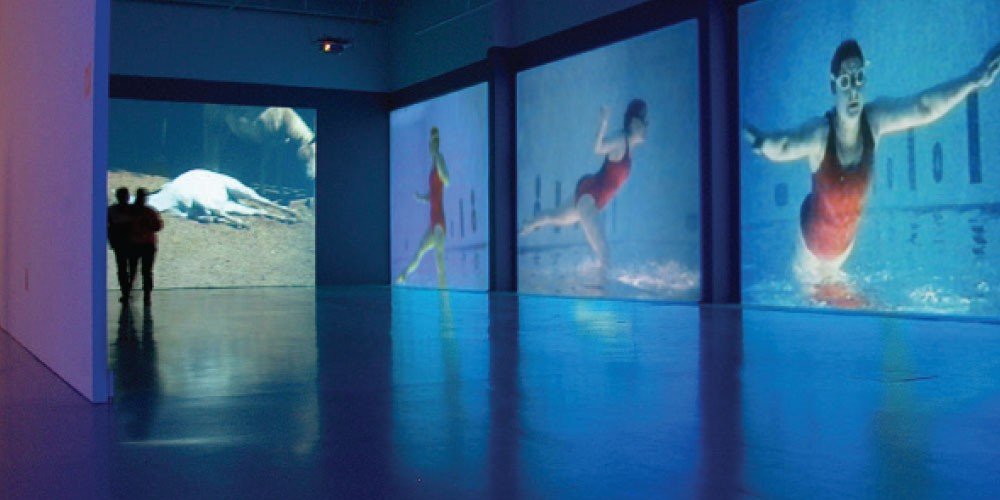
The trans-aesthetics of new media no longer have the “space of the future” before them, as the time of the coming change in the constructed reality of the world. The new media stopped time in the ecstatic moment of a one-time event, yet preserved the repeatability of what was. The replay effect of the digital age only shows that what constitutes the essence of “our time” is stability in the changing state of information and communications. In a video performance titled Stories from the Nerv Bible, Laurie Anderson invites her viewers to confront the future by asking whether there is hope for human progress or whether we have fallen hopelessly into a state of global violence and social lawlessness. The contemporary artist evokes the allegory of the angel of history ‒ Angelus Novus ‒ from Benjamin’s essay on progress in the interpretation of Klee’s painting of the same name. The storm of progress no longer leaves the possibility of distinguishing between the previous, the present, and the upcoming. Communication processes within the social framework of interpersonal relationships employ different modes of mediation. If they are neutrally called “media”, then it is already a question of a new relationship of mediation between people based on the visual processing of information. For Sachs-Hombach, the medium is primarily the physical carrier of the sign. This is not about any technological, economic, or institutional aspect of media activity within social systems. The distinction between media connected to the human body and those independent of it complements the formal analysis of communication in general.
Fixed forms of communication that are independent of the body are pictures and films. They are transmitted between users via written language and abstract symbols. Gestures and facial expressions are forms of communication that are temporarily attached to the body and constitute gestural, nonverbal visual communication. The body is understood explicitly as a medium. (Sachs-Hombach, 2006: 96 and 97). The transition from the mimetic-representational conception of the image to the conception of the image as a communication medium is not of the same ontological rank as the transition from the magical-cult understanding to Plato’s, which truly begins the philosophical question of what an image is in general and why it must be in the function of cognition through logos. Before Plato’s doctrine of mimesis, the identity of the divine and of what was depicted in a cult image, statue, or temple was understood to be identical. The reversal occurs when the real character and his image are no longer exposed in the picture as identity and unity, when, therefore, mediation occurs in the sense of representing a character with a picture. Sachs-Hombach’s concept, as we have seen, is a consistently realized attempt to establish the science of the image (Bildwissenschaft) through the symbolic integration of the perceptual, cognitive, and communicative aspects of pictoriality. The problem with such an interdisciplinary science, which would need a new (philosophical) meta-theory of the image for its foundation, is that it remains unclear how and in what way the two should be understood:
(1) generating a new reality that the image assumes and at the same time “creates” with its presence in virtual space-time;
(2) the transformation of the image as information into a communication medium of visuality.
In both cases, we face the question of the ontological status and function of the image in relation to what is real and what is visually constructed. Contemporary debates on these issues persist. On the contrary, there appears to be a methodical doubt about the scientific character of such a post-science image, which should be part of the new general cultural science (Kulturwissenschaft). One of the convincing critical answers to that question has been provided by Lambert Wiesing, a contemporary German philosopher and theorist of image and visuality. He, namely, against any semiotic-communicative model of the image as a closed circle of meaning in which images refer to images as signs in the communicative chain of events, tries to save the phenomenological approach to the image. If a picture shows something, this does not mean, according to him, that there exists a relationship of noticing in the sense of an intersubjective relationship in which there is still a reference to something real in the relationship between the picture, the observer, and the excess of the imaginary.
The question that must be asked concerns the character of a completely new artificial presence within the field of media-constructed reality. The artificial presence of the image places the observer in a position of understanding the iconic difference between a living or real presence and a non-living or artificial presence. (Wiesing, 2005: 35-36). At the same time, it seems essential to warn against the pre-discursive and discursive perceptions of the image, as remnants of the iconological tradition of interpreting the image’s meaning in the history of art. In the non-living space-time of immersive image immersion in virtual reality, the observer finds himself in a situation that necessarily has the double character described above. At the same time, he is free from the excess of prior knowledge about the meaning of images, which he regards as intertextual and metatextual creations of media. On the other hand, his vision is mediated by awareness of the changed reality in which the present is presented to the observer. Thus, in its material aspect, the painting is shown as an intentional object. However, the experience of viewing such an artificially generated image, for example, on a computer interface, already significantly changes the meaning of the phenomenological concept of intentionality. That all images are something intentionally determined by perception cannot be problematic. What do artificially generated images refer to? This may be the central problem in contemporary discussions of image in the digital environment. The phenomenological concept of intentionality from Husserl to his numerous successors had something of vagueness. Consciousness in all its modes of presence in the world is always intentional consciousness.
From Foucault’s position on the disappearance of the concept of man in the archaeology of modernity to Derrida’s critique of the logocentrism of history, there is a path of formal constructive reduction of man to something immanent to him ‒ the mediality of the body within the world as a text. The media denotes the artificiality of the technoscientific approach to the world and to man. From this constructivism, the thought about the eccentricity of the medium and the decentering of the subject inevitably arises. This is of decisive importance to the fields of media studies, communication, and media philosophy. The media’s eccentricity means that all media are necessarily intermedial and trans-medial, referring to other media and transcending their indeterminacy. The new media of the 1990s do not rest on the mere mediation of information but rather translate “old” content into new “formats”. It should already be clear from this that the formal constructivism of global reality is nothing more than a network of rhizomatic actions. The decentered subject of the media is not human in its intersubjective extension of the senses. It is the very form of media that now becomes the mediality of the event. Far from some mysterious force that inexplicably starts the media process in its development, the concept of mediality can be defined as the occurrence of a reproductive event. In it, creation and reproduction on the side of the “subject” of procedural and transmission and mediation on the side of the “object” in the process of events are always mediated. The mediality of the media denotes worldliness without the world of the contemporary digital age. The temporality of the event corresponds to the pragmatic content of the media. Everything becomes informative because the information in its implosion (compression and condensation) becomes the internal logic of reality itself. The interactive nature of the media in the social meaning of the inclusion of the democratic public in the game of discourse and dialogue, as Flusser and, following in his footsteps, Kittler, explain the process of transferring the public sphere into the private and the termination of “public” and “private” in the corporate structure of the world’s communication activities, from noise in communication and saturation with the homogeneity of messages, their uselessness and bareness of meaning, leads to the entropy of the social order itself, which is stabilized only by constantly staging apocalyptic events. (Kittler 2013) In other words, the apocalypse represents the internal structure of the media age of entropy and not any catastrophic consciousness of this time. However, the apocalypse is not the reality of the destruction and revelation of the new world, but a media event staged based on paranoia and conspiracy theories.
To that extent, Flusser’s definition of the media, in contrast to McLuhan’s, is more thought-provoking for the emerging era of transmediality. Flusser understands media epistemologically within the techno-scientific framework of the modern world. Instead of the subject-man in the humanistic sense of the word, which is still at the foundation of McLuhan’s anthropology of the media, for Flusser, an intersubjective network of communication is at work. The project replaces the subject, and the network arranges, synthesizes, and analyzes events from two worlds, the “natural” or technical and the “social-humanistic” or communication world. Therefore, the film cannot be just one of the other media in a linear sequence of development: from image to letter to visual text. It is the universal and paradigmatic medium of the world as techno-code. Life in the age of the media is necessarily a depicted or visualized life in which the entire realization of metaphysics is completed: the emergence and development of the techno-biosphere of the new corporeality of the complex body of living memory and artificial intelligence. When there is no longer the stability of space and the chrono-utopian structure of time in the sequence and sequences of the series, then the mediality of the film itself is the event of the creation of a new space and a new time. The conceptual understanding of space and time corresponds to the conceptual age of film, in which ideas are expressed in images. Deleuze says that film directors think in pictures. It is therefore not at all unusual that precisely with the flourishing of new media in digital format, the philosophical understanding and interpretation of the film will become almost more important than the artistic interpretation of the film. The paradox is self-explanatory because the loss of the aura of the event of the topology of art and the loss of the original temporality of the event necessarily leads to a medial turn.
One of the almost expected answers and binding approaches to reality in the modern world of construction and deconstruction of the event itself is that the media is responsible for such phenomena. In advance, therefore, it is assumed that the media have replaced the transcendental constitution of the object of experience. Instead of God or Thing as a condition for the possibility that an event has any internal or external “meaning” at all, there is now a term that is already problematic in that it refers to mediation between the two. The mediation of consciousness in its journey from the point of view of “natural” consciousness to the absolute spirit in the form of art, religion, and philosophy was, for Hegel, the “matter” of the phenomenology of spirit. It is the path of mediating consciousness as a spirit to the identity of subject and substance in the absolute science of spirit itself. That is why Hegel’s philosophy can be called ʺabsolute mediologyʺ. All that is acquired in the form of the medium of spirit in its journey through time of absolute presence as the eternal present. For contemporary media theory, in its much-celebrated interdisciplinarity, to have credibility, the world must be constructed from a concept of the real that corresponds to the very idea of the world in the age of its worldlessness. Undoubtedly, the “real” lacks the fullness of Being in the excess of attributed reality. The difference between the world and its reality, and the medial deconstruction of the immediacy of the relationship between man and the “world,” opens the problem of self-determination in communication beyond any instrumental logic of action.
Communication is not the result of a closed circle of information flow in the sense of a vulgar relationship of sender-receiver of a message, but a social relationship between the signal and the decoding of the message in interaction. Therefore, the question of communication in the modern world of network societies is a first-class question about social power and the identity of subjects/actors in general. However, can there be communication at all without a world that has become a network of social events? The relationship between the form of media and the form of communication cannot be declared only as a social relationship. It is necessary to determine the relationships between the concepts beforehand. For this a priori form of media, society appears as a condition for the possibility of communication. For example, in sociological theories of globalization, rather than the power of social classes, the basic power structure has shifted to the power of communication among social subjects/actors. However, such a neo-Weberian approach, as credibly advocated by Manuel Castells in his analysis of the global age of network power and communication, is ultimately a form of techno-determinism. Instead of society, we are now talking about communication networks. Rather than the social interaction of elites in the distribution of absolute power, communication becomes the power of cognitive capitalism in its highest phase of the accumulation of knowledge-awareness-feelings. Hence, the media are not socially determined by some a priori force (a signifier in the semiotic sense of the word). The formal-material conditions of interactive communication set them. Therefore, communication becomes possible in the digital age of the “world” only when the “world” is spatially and temporally displaced from the centre. The decentering of the “world” corresponds to the process of media deconstruction of the subject. If the “world” can be called what shapes language in its articulations of thought and bodily experience, then it is evident that the media concerning man and the world have the power to create a new subjectivity. It now has the character of active inter-communicativeness.
Just as language in the era of technical destruction of the meaning of the world necessarily acquires the character of a pragmatic means of communication, so the media language of events becomes, as Sloterdijk defines media, a combination of “encyclopedia and circus”. (Sloterdijk 1983) The essence of language in the era of media neutralization of events can no longer be explained by anything other than referring to the logic of the spectacle itself. However, since the spectacle in all its forms is capital as a social relationship mediated by images in its highest phase of visual communication, it is evident that the language of contemporary media no longer imitates anything (the referential nature of language) nor represents (signs of society and culture), but precisely redesigns the world as a media spectacle of events without “meaning” in its fatal inter-mediality. Spectacle refers to media forms just as the language of spectacle refers to the material conditions of “real” events. For the spectacle of media self-production of events to function perfectly, language must become a tool of visual communication or, in other words, the empty speech of advertising messages. This is what Baudrillard calls the totalitarian message of contemporary media’s metalanguage.
The formal loss of the metaphysical concept of the world also means the material gain of pragmatic and empirically available communication. On the question of the loss of the world as a historical set of Being, beings, and humans, one of the leading theoreticians of (new) media, Vilém Flusser, in the essay “The Codified World”, says directly:
“Premodern man lived in a world of images, which meant the ‘world.’ We live in a world of images, whose theories regarding the ‘world’ hope to symbolize. This is a revolutionary new situation. In order to grasp this, the present reflection will attempt an excursus on the concept of codes. A code is a system of symbols. Its purpose is to enable communication between people. Because symbols are phenomena that replace (“stand for”) other symbols, communication is a substitute: it replaces the experience of “that which it intends:’ People must make themselves understandable through codes, because they have lost direct contact with the meaning of symbols. Man is an “alienated” animal, who must create symbols and order them in codes if he wants to bridge the gap between himself and the “world.” He must attempt to “mediate:’ He must attempt to give the “world” meaning. ʺ (Flusser, 2004, 36-37)
If, on the other hand, no one stands behind the media, then the media themselves stand behind their unrepresentability by anything other than the mediality of the media itself. Moreover, precisely this mediality, in Flusser’s terms, is the codified world of theories about the world. The difference between theories about the world and thinking about the world in its worldliness alone decides the character of the worldlessness of the contemporary world as a network of medially constructed events. It has long been clear that, in modern culture, technical assumptions about observation and perception can no longer be lightly rejected. What we observe is not merely an immediately present event. It is always about an apparatus that opens the event to our cognitive and perceptual possibilities that are not naturally given. Instead, the naturalness of the view is made possible by the cultural techniques of viewing itself. The body is structured by changes in the manner of its medial performance. When the camera alters the perceived object of criticism, we can discuss the technological-aesthetic transformation of the body as an object. The eye cannot be innocent like any other sense. However, for an event to be reproduced in its “truth”, much more than a reproduction apparatus is needed. Each medium, in its historical-epochal determination by the bodily structure of action, is at the same time a cognitive apparatus and bodily situating in the space-time of social relations and the cultural order of meaning. If therefore, the doubt about the “reality” of the event stems from the doubt about the interpretation of the event, which is always the product of diverse experiences of perception and to that extent subject to the ideological formation of discourse, then it is self-evident that the concept of media in its pragmatic extension to all areas of society, culture, politics, art, sport, to everything that remains of the metaphysical idea of the world, goes beyond what is anthropologically destined for it: namely, to be a mediator of information exchange. McLuhan’s assumption that the medium is the message can no longer be a sufficient guarantee of media “neutrality”. There is something completely different and much more in the dubious “nature” of the media since the very beginning of the modern era.
It should therefore not be surprising that one of the prominent theoreticians of contemporary art and media, such as Boris Groys, expresses doubts about the effectiveness of the very concept of media and the entire theory that “serves” the monstrously growing communication drive. Doubt even goes so far that the only media theory, according to Groys, can be called a conspiracy theory. The reason is that there is no longer any sufficient reason for us to operate with the term “real”, and since the media in the digital form of their information and communication activities do not maintain “real”, but rather produce and stage it, then the need for “real” became simultaneously obsessive and pathological. The obsession with the pathological is only because the “real” no longer has a foundation in the “reality” produced from the technological creation of objects. When it finally became certain that the “real” no longer exists “from above”, there emerges a panicked search for the “excess of the real” in the immanent event itself.
In the semiotic theory of communication, the pragmatics of meaning becomes more important than the syntax and semantics of the message. The performativity of use, therefore, decides the meaning of something as “useful” and “effective”. The pragmatics of language mediates the body as the speech of action and reaction in the space and time of the media. What is the fundamental problem with mediality without a medium or with corporeality without a body? The discussions about it are primarily focused on the question of media language. Thus, for example, the contemporary German media philosophy (Krämer, Mersch, Sandbothe, Hartmann and others) starts from the fact that the medial turn, among many other turns from the traditional metaphysics of language and body, is an attempt to overcome the still existing binary oppositions of openness-closedness of language as a body of media or, on the other hand, text-image to liberate the textuality and pictoriality of the world itself in its essential telling of the “traces” of language and the “apparatus” of the body. The issue of language within the media’s referential frame cannot be limited to communication in the era of telematic society. (Flusser 2004, Mersch 2006) The computer language of information, as well as the cybernetic aesthetics of communication, are made possible by the “third,” which cannot be reduced to the formal structure of the technosphere and the material structure of the biosphere. The discomfort stems from the fact that all technologies today are information and communication, and their language pragmatics is an almost perfect game of codes that change programmatically as new software is perfected. The technology is aesthetically constructed. Therefore, the new media synthesize within themselves four metaphysical causes in the complex situation of the techno-biosphere:
(1) format of knowledge of reality as a project in the form of visualization (3D);
(2) the materiality of the body as an object of perception in the social environment of information (network societies);
(3) the effectiveness of pragmatic action based on the performativity of speech in changed situations and contexts of the interactive culture of Others (interface culture);
(4) expediency in the productive consumption of the “new” as an immovable driver of the entire reality of the modern world in which cognition and sensibility are combined in the memory machine of capitalism.
The first Aristotelian understood cause as having a hidden primacy in this scheme. The formal cause, namely, represents the transcendental condition for the possibility of the entire system functioning. The fourth, as the final cause of reality, combines production and consumption, since consumption and its subjects/actors can never stop in the form of stable order, but exist permanently in the process of renewal and crisis of production potential. The second and third material and efficient causes show how modern society and culture are established in a pragmatic-performative way through the logic of new media. It is not difficult to conclude that society in the age of medial neutralization is always, as shown by Baudrillard, Foucault, Deleuze, Flusser, Latour, Kittler, and many other posthumanists, a society of control governed by a bio-technological code. The self-organizing logic of culture cannot be functional. It can develop into a complex network system only because the path of direct mediation of the living body as an image that emanates energy, feelings, and experiences has been technologically realized. Taken as a whole, society denotes a pragmatic set of information. It works through a feedback culture that self-organizes the order of social relations based on communication among different subjects/actors of social power. There is no doubt that society, in its pragmatic way of acting, should be determined by the result of the disintegration of the primary sphere of mediation of freedom. Therefore, control over its worlds of life (culture as an interface) becomes a question of contemporary economics and politics. Surveillance occurs because the networks of direct mediation (new media) are increasingly economically and politically subservient to the coupling of capitalist transnational corporations and authoritarian forms of “democratic control” over the cyberspace of information exchange.
The interactivity of new media creates the illusion that the world is unique and that technology is neutral. If there is anything common to all media theories, it is the view that the media as a technology of information transmission is not neutral. This applies equally to media “techno-determinists” and “cultural voluntarists”. What is different in the approach to media stems from the relationship between ideas and reality. Because if the user is the one who decides to change things by setting new rules of the game in a society and culture, then it is self-evident that the question of use has become a fundamental question of the provision of media in general. Instead of asking “what” an event is and what its meaning is, it is now essential to know “how” something happens and what the meaning of the events is in the event itself. Procedural unfolding is an open process of mediatization of the body. It is not free in the language that the medium uses to talk about the body, but it is in the decision about the path of language that the medium uses in its embodiment. The pragmatics of meaning, therefore, should be reduced to use. So, the performativity of new media speech denotes their conceptual body of resistance in performance. That is why the media should not be understood in any other way than as a set of four causes in the contemporary turn of the world itself.
So, what denotes the term ‒ illusion? Precisely because the digital world is always the one that, through the implosion of information, creates the appearance of reality as an abundance and breach of information from which communication can become either a mass rebellion against the society and culture of hegemonic distributed power or, on the other hand, mass indifference towards all actions to change society and culture at all. The first case represents the activist faith in the power of new media as subversive resistance, and the second case should be characterized by escapism and nihilism, with a retreat to one’s own Voltaire’s garden, coupled with a lifestyle choice as a narcissistic celebration of the empowerment of a self-conscious individual. The information society in its telematic form denotes only the technical realization of the end of the linear code. Being “connected” to the network does not mean being socialized or culturalized. To be “connected” to the network means to have opportunities for freedom of information, even under the condition of a threat to that fundamentally liberal idea of freedom for all. Instead of the democratization of the media and the great digital utopia of dialogue at a distance, “now” and “here,” we are facing a crisis of dialogue. The democratization of the media has played its part. The subversive demand for free software hides the potential of the socio-cultural struggle in the virtual space for the redistribution (socialization) of surplus value. Communication has come from ecstasy to the stage of final castration of the Father/Law, in Lacanian terms. Everyone uses information from the network, and communication is an interpassive form of dialogue, a direct democratic monologue (Pfaller, 2002).
Does a man have the power to control technology? Can he use it for “his own” purposes? By our definition of the media as both a means and a purpose for constructing the horizon of the world’s meaning, the media’s ambiguous nature has, to this day, determined disputes between representatives of two theoretical-cognitive and critical positions on the relationship between man and technology. The ambiguous nature of the media presupposes both a technical-technological and a social-cultural division. The former concerns the ontological definition of the media, and the latter concerns the anthropological definition. The first “ontological” and techno-deterministic attitude places the media on the level of conditions for the possibility of socio-cultural communication. Second, the “anthropological” and “humanistic” attitudes are in critical opposition to technological power. Man as a subject rises to the rank of a historical being of change. According to this theory, man cannot be passive, but an active being of creative freedom. From the new Era to modern theories of media and new media, such a dual structure of thought has been maintained.
Technological or media determinism seeks to explain all social and cultural phenomena through a causal-teleological model (cause-and-effect). Changes in society and culture are made possible by significant shifts in how humans use technology throughout history. The concept of technological determinism was introduced into anthropology and sociology by the American economist and sociologist Thorstein Veblen at the end of the 19th century. and at the beginning of the 20th century. The historical materialism of Karl Marx and Friedrich Engels, as a critique of Hegel’s philosophy of history, is most often understood as an irreversible, materialist (technological) determinism. Marx’s concept of production forces (capital, science, technology) and production relations (classes, the social context of capitalism, interpersonal relations) within the framework of his dual scheme of historical development underscores the possibility of continuing the determinism of culture as a medium in the contemporary era of global capitalism. However, to what extent is it still possible to understand communication in social relations and cultural orders of meaning as “intersubjective relations”? Although the exit from the scheme of subject-object relations is resolved in this way, the difficulties are that it remains in the conceptual horizon of the speculative philosophy of the subject. Flusser, like the entire theory of new media in the German-speaking environment, is undoubtedly a big step “forward”. One cannot even imagine a radical theory of new media with the concepts of “digitalization”, “virtualization”, “dematerialization”, “decentering”, and high-tech civilization without simultaneously radically abandoning the talk about “Human”, “society”, and “culture” within the framework of traditional technical and humanist ideas about historical development. If “man” is considered anthropologically, but now with the leading thought of “new anthropotechnics” (Sloterdijk, 2009) that are at his disposal by insight into the changed technical sphere that is becoming bio-technologically organized ‒ nanotechnologies, genetic changes, biotechnology, cloning ‒then the theory of new media, from this cognitive-theoretical point of view, tries to release the burden of dogmatic technologism and false humanism of communication. The transition to the posthuman environment of new communication technologies, therefore, requires an attempt to define a new “man”. It is no longer an anthropological question of what man is among other living beings, but how can “man” still maintain his “humanity” if he is not considered as a unity of techno-spiritual connection with the divine, the world, and “nature”?
It is not uncommon to say that the digital age has made it possible to get out of the metaphysical labyrinth of history. In it, a man was always determined autonomously. As a creator of technology, as a social being of change, and as part of the symbolic order that connects material structures and spiritual processes, a man defined himself as a privileged mediator between God, the world, and nature. Man, therefore, was metaphysically determined medially. In the anthropological horizon, the media were an extension of the human body (McLuhan, 1994). In the semiotic horizon, “man” was understood as a technical-social-cultural order of information-communication that refers to other signs. Therefore, a ’man’ becomes an extension of media (Flusser, 2004) with other informational means. In both versions, anthropological and semiotic, the essence of man is ultimately reduced to the possibility of imaginary-symbolic production in a changed historical context. Communication becomes more than a message as information. Only with the possibility of communication does “man” become a co-participant in a system in which God, the world, and nature can become a divine, world-historical, and natural meeting point of a new relationship with history, or else they can completely disappear in the absolute visualization of the world as pure information without communication.
Let us repeat: the media is not a means of communication, but a means/purpose of communication in such a way that it creates a condition for the possibility of communication at all. That is information. Why, then, when talking about new media and the consequences they have on the development and changes of social structures and the cultural order of meaning, is it not simply that there are only information technologies? Why is an entirely different term often used ‒ communication technology? Is there arbitrariness in this, or is it a matter of a specific cognitive-theoretical position in the discussion of new media deciding how and in what way the term information will be used, as well as communication? It would be logical to conclude the following. Techno-determinists use the term information technology. For them, communication means something secondary, derived, non-autonomous, an effect and not a cause. Anthropologically oriented communication theorists will avoid the term information technology in favour of communication technology. However, they will acknowledge that the society in which science and technology rule is an information society. The conflict between these two cognitive-theoretical positions is noticeable in all discussions about the nature of contemporary global capitalism. Thus, for example, the techno-determinism of the information age in the analysis of globalization is represented by the sociologist Manuel Castells in a neo-Weberian way (Castells, 2011). The second stream would be represented by an attempt to develop a critical theory of risk society from the perspective of a cosmopolitan alternative to the techno-determinism of globalization, as articulated by the German sociologist Ulrich Beck (Beck, 2008).
I argue that it is necessary to move beyond this cognitive-theoretical and, consequently, ideological conflict. The contemporary situation, which in our digital age shapes the understanding of technology, media, society, and culture, requires a radical overcoming of the aforementioned metaphysical duality. Instead of the model of cause-effect, subject-object, and structure-function, it seems possible from the context of the theory of complexity to show the irreducibility of information and communication so that their separation, as well as the unquestionable relative supremacy of the first term, remains preserved in a productive relationship. New media becomes a new information and communication technology. Just as a man in the age of new media denotes a network of relationships among technology, society, and culture, the same holds for the operation of new information and communication technologies, primarily within the telematic society of immediate availability, information exchange, and interactive communication. Such technologies are fluid and fractal, universal and particular, decentralized and creative. However, they are not an extension of the human body, nor a continuation of a man in a thinking machine. These technologies are above all the unity of “living images” and “images of life”. Without visualizing concepts, new media could not perform cognitive functions. Conceptual art rests on a pure idea in a sign, text, or image. In the language of new media, information and communication technologies are not purely thoughts. They are “living images of life”. The bio-digital circuit determines, in a visual or pictorial turn (iconic turn), what is even an act of thought in the digital age. Speech, language, text, and image of life are reconciled to identity. Visualization has become more than a mere illustration of thought. It means the productive effect of mental images in the new reality of the world as a project of an intelligent machine.
New information and communication technologies constitute a bio-digital complex of science, technique, technology, and life, exemplified by artificial intelligence. However, it no longer refers to “man” and signs, but to cognitive maps of the posthuman adventure in virtual space as a new form of real time. Only from this point is it possible to understand why the techno-culture of our time denotes a post-culture that no longer has God, the world, and nature as its objects. The structures, processes, and codes of a “new” world whose horizon of meaning is determined by the pragmatic use of information in the concrete world of life replace God, the world, and nature. Getting out of the dead end of the form and content of communication cannot be effective if it is not seen at the same time that the formal content of the communication is always threefold determined:
(1) how communication occurs in the process of historical development from logos, text, to image;
(2) an order or system of signs by which communication from an order or system of information is translated into a new language that can be communicated and understood by the community of information users;
(3) instructions for action based on dialogue and discourse in the community, which is enframed on the principles of mutual interaction of different subjects/actors, regardless of their other, conflicting interests depending on the position they occupy in the social order of roles, status, and lifestyles, as well as the cultural representation of power through ideological practices that are available to them in the visual culture of the digital age.
The formal content of communication removes the distinction between form and content. The medium of communication cannot be neutral. The messages are neither syntactically, semantically, nor pragmatically independent. Messages are always medially determined. Using the possibilities of IT (information technology), the user, who is both the sender and the receiver of messages (interface-feedback), in Lacanian terms, unconsciously knows that the language he uses becomes a condition for his ability to act as a participant in interactive communication. Therefore, it was necessary to recall that Flusser methodically overcame the duality of “man”, “society”, “culture”, and “machine” in his communication theory. Why, in the end, do I believe that the communicative polycentric orientation, which was created by the logic of social networks in the age of cybernetic creation, storage, and transmission of information, is impossible to ethically restrain to the extent of some liberal-democratic repressive tolerance of the participants in the dialogue-discourse? We can take, as an example, the case of Twitter following Elon Musk’s takeover, and the fact that Donald Trump once again falls into this category as a legitimate participant in political communication despite his incitement and the dissemination of misinformation to expose political rivals. The problem with open communication today does not stem from the legacy of post-totalitarian censorship of information, but from the fact that every technological advance in so-called social networks always entails a breach of ethical-political boundaries in understanding the Other. Communication, namely, is never neutral, just as it cannot be the dispositive of the new media, which is equally successfully used by angels and devils, by fascists and communists, by fundamentalists and ecologists, and by blacks and reds. If information constitutes the essence of cybernetics, then its acceleration, dissemination, and storage aim beyond the limits of communicative irrationality, to twist Habermas’ famous formulation about public consensus as the basis of liberal democracy. The more the communication itself became like the vulgar discourse of the street, the more the so-called transparency of the social conditions of the production of the discourse of freedom has become a matter in the hands of new mass users who cry out for their recognition, even if they knew in advance that it becomes only a digital illusion among other illusions of this miraculous contingency of life. Instead of a metaphysical grand narrative about the rule of the principle of identity and the sufficiency of reason for explaining phenomena in the world, we encounter a cybernetic turn. Now, namely, contingencies produce events that are not a necessity of things but belong to the set of events on the other side of determinism and indeterminism. This is also the case with new media that facilitate communication and are not merely means of visual transmission at a distance. Therefore, since ethics is always a kind of prohibition and restraint of life forces and ecstatic powers for some Messianic goal or pragmatic function of guaranteeing different positions in public discourse, then any ethics for the technological age is predestined to create illusions of responsible communication. Let us forget about such doctrines of salvation from uncontrolled freedom. The videological turn indicates the breaking of all ethical boundaries. Rather than restricting freedoms, it is more important to move beyond the borders of the global society of control as the first and final station on the path to a new technological singularity.
References
Beck, U. (2008). Weltrisikogesellschaft. Auf der Suche nach der verlorenen Sicherheit. Frankfurt/M.: Suhrkamp.
Castells, M. (2011). Communication Power. Oxford: Oxford University Press.
Flusser, V. (2004). Writings. Minneapolis: University of Minnesota Press. Ed. Andreas Strohl.
Heidegger, M. (1989). Beiträge zur Philosophie (Vom Ereignis). Frankfurt/M.: V. Klostermann.
Heidegger, M. 2000. Vorträge und Aufsätze (1936–1953). Frankfurt/M.: V. Klostermann. Ed. von Friedrich-Wilhelm v. Herrmann.
Kittler, F. A. (2013). Die Wahrheit der technischen Welt. Essays zur Genealogie der Gegenwart. Frankfurt/M.: Suhrkamp. Ed. Hans Ulrich Gumbrecht.
Lovejoy, Margot. 2004. Digital Currents: Art in the Electronic Age. London-New York: Routledge.
Manovich, L. (2001). The Language of New Media. Cambridge, Massachusetts-London: The MIT Press.
McLuhan, M. (1994). Understanding Media: The Extensions of Man. Cambridge, Massachusetts-London: The MIT Press.
Mersch, D. (2006). Medientheorien zur Einführung. Hamburg: Junius Verlag.
Paić, Ž. (2008). Visual Communication – An Introduction. Zagreb: Centre for Visual Studies.
Paić, Ž. (2019). White Holes and the Visualization of the Body. London-New York: Palgrave Macmillan.
Paić, Ž. (2021). Aesthetics and the Iconoclasm of Contemporary Art – Pictures Without a World. Cham: Springer International Publishing.
Paić, Žarko. 2022a. Art and the Technosphere: The Platforms of Strings. Newcastle upon Tyne: Cambridge Scholars Publishing.
Paić, Ž. (2022b). The Technosphere as a New Aesthetic. Newcastle upon Tyne: Cambridge Scholars Publishing.
Pfaller, R. (2002). Die Illusionen der anderen. Über das Lustprinzip in der Kultur. Frankfurt/M.: Suhrkamp.
Sachs-Hombach, Klaus. Das Bild als kommunikatives Medium. Elemente einer allgemeinen Bildwissenschaft. Cologne: Herbert vom Valem.
Sloterdijk, P. (1983). Kritik der zynischen Vernunft, vol. I-II. Frankfurt/M.: Suhrkamp.
Sloterdijk, P. (2009). Du musst dein Leben ändern. Über Anthropotechnik. Frankfurt/M.: Suhrkamp.
Wiesing, L. (2005). Artifizielle Präsenz. Studien zur Philosophie des Bildes. Frankfurt/M.: Suhrkamp.
Wittgenstein, L. (1998). Philosophical Investigations. Oxford: Wiley-Blackwell.
Žarko Paić
Žarko Paić is a Professor at the University of Zagreb, where he teaches courses in Aesthetics and Media Theory. He publishes frequently in philosophy, social sciences, and art theory. His publications include Theorizing Images, eds. with Krešimir Purgar (2016), and Technosphere Vol. 1-5 (2018-2019), White Holes and the Visualization of the Body, (2019), Neoliberalism, Oligarchy and Politics of the Event – At the Ege of Chaos (2020), Aesthetics and the Iconoclasm of Contemporary Art - Pictures Without a World (2021).